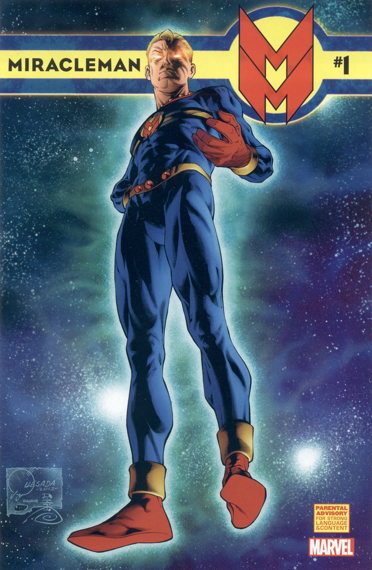
Quite a while ago I came across a couple of mid-1980s distributor memos to retailers in regards to the release of Miracleman #9, a comic that contained explicit scenes of childbirth. Given that today is the release of Marvel’s reprint of said comic, I thought I’d present them here, in slightly redacted form, to give you a bit of a historical perspective on this comic’s initial release. Some very telling details in here about the sort of things the industry was worried about at the time, and an interesting footnote in the then-raging debate about comics content-labeling and ratings systems:
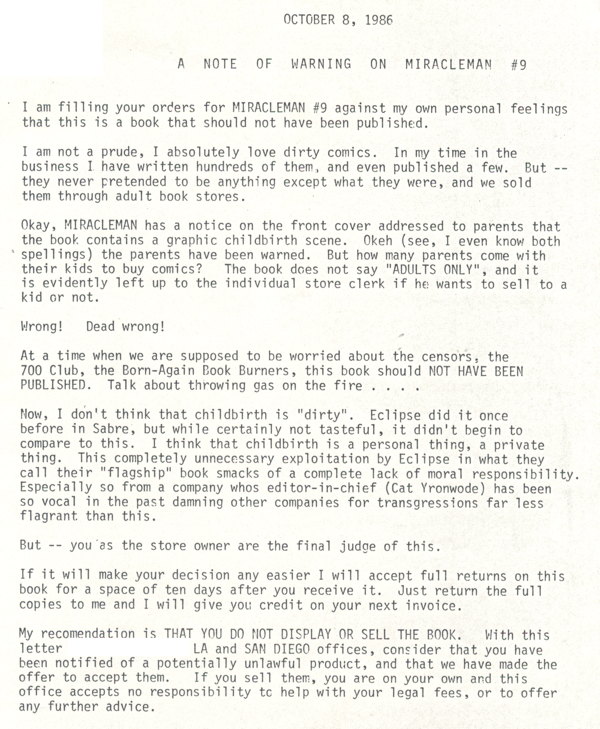
Clearly this didn’t sit well with certain concerned parties, resulting in this follow-up memo:

Of course, this particular distributor wasn’t alone, in that Diamond Comics also had some objections to the book.
In my particular case, I was still at the time just barely a minor, but “just barely” is still “not old enough,” given that the local funnybook store did indeed restrict sales of Miracleman #9 to adults. But, unlike as is implied in the first memo, my dad did come with me to buy comics, so I was able to purchase said issue. Actually, I had to come back with my dad, since I wasn’t allowed to buy it during my first visit that week. Imagine having to wait so long for a new issue of Miracleman to come out, particularly since the previous issue was a fill-in containing 1950s reprints, only to be told “sorry, kid, gotta be this tall to get on the ride.”
Not complaining, mind you. There was a feeling of “they’re coming to get us!” prevalent at the time, as the industry’s rising visibility from high-profile projects like Watchmen and The Dark Knight Returns eventually increased the number of “do you know what your kids are reading?” exposés from people eager to blame problems on easy targets (cf. rock ‘n’ roll, video games, short skirts, fire, the wheel) and folks were just straight up afraid. A little precaution, such as the shop restricting sales on MM #9 to adults, wasn’t out of line. I still do so at the shop if necessary now that I’m the dude making the decisions, though to be honest it’s rarely a problem. Kids aren’t looking for Avatar books, by and large, so I’m not bagging and tagging them “ADULTS ONLY” and pasting them to the wall. (Though, frankly, most issues of Crossed make that birth issue of Miracleman look like Richie Rich.)
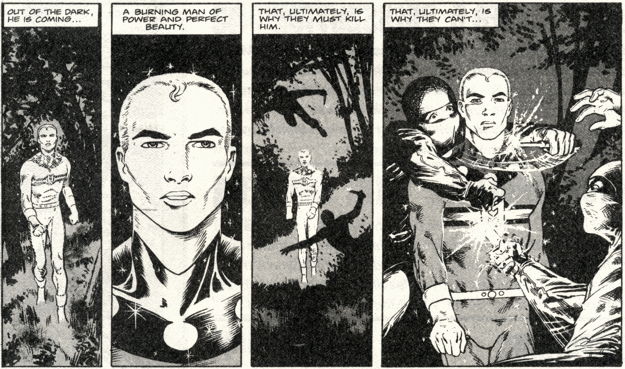
The Avatar comparison isn’t exactly analogous, of course. It’s not like all the previous issues of Crossed were all ages or rated Teen Plus or whatever and then suddenly here’s an issue with pages of close-ups of [REDACTED] being jammed into [REDACTED] while cascades of [REDACTED] pour out of [REDACTED]. It’s more like, I don’t know, here’s a new run of Spider-Man and then suddenly issue #10 is the all Topless Mary Jane issue. Or something. You know what I mean. But it’s funny, and certainly clichéd to point out, that the violence in the previous issues didn’t warrant all this fretting, but the non-violent birth scenes did. The contrast of that violence with this birth is the very point of the story:

And yes, it’s easy in hindsight to sort of mock the reactions (or overreactions) from distributors at the time, especially since, as far as I can recall, there wasn’t much or any (or at least any widespread) objection to Miracleman #9 from “the real world” back then. Of course, there’s still some worry, now as then, otherwise Marvel wouldn’t have started polybagging their reprints months ago to keep this specific issue from standing out as anything special, no need to look, nothing to see here, officer. But if this were a perfect world, a comic book legal defense fund wouldn’t need to exist.