Still going through those one-vote wonders from your feedback on the best ’80s indie titles. Like I said before, nothing wrong with only getting one vote in my pseudo-poll…it’s an indication of just how much good stuff there is to choose from for there to be an easy consensus.
Journey (Aardvark-Vanaheim/Fantagraphics 1983-1986)
 William Messner-Loeb’s magnum opus, this series featuring the adventures of frontiersman Wolverine McAlistaire in the 1800s had a not-long-enough run of 27 issues. There were a couple of back-ups in Cerebus that precede the series, and there was an aborted follow-up mini Journey: Wardrums that only had two of its proposed six issues released. The Fantagraphics benefit series Anything Goes (#5 in 1987) includes a Journey short, and in 2008, pal Nat published Many Happy Returns, which contains the latest, and last, new story for the property.
It’s a great series, beautifully illustrated in black and white, and Loebs’ style is perfect for the wilderness settings. There are some funny anachronistic bits — anachronistic on purpose — and a mix of actual historical figures appearing alongside with the supporting cast. …It’s been a while since I’ve read through these, to be honest, but I do recall it was a wonderful comic and I would highly recommend it.
There are a number of reprints out there, the most comprehensive being two volumes from IDW in 2008-9 which reprint the 27 issues of the original series. They’re out of print, but you might be able to find them on the aftermarket. The Cerebus back-ups are in the first volume. Fantagraphics published two reprint volumes, Tall Tales and Bad Weather, which include issues #1-8 and the back-ups.
Of particular note is #13, which crosses over with Jim Valentino’s superhero parody book normalman. Yes, you read that right. That would be the first issue of the series I’d ever picked up, and I liked it so much I hunted down the rest of the comics and have them here today, for me to someday reread because boy they were good. See, that’s how crossovers are supposed to work.
Lloyd Llewellyn (Fantagraphics 1986-1987)
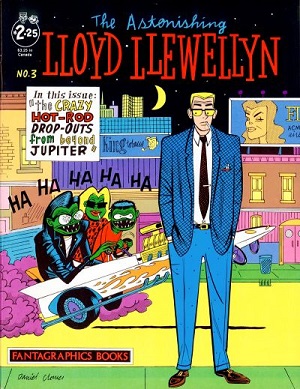 I saw the first issue of this magazine-sized publication on the shelf at the comic shop, and as a teenager who still liked superhero comics but was always on the lookout for something new and weird, I immediately picked it up, and all the follow-up issues as they came out besides. Strange, funny adventures by a nascent Dan Clowes, with more than a touch of influence from the Silver Age. You can see the beginnings of what would later blossom in Eightball, only barely constrained to the conceit of the title character’s detective-y endeavors.
Lloyd first popped up in a preview story in Love and Rockets #13 in 1985, and he would also appear as a back-up in the aforementioned Doomsday Squad (in his first color story appearance, I believe).
There would be some later appearances, including a Lloyd Llewellyn Special that was comic-sized, unlike the previous ongoing. Then in Eightball Lloyd turned up a couple of times, but was pretty much discarded in favor of other fare.
For reprints, there’s the late ’80s paperback release of #$@&!: The Official Lloyd Llewellyn Collection, which includes a number of stories from the magazine and the special (but not all), as well as a new story. The ultimate reprinting would be the Manly World of Lloyd Llewellyn, which seems to include everything. This was a limited hardcover with a 2,000 copy print run, so it may be a little harder to find, and likely more dear in cost.
Mighty Mites (Eternity 1986-1987)
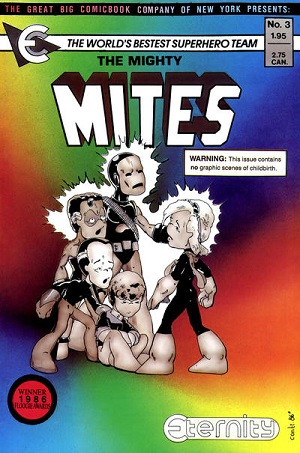 Well, here’s one of those series where I don’t have a lot to say about it, aside from what I already wrote about one specific issue, oh, about 13 years ago. That issue was chock full of parodies and mostly (presumably) unofficial cameos of other characters, both mainstream and small press, and I presume the rest of the series was likely the same. I thought it was amusing, and it was no less a personage than Rusty Shackles who noted the spot-on Chris Claremont parody in another issue. With only these two data points in hand, I’m going to say this series might have been one of the better results of the black and white boom.
There was an initial three-issue series from Eternity starting in 1986, followed by a new two-issue series in 1987. Then in 1991 another new three issue series came out from Continüm, followed by yet another three issue mini from the same publisher in 1993. What is this, Aspen Comics? As far as I can tell, this was never reprinted in trades or anything, so you’re dependent on finding the single issues in bargain bins or in old stores that have been around a while and still have copies floating about. But if you do seem ’em…heck, try one out. I liked the one I bought.
Once more, lots of typing…thanks for plowing through all that, pals. There’s no short way of doing this that I’d be happy with, so, well, here we are! Back Friday with more goodies!
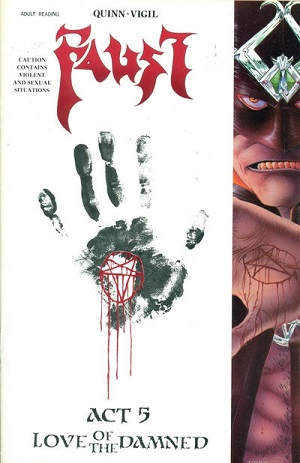 My earliest memory of Faust was figuring out quite what to do with it, since we couldn’t exactly just put it on the shelf as is between Checkmate and Daredevil. We put a single copy in a sealed bag on the shelf, with a little sign attached saying that copies were available at the counter. I think if I were to do that today, I’d probably bag each of ’em, or I’d do what we did with very adult material later at the shop and put them in the customer-accessible “naughty box,” but I discussed that in depth
  So Steve Moncuse’s Fish Police was not a series I read, but I do recall that the first issue of this series was, for a time, “hot,” perhaps part of that It had a pretty good run, as Comico picked it up following the initial Fishwrap run, and then continued under the Warp Graphics label after Comico went under.
 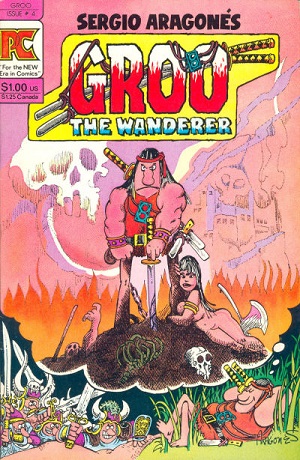 Hoo boy, my entries here are getting a bit long. And given that I’ve been a fan of Groo for decades, this could go on forever, but I’ll try to keep it down. Created by Serio Aragones, Groo first appeared in the benefit comic Destroyer Duck #1 in 1981 (
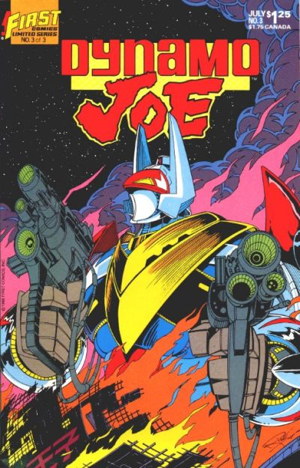 I made an oblique mention of Dynamo Joe in
 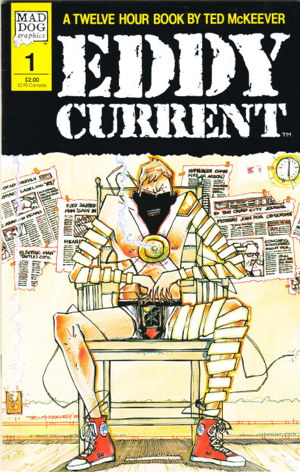 Was this the series that put Ted McKeever on the map? I feel like this was the comic that introduced his particular and peculiar vision to the world.
 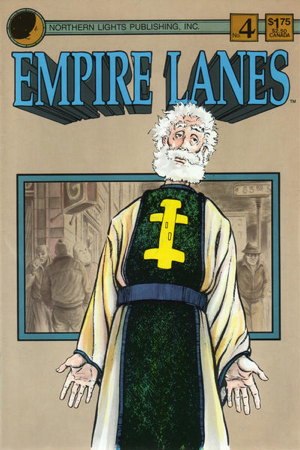 Okay, you got me, I know nothing about this comic. I mean, I remember seeing it at the shop, but I can’t tell you a darned thing about it.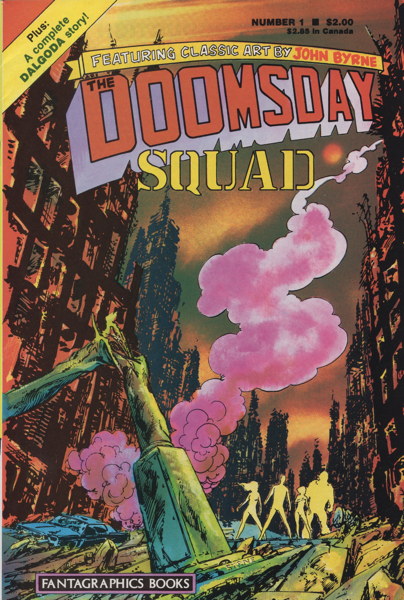
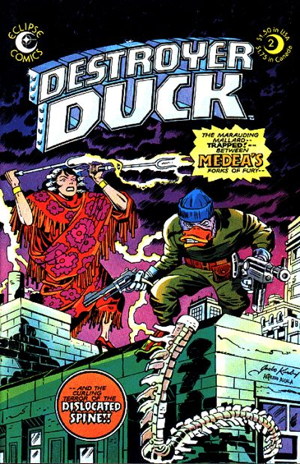 Created as a benefit book to help Steve Gerber scrape together some dough for his lawsuit against Marvel Comics, the seven issue run contained some interesting work. Not least of which was the lead, featuring the title character, written by Gerber and illustrated by Jack Kirby and Alfredo Alcala. The first issue alone contained work by Dan Spiegle, Mark Evanier, Marty Pasko, Joe Staton, Shary Flenniken and more…plus the first appearance of Groo the Wanderer by Sergio Aragones!
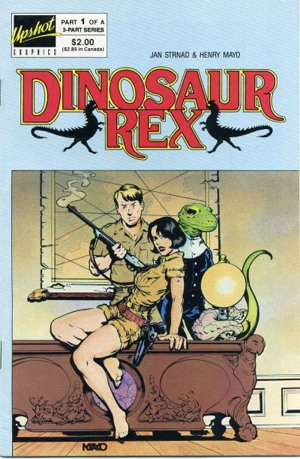 Whelp, you got me, here’s a comic I know very little about. I mean, I know it exists, we carried it at my previous place of employment, even sold a few out of the back issue bins. But I never cracked open a cover on any of the three issues released.
 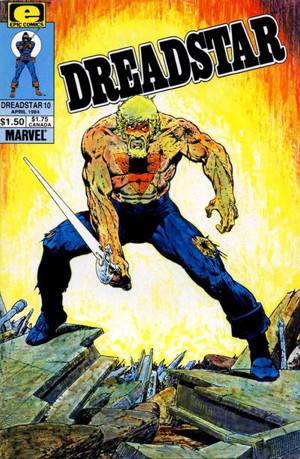 Well, here we go, a comic that, as opposed to Dinosaur Rex, I know almost too much about. In fact, when I intially started this topic, it was this series that was going to get my vote for favorite ’80s indie. It did not, however (we haven’t yet got to the title that did) but boy oh boy was it a close one.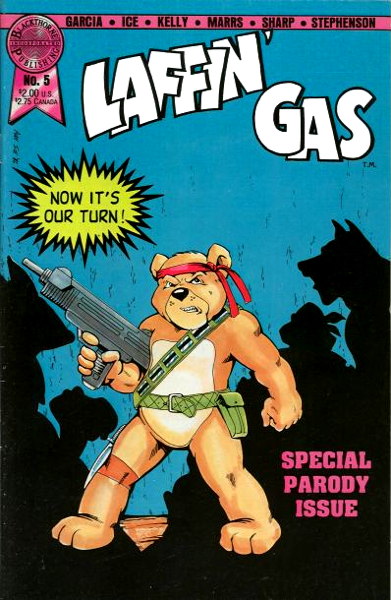
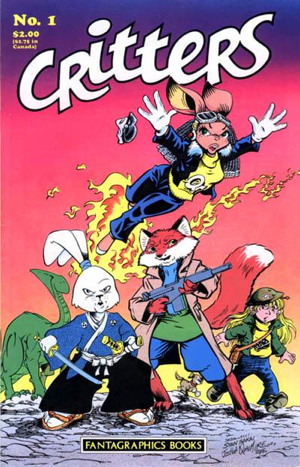 Well, here’s another comic which had an issue I could have bought from the old shop for relatively dirt cheap, but just never got around to it. It’s that first issue, pictured right here, which I wanted for the
 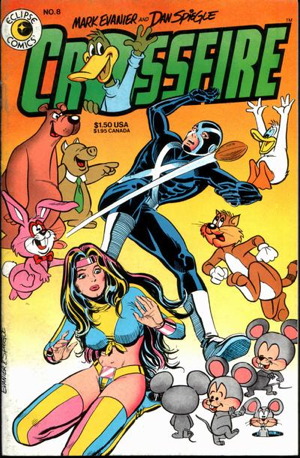 I like Mark Evanier’s writing. I like Dan Spiegle’s art. So why didn’t I read this series? Because I’m a dummy, I guess.
 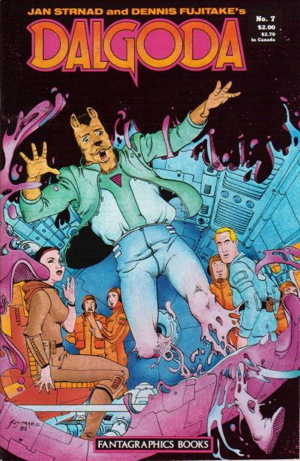 Okay, this series I read every issue (and the follow-up
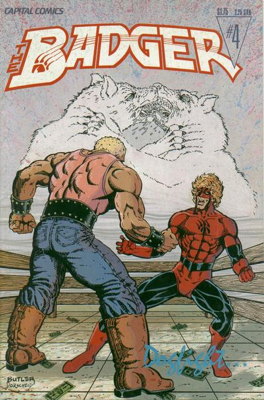 …And there were several one-shots and minis after that initial run. The Badger has come up on the site recently, but let me quote what I said about the character
 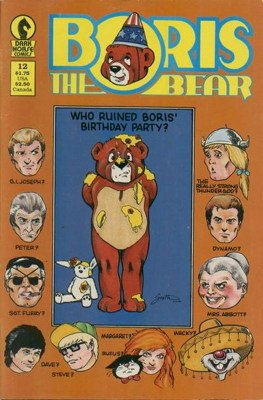 Another series I adored. Began by Mike Richardson, Randy Stradley and James Dean Smith, later taken over mostly by Smith), the initial issue had Boris going after (i.e. outright slaughtering) thinly-veiled parodies of Teenage Mutant Ninja Turtles knock-offs (and other funny animal comics launched in their wake). The next issue went after the giant robot genre, and so on. While parody was always a part of the series, it fairly quickly began to focus a little more on Boris’s life and friends and less on the ol’ ultraviolence.
 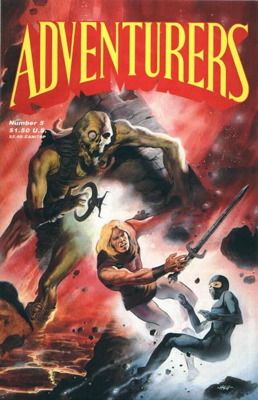 A straight-up fantasy book, from appearances (sorry, didn’t read it, so if I’m missing some nuances, please correct me!), in a time when the sword-and-sorcery thing was slowly on its way out (though Conan was hanging in there). Featuring covers, at least for a while, by Peter Hsu, who had previously worked on the slightly more naked
 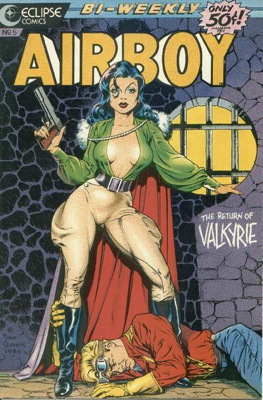 I have read one issue of Airboy, and that was the Airboy and Mr. Monster comic from 1987. I talk about it
 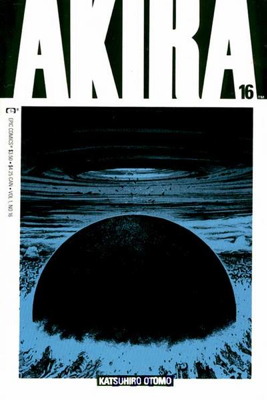 I know Akira primarily from the stunning and influential film based on Katsuhiro Otomo comics (originally serialized in Japan). I somehow was familiar enough with the comic to recognize that a character or two that popped up in the film for, like, a second, were actually fairly prominent in the comics themselves, but that’s what is to be expected when you try to compress a couple thousand pages of comics into a two hour movie.