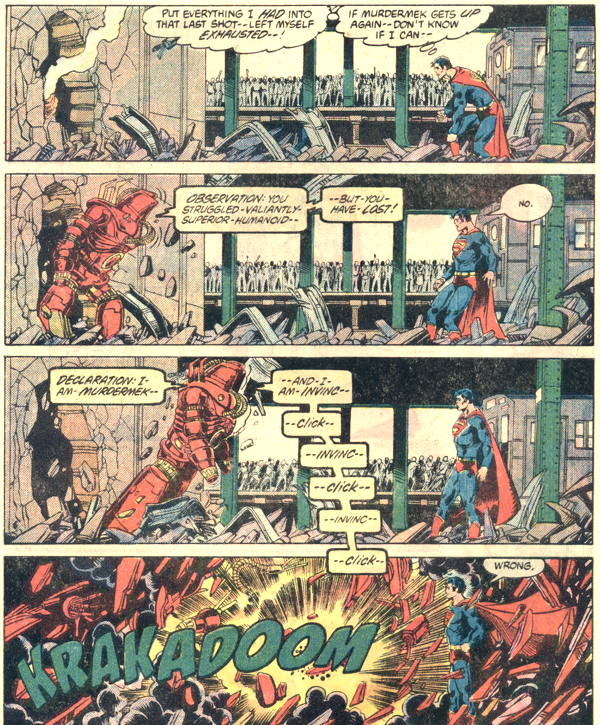
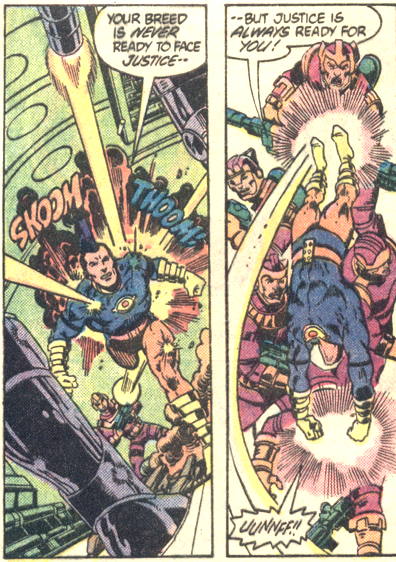
So I’ve been using the DC Universe Infinite digital comics service mostly to try to catch up on many of the comics I picked up but couldn’t read during the earlier and particularly bad months of my eyeball issues, when I wasn’t really able to read anything. I’ve also been using to dip a little farther back into DC’s publishing history, reading some Golden Age books, a lot of the earlier Silver Age Green Lantern (boy, does Hal call Tom that name a lot), and finally reading the entirety of Ostrander’s Suicide Squad run (which I missed during its initial publication). And I keep hoping they’ll add more late ’70s/early ’80s Superman comics to the catalog.
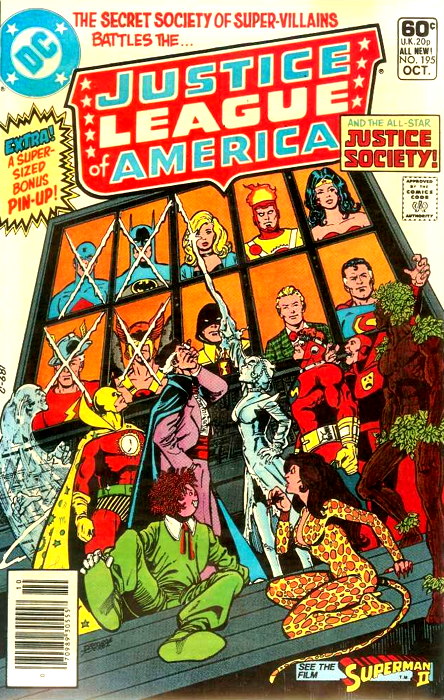
Anther purpose to which I’ve put DC Universe is revisiting some old favorites from my youth, my own copies either buried deep in the remainder of the Vast Mikester Comic Archives, or long since tattered into unreadability and discarded. One of those stories was the “Secret Origin of Red Tornado” two-parter that ran in Justice League of America #192 and #193 in 1981, when I was 12 years old.
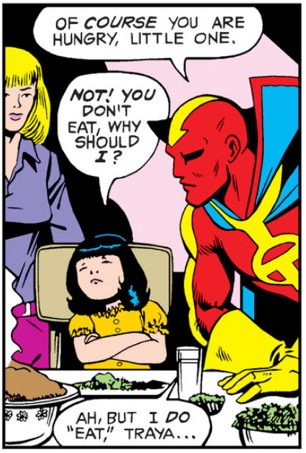
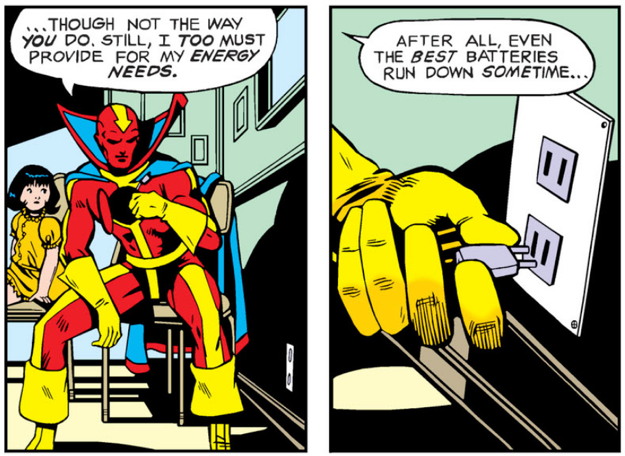
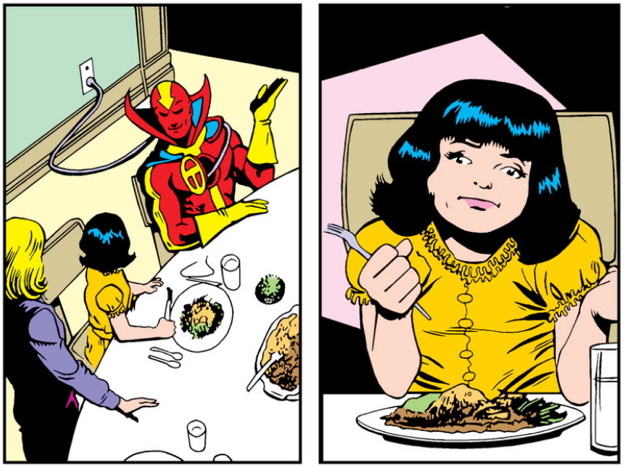
I pointed out one short sequence in my last post, where I discussed the occasional brief focus of a team book on developing characters that had no other home on that stands. Now granted pretty much the entire focus of this story was on Red Tornado, but you know what I mean. Getting a little character development in for Reddy’s supporting cast because, you know, where else is that going to happen. (At least not until his own mini-series a few years later.)
Another bit of character development for someone who didn’t have his own title (but was featured in a back-up series in another comic at the time) was this, where the Flash admonishes Firestorm for prematurely (and loudly) giving up on a teammate for dead:
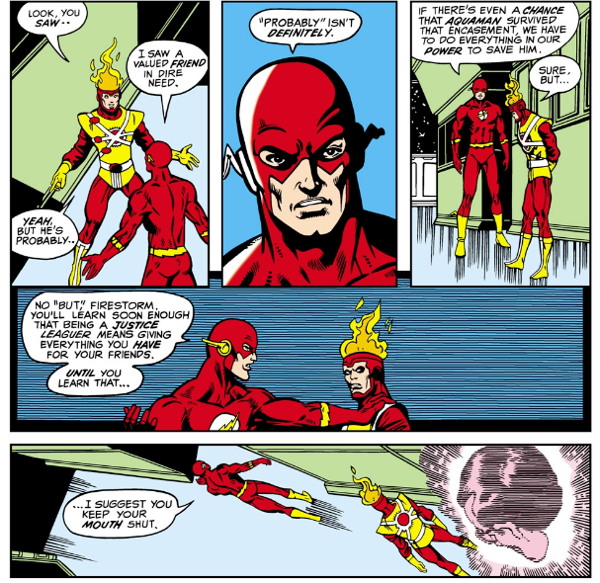
That sequence has stuck with me for a long, long time. Particularly this panel just before it, with Superman giving ol’ Flamehead the super side-eye:
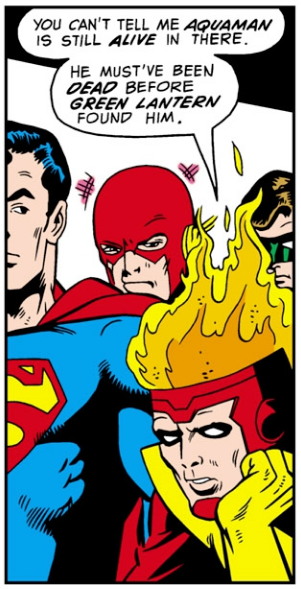
You could just feel that burn of shame on Firestorm’s behalf. And in retrospect, it isn’t necessarily some tossed-away sequence to fill pages and create conflict between members of the team…this was written by Firestorm’s creator, who was also writing those back-ups over in The Flash. As such, it feels like an important part of the character’s development and not just something you could ignore because it didn’t happen in one of his “real” (i.e. solo) stories. I don’t think I appreciated this at the time, but now that I’m older (definitely) and wiser (jury’s still out) I certainly appreciate it now.
Another thing I appreciated about this comic, then and now, is just how much backstory got crammed into this comic. Well, “crammed,” relatively speaking, since this stories did run 52 pages over two issues (at only 50 cents a pop, even) so there felt like there was plenty of space. But there was a good chunk of the narrative given over to expository info needed for the reader to realize the importance of just what’s going on around here.
I mean, we get a retelling of Red Tornado’s beginnings:
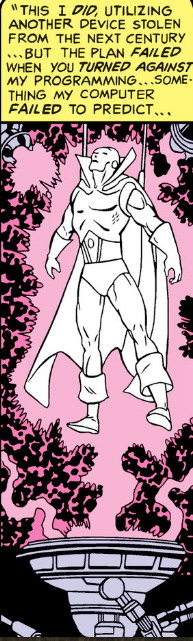
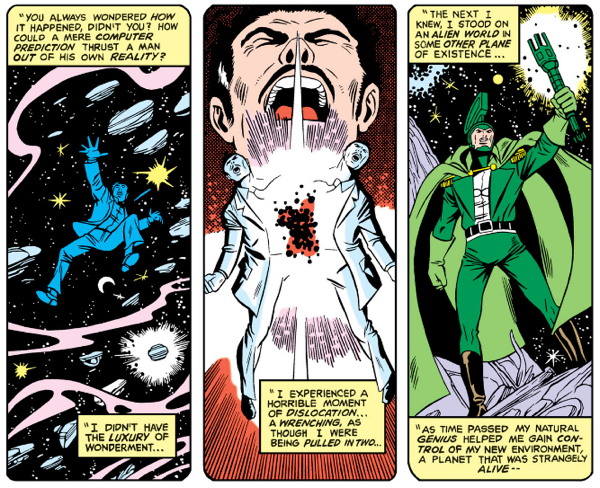
We learn about the villain T.O. Morrow, his origin, and what he’s been up to since his last appearances:
There’s some bonus Adam Strange stuff, tying into the current story:
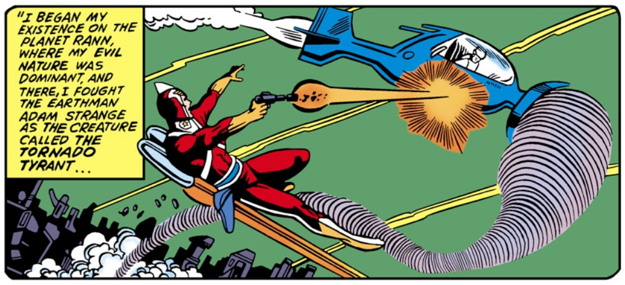
…and that’s not even all of what’s being shown and explained in this book. And it all reads very smoothly. As I said, I was 12 when this came out. I’d been reading comics for a bit, but I didn’t know much about characters like Firestorm and Red Tornado at the time, I certainly didn’t know T.O. Morrow, and while I knew Adam Strange mostly from being featured on the early Nickelodeon program Video Comics, I didn’t really know from the Tornado Tyrant.
It would seem like this is a lot to hit a kid relatively new to comics and some of these characters/concepts, but I do recall finding it absolutely fascinating. Finding out there was a history to these characters, still being referenced, still mattering, that happened long before I entered these worlds, gave the proceedings a depth that they would not have had otherwise. It’s a style of presentation that would shortly have me doing deep dives into Roy Thomas’s DC work, and its reverence for Golden Age tales.
I wasn’t put off…I was attracted by the idea that there was more to learn about all these characters and the worlds they lived in. I know, and I knew even then, that the shared universe at DC (and Marvel too) was built by Many Hands and inconsistencies abounded, but part of the fun was seeing what fit and what didn’t. It’s a feature, not a bug.
I’ve spoken about Crisis on Infinite Eaths before, and how its attempt at codifying and streamlining the DC Universe was compelling reading at the time…perhaps one of the very few times a comic book series had you genuinely concerned for the fate of those involved. It wasn’t until after patch after patch after patch was applied to that firmware upgrade that it began to sink in that the trip Wolfman and Perez took us on was, maybe, not really necessary. Reboots and relaunches began to pile on, and that long history for these characters began to evaporate.
The repeated relaunches of Legion of Super-Heroes threw away all their history in exchange for brief high bursts of first issue sales and slow declines. X-Men, a comic once read by, you know, everyone, splintered into endless spinoffs and relaunches, with no one easily able to follow the thread of stories and characters.
I know there are attempts to redress the shallowness of their fictional worlds. Nearly every crossover event at DC is about trying to make Crisis never-was, with the latest iteration being “every story matters,” however that’s going to work.
This whole post reads like “why aren’t comics like they were when I was a kid,” which comes awfully close to lumping me in with those “comics were never political!” people, and nobody wants that. Comics are always evolving and changing and trying to find their place in a world where they’ve been largely supplanted by, ironically enough, their own enormously popular TV and movie adaptations. There is still lots of good work being done with them, and I still love reading (and selling!) them.
But I do miss the feeling I had of dipping into some comic I hadn’t read before and realizing there’s a whole world here that I’m only barely experiencing in this one issue. Maybe I’ve read comics for too long to have that happen now. Or maybe I’m assuming too much, and that kids do have that same wonder, just not with the same types of comics I read. There’s someone out there whose first volume of Naruto is number 81 and being intrigued by what they’ve discovered, the same way I was 40 years ago, when I decided to pick a comic off the rack that promised secrets to be revealed about Red Tornado.
images from Justice League of America #192-193 (July & Augst 1981) by Gerry Conway, George Perez, and John Beatty