Batman, absolutely.

Hi pals. First off, I’ve shut down the comments on Friday’s post, and I’m going to consider the matter closed here for the time being. So, please don’t revive the discussion/debate in today’s comments. If something changes, I’ll put up a new post and start a new thread, but I think the topic has been covered sufficiently for the time being. Thanks to everyone for participating, and to Matthew for being a trooper.

Second, I’ll be returning to responding to your queries from the last Question Time post, as well as continuing the Final ’90s Countdown, in short order. I promise to finish both series sometime in 2026. Well, at least I’ll try with the Final ’90s Countdown.

Third, I know it’s an unpleasant world out there right now, and people are rightfully upset and afraid and angry at what’s happening. It may seem a bit silly focusing on comics like I am, but it helps to relax and center myself and escape from the world at least momentarily, at least for my mental health and yours as well. I’m not ignoring current events, but doing something quiet that I can control and enjoy really recharges the ol’ brain batteries. I hope everyone can find some similar respite.

• • •

Okay, I’m letting Wayne skip the question line a bit to answer this inquiry of his from last Wednesday:

“What is the deal with ABSOLUTE BATMAN?

[…]

“What is the main selling point? Is it violent like I’m the goddamn Batman? Is it Batman with no [other] bad guys or girls yet? I’m not checking Wikipedia.

“I want YOU to tell me why YOU buy so many copies and WHY it sells for you.You are in the middle of a desert, yet you sell more than the comic shop in downtown Chicago.”

Ever since Marvel hit it big with its fresh-start, continuity-lite (’til it wasn’t) Ultimate line, DC’s been trying to find a way to do something similar with their own titles. Essentially, “rebooting” their big characters with new hopefully-new-audience-grabbing titles and stories while still keeping the regular versions around in order to not alienate their already-existing readers. Sort of a have-your-cake-and-eat-it-too situation.

The initial two attempts were the All-Star line, started in 2005, which resulted in one genuine classic (All-Star Superman), and one still-as-yet-uncompleted run that received slightly more…mixed reviews (All-Star Batman and Robin the Boy Wonder). Both were not part of “official” DC continuity (however that usually stands), and were not connected to each other in any way. And while they both sold very well, the “All-Star” line faded out once the Superman story was done, and it became apparent that the Batman series had stalled out. Other series, like All-Star Batgirl and All-Star Wonder Woman, were planned but never released.

DC’s next attempt at an Ultimate-esque imprint as the “Earth One” line, a series of graphic novels aimed at the book market. And while a number of these were released, some with multiple volumes (like Superman: Earth One, have three volumes so far). I think, technically, this imprint may still be A Thing, even though the last graphic novel in the line, Green Lantern: Earth One volume 2, came out in 2020. (And Wonder Woman Earth One received a Compact Comics paperback edition within the last year.)

DC’s newest attempt at Ultimizing their comics, the “Absolute” imprint, certainly seems to have the most traction out, with current titles selling well, and new titles on the way. Unlike the previous imprints, “Absolute” has its origin in the regular DC Universe, via various Darkseid-related shenanigans that began in the DC All-In Special and are now coming to some kind of head in the DC K.O. event, currently running in a comic shop near you.

It’s possible, that at least for some readers, that connection means the comics “count” in their ongoing investment into the DC Comics Universe at large. And that pays off, in its way, with that current crossover I mentioned. I don’t know if that’s a significant factor in the Absolute line’s current popularity, but it’s not not one.

But when it comes specifically to the Absolute Batman series and why it’s popular, the biggest reason is that…


…it’s Batman.

And I know that sounds like a facile answer, but it’s really the big one. Batman is arguably the most popular superhero character of all time — or at least in the top three, behind Swamp Thing and Krypto — and having him headline the brand new imprint of comics is usually going to lead to big sales. Absolute Batman was first out of the gate with a comic book series, it showed everyone how this new line was going to work, and remains the flagship title of the imprint. It is the face of this publishing endeavor.

It helps that it stands alone, with (so far) only some minor crossing over with Absolute Wonder Woman, even though all the “Absolute” titles exist in the same world and the characters certainly will all meet each other. (Not counting whatever’s going to happen in DC K.O., of course.)

The quality of the art and writing is top notch, drawn by Nick Dragotta and written by Scott Snyder, with Snyder being already generally well-regarded for previous Batman work. I know when Absolute Batman was first announced, and the art was released, many fan reacted with “uh, Batman looks weird” but now that everyone’s seen it in action, those same fans are now “we love our chonky boy.”

But the two of them together have produced a work that is dense with information, both textually and visually. And given issue of Absolute Batman feels like it contains the equivalent of two other comics, and in these days of high prices and concern over cost-versus-content, it makes for an appealing buy. It feels…modern, taking these nearly 90-year-old characters and reinventing them via current sensibilities and storytelling techniques.

Now, I’m trying not to step too much on what WizarDru and William have already said in their correct and valuable responses regarding the actual contents of the books. These are new takes on old characters, from Batman/Bruce Wayne himself, all the way to his rogue’s gallery (many of who are, at least at first, friends of Bruce and privy to his secret). As William notes, emotion plays more into the proceedings, supporting the previous be-all Batman tropes of problem solving and punch-outs. And making Bruce poor, or at least not rich, puts paid to all the criticisms of “why doesn’t he stop crime with money” and “rich guy punching down, literally, on the underprivileged.” Every battle Bruce has is an uphill one.

And in concession to our online meme-full world, there are more cool elements in each story. More examples of pure radness and badassery that makes for lively discussion and scanned images on TikTok or Instagram or wherever. “Look at Absolute Batman just wiping out these white supremacists” sells more people on how cool a comic this is, making more people look for it, meaning more sales, more sell-outs, more reprints, so on and so forth. Making comics cool again, or at least these “Absolute” comics, can’t be underestimated as a factor, especially wit younger people not in the habit of buying physical media.

Another reason Absolute Batman sells well is for a reason that may not immediately come to mind unless you’re a comic shop owner observing comic sales. Or if you’re participating in this yourself…but investment. Not the kind of “investment” I mentioned previously, but “buy multiple copies, get ’em CGCed and put on eBay” kind of investment. The comic sells well, therefore there’s demand, therefore there’s opportunities. First appearances of Absolute Catwoman, Absolute Harley Quinn (that one kinda slipped past people), and of course Absolute Joker, that gets the investors excited.

Plus, the multiple printings each issue receives (#1 just had its tenth) attracts not just readers trying to catch up, but investment collectors who think the lower print runs on some of these may lead to a financial boon. And the more readers part = more demand for issues = more chances of higher prices on the secondary market.

I’m sure that’s not all the reasons, and that the sales on this book will continue like this forever. I’ve said a number of times that some days at the shop, I feel like I’m an Absolute Batman store and nothing else, as I get customer after customer, new customer after new customer, passing through my doors and asking where the new issue is, or where any issues are. And anything that’s getting new readers in is a good thing.

I would’ve read a Grim Ghost/Tarantula team-up comic.

Isaac P. wants to know

“I’m fascinated by the ‘every publisher launches a superhero universe’ era of the 90’s that brought us the Ultraverse, Comics Greatest World, & the like. Is there one of these that you, as a reader, wish had been a success? Alternatively, are there any particular memories of this era that stick out to you from the sales side of things?”

I will tell you the one big memory I have of this particular period in the comics industry history. It’s probably one I’ve mentioned before, but it’s well worth repeating.

I very strongly recall getting in the new copy of the Diamond Previews catalog, which features Dark Horse’s “Comics’ Greatest World” on the cover, ballyhooing the arrival of A New Superhero Universe™!

Courtesy the folks over at the Longbox Heroes podcast, here is a scan of that Previews cover from April 1993:


And as you may be able to see, there’s a split down the center, where you could swing open those parts of the cover and reveal the Comics’ Greatest World gang lurking within:


Which is all well and good, but 30+ years later, I can still remember the thoughts I had upon seeing this cover. I thought about all the other Superhero Universes and such that were coming into existence around this time, and I thought of Dark Horse’s entry into that already-burgeoning playing field, and I wondered “how do they expect comic readers to pay for all these New Universes?”

And that was the real problem. Here’s Valiant, here’s Ultraverse, here’s Comics’ Greatest World, here’s…I don’t know, Triumphant, here’s that other shared superhero universe Malibu was doing aside from Ultraverse, and then there’s DC and Marvel of course, and probably more I’m not thinking of at the moment.

It was just too much…new comic readers weren’t suddenly going to appear from nowhere to read all these comics, especially during a market downturn. The fans that already comprised comic book readership were either going to have to cough up more money to buy additional books, or they’d have to drop other books to make room for some of these new titles. It wasn’t a huge growth move for the industry, it was more a lateral move.

You know how there was a huge push to make shared universe movies after Marvel’s success with that strategy, only for several studios to find out that it wasn’t quite as easy as all that? (And that even Marvel isn’t finding it so easy lately?) What’s going on in the comic book industry about this time is sort of similar to that, except 1) publishers had a slightly better hit rate, and 2) there was a whole lot less money at stake.

The rise and fall of the Superhero Universe in comics was enough of a thing for the Overstreet Price Guide to release a side-guide a few years back, the Overstreet Price Guide to Lost Universes. And as you can see at the link, it doesn’t just concern itself with ’90s efforts, as it includes the ’70s Seaboard/Atlas books…though, were they in a shared universe? I can’t recall any crossovers there. Anyway, I think I actually grabbed a copy of this for myself, so I’m going to try to dig that out and give it a once-through before I continue here.

Yes indeedy, this is going to be a two-parter, at least. I kinda want to spend some time with some of these departed Universes and not rush through ’em at the end of this post, so I hope you forgive the cliffhanger.

Just a little peek at what was goin’ on 26 years ago.


So I had a few Diamond Comics retailer informational thingies sitting around, back in the days when Diamond would produce a thick color monthly mag and a weekly black and white multipage newsletter.

One of the things you’d see in the newsletter, Diamond Dateline, are listings of the top reordered items. And this particular issue I’m looking at, from December 1st, 1999, includes the chart of the top reordered comic books that’s at the top of this post.

(And yes, there is a “top reorders by retail” that orders entries by the cumulative total cost of each reordered item.)

I don’t know that there are a lot of surprises on that list. Tomb Raider is kind of one, given the recent years spent as mostly a nostalgia brand, getting dragged back into the spotlight with new video games and media adaptations every once in a while. But one forgets that in 1999, the franchise was still a popular one, and thus retailers scrambling for more copies at the time begins to make sense.

The X-Men titles’ presence on the reorder list also comes as bit of a surprise, as I don’t recall sales fluctuating a whole lot on these then. The X-titles sell as the X-titles sell, with rarely much of a change. But looking at X-Men #96 we see it’s apparently part of some storyline involving the villain Apocalypse, and also Alan Davis drew it, so that may have goosed orders a bit. The Uncanny here is part of the storyline, so demand for that probably caught retailers off-guard a little as well. (Also applies to Cable #75 and X-Men Unlimited #25, the latter of which didn’t even note on the cover that it was a part of the crossover.)

That Batman: War on Crime book is one of those oversized Alex Ross productions. This is not a shock that demand for the book would have outstripped retailers’ initial orders, given the unusual format and how most retailers probably order conservatively on paperbacks. That said, the Superman one was just the year before, so maybe folks should’ve been able to estimate the number of needed books a little more clearly, but ah well….

I’d totally forgotten about M Rex, so it’s weird to see it here, at one point a Top Ten reordered comic book in the country. Probably stories putting all the Image Comics money into Tomb Raider #1 and forgetting about the other titles for the month.

Danger Girl is no surprise…mostly forgotten now, except by the occasional hopeful holdout, but it was red hot at the time and the cliché of “printing money” seemed to apply very thoroughly to this specific comic. I wonder if those reorders were even filled at the time…I imagine leftover stock didn’t last very long.

Steampunk: Catechism was a one-shot lead-in to the ongoing (at least for a bit) Steampunk series, a comic that I mostly recall for customers asking me “yeah, what’s all this about?” The art was nice, though, and based on the reorders on this initial installment there was a large amount of anticipation for what was to come.

Or I could just give every one asking a Swamp Thing.

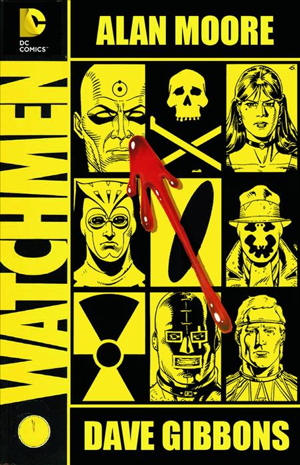
I noticed a lot of discussion on the Blueskies, at least amongst several groups of folks that I follow, regarding the appropriateness of Alan Moore and Dave Gibbons’ Watchmen graphic novel as an introductory comic for new readers.

Reactions, as you might imagine, are mixed, heavier on the “no you probably shouldn’t” versus “sure, why not.” My own particular contribution to the discussion was that I personally don’t need to handsell the Watchmen to anyone. It feels like anyone already coming into a comic shop looking for comics, Watchmen is already a known quantity, and it sells just find without my intervention.

It had been a while since it was that way…Watchmen sales took a hit around the time its movie was released, at least in my neck of the woods. But as time has passed, sales have slowly built back up again to having to reorder the books on a near-weekly basis. There were blips (or anti-blips, slowing sales down a bit) here and there, with the presence of the HBO series, or the prequel comics, or Doomsday Clock, but Watchmen is back to its bestseller status.

All that said, is Watchmen the right book to give to someone new to comics?

Well, it depends.

If someone comes in and asks “so, what are the classic graphic novels that everyone should read?” then Watchmen is definitely on the list, along with Dark Knight Returns and some others. I have received this question in the past, and these are exactly the kind of comics these people are looking for.

If someone comes in and asks “I’m looking for a comic to start with,” then it’s anyone’s guess. Asking “what are you in the mood for” and “what characters do you like” or “what kind of things do you like to read” and so on and so forth are necessary in pointing folks in the right direction. And not always to the graphic novels (unless they specify they want a longer read), but maybe finding a single issue as well.

It’s single issues that I most have to track down for folks who come in buying comics for other people, usually adults (parents or grandparents and such) looking for something for kids, either present or not. It’s not easy, sometimes, as for example I offered recent issues of Amazing Spider-Man and Superman to a couple of adults for a child, and their response was “these seem awfully dark.”

Many times when I have adults asking on behalf of children, they request “nothing too violent or bloody” which can also be a little tricky because I won’t know what their particular limits are for those sorts of things. Ever since I had a mom complain that the ladies in a reprint of a Steve Ditko Spider-Man comic were “too sexy,” I never try to assume what “too much” of something is going to be. Thus, it takes a moment or two of letting them go through the comics to make sure they match their needs.

We’re a bit off the main topic here, which is “Watchman: Good or Bad” for new readers, and honestly I’m neutral on it. Like I said, it’ll sell on its own anyway, especially now that it’s available in a $9.99 Compact Comics format. In terms of difficulty for new readers, I don’t think it’s too challenging for, y’know, a bright teen or an invested adult to tackle it.

As an alternative for someone looking for a good superhero comic to start with, the All-Star Superman book by Grant Morrison and Frank Quitely is a popular favorite, as is Darwyn Cooke’s New Frontier. Both have their own challenges for new readers, but honestly any comic book-styled graphic novel may not exactly be smooth sailing for someone unfamiliar with the format.

Of course, this is just in regards to superhero comics, but when people come in for their first comics, it’s superhero stuff they’re looking for. But sometimes the little, little kids are happy with Disney or My Little Pony…I probably wouldn’t hand a 5-year-old Watchmen.

The answers to those questions may be found elsewhere on this site.

So some local high schoolers contacted me about doing a little filming in my store for their film class, which brought up the question “why didn’t my high school have a film class?” I mean, probably because you can film things on your phone now, versus having to carve a movie into rock frame by frame back when I a teen.

Anyway, they were good kids, held a brief interview with me (asking questions like “why did you decide to sell comics?” and “what’s changed in comics since you started in this business?”), and they even bought a small handful of funnybooks. It was bit of a fun diversion on a day where I needed a little distraction.

• • •

One final reminder:


Free Comic Book Day has come ’round again, and hie yourself hither to your local comicks shoppe and get yourself some fistfuls of free books. Retailers have to pay for the freebies, so if they’re having an associated sale (and they really should be), buy a thing or two if you can to help them out!

Most of all, have fun and spend the day enjoying comics!

• • •

So long, Butch.

I mean, the worst that could happen is that the entire comic industry dies.

EDIT: Things change fast in Comicstown, as here’s breaking news about Dimaond’s status…and it’s not good.

So I’m 1) feeling a little under the weather, and 2) have a medical thing in the morning, so I’ll try to keep it (relatively) short today. I’ll get back to the Final ’90s Countdown in short order, honest.

Anyway, I’d somehow missed that Alliance, the company that had put in the winning bid to acquire Diamond Comics Distributors, and then went to court when Diamond tried to sell to the second-highest bidder, has now backed out of the deal. Not sure of the reason, though I’ve seen speculation here and there, none of which is my guess that they saw the giant mound of Funko Pops on which Diamond is sitting.

Now, like the article says, the company may go to the next bidders, if they’re still interested, but who knows at this point. I do get asked a lot if Diamond’s travails are causing any issues with my shop, and honestly, as time wears on and I get less and less dependent on Diamond for product as companies depart for greener pastures, the answer is…no, not especially.

Not to say that Diamond doesn’t have stuff, still. I mean, Dynamite Entertainment is still hanging on to them for dear life, plus plenty of other indie publishers. And they carry merch like action figures and tchotchkes not available at the other distributors. Plus, while I can get most of my comic supplies from Lunar, at lower shipping costs, my customers (and me as well) prefer the thicker-walled comic boxes still available through Diamond.

But I’ve noticed having a delayed shipment from Diamond is no longer the huge pain in the rear it used to be, when, oh, nearly all my comics came from them. The news of a delayed shipment now generally elicits a small shrug. I’d rather have it all out for New Comics Day, but it hardly impacts my income and the books’ sales if they arrive late. Even Dynamite and the indie books will still sell fine if my Wednesday crowd doesn’t seem ’em ’til the following week.

So, in short, I am curious as to what happens with Diamond, but I don’t feel like my livelihood depends on their survival…especially with the attrition of publishers they’re seeing. I’d miss some of their product lines and services, which I’m sure would show up elsewhere. And that is all jumping the gun anyway, since they’re not dead yet. I do wonder what changes will be in store once another company takes control, but at least I can watch and not worry overmuch about how those changes could impact me…I mean, so long as they keep the indie comics they have left comin’, which is the big potential loss, of course.

My bid for Diamond (20 bucks and an original 45 of Chris de Burgh’s “Dont Pay the Ferryman”) was rejected.

One final reminder about leaving your pick for your favorite 1990s indie comic in the comments to this post here. Just read the rules first! I’m shutting down the comments after this weekend (I think I can do that) and I’ll start tallying the votes.

I haven’t really been monitoring the comments there, except for when I was asked to rule on Alan Moore and Eddie Campbell’s From Hell (nope, sorry, it began serialization in 1989) so I don’t know how far off the rails everything got there. I trust everyone behaved themselves.

In other news…sorry my entries have been a little on the brief side this week. A combination of some long days at work and a sudden new eyeball issue have been bit of a distraction. (No biggie on the eye thing…the main problem is under control, but apparently I’m now allergic to one of the eyedrops, in case anyone here has seen be in person and wondered about my irritated eye with the swollen lids.) I should be back up to speed soon. Especially if I’m about to discuss a couple dozen different 1990s comic book series.

• • •

In other news:

  • Yup, Batman #158, with the first part of the new “Hush” storyline, has been unleashed. And as I noted in my previous post on the subject, there are plenty of people buying more than one cover of the thing, which is likely what DC was hoping for. Anyway, sold about what I was expecting, with enough left over for the stragglers who see, like, part four on the shelf and are all “THERE’S A NEW HUSH STORY!?”
  • So Diamond Comics Distribution has a buyer, a company called Alliance Entertainment. Actually, when I first heard the news, it was “ALLIANCE BUYS DIAMOND,” and I was all “wait, Diamond’s subsidiary game company Alliance bought it?” until I discovered it was a totally different Alliance. I’m not sure where it’s going after this, given Diamond is in its diminished form, and I can’t be the only store that’s shifted everything it could away from Diamond to other distributors. I just placed my monthly order with them and it’s the smallest its ever been. My weekly bill from Lunar Distribution is larger than that month’s Diamond order.

    It’s definitely a “wait and see” thing, though I’m sure Diamond-exclusive publishers Dynamite Entertainment and DSTLRY are breathing tentative sighs of relief.

  • Marvel’s slow rollout of who’s gonna be in their upcoming Avengers: Doomsday film was quite the stunt, as it seemed to be all over social media for hours the other day. Looks like this film will be just total mayhem but, and I hate to beat this drum again, there’s a lot riding on this film being a box office smash. And it already sounds like the movie is going to cost a lot of money, so a billion dollar take is almost certainly a necessity. We’ll find out soon enough.

There you go, All The News You Already Knew About. Thanks for reading, pals, and with any luck I’ll be back to normal blogging next week.

Still salty about the Jason Todd thing.

Okay, I ultimately decided not to continue the search for the most ’90s comic for the moment, as picking up from where I left off there was…well, weird. But I do have more 1990s comics content in the works, so check back next week for that.

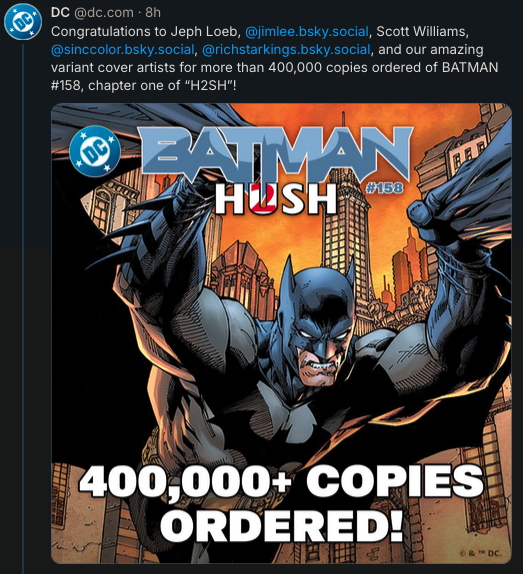
But, speaking of the 1990s…here’s DC Comics with a big ol’ announcement regarding the forthcoming variant-laden first issue of Jeph Loeb and Jim Lee’s “Hush 2” storyline:


So here’s what Batman #158 entails.

Cover A – the main cover.

Covers B, C, D, E, F, G – cardstock cover artist variants

Cover H – the blank sketch cover

Cover I – foil cover by Jim Lee and Scott Williams

Cover J – a connecting fold-out cover by Jim Lee

Cover K – wraparound foil cover by Sean Gordon Murphy

Cover L – the 1 in 25 ratio variant

Cover M – the 1 in 50 ratio variant

Cover N – the 1 in 100 ratio variant

Cover O – the 1 in 250 Jim Lee pencils “virgin” cover

Cover P – the 1 in 608 (get it?) black and white variant signed by Jim Lee

Cover Q – the 1 in 608 black and white variant signed by Jeph Loeb

Cover R – the 1 in 1000 signed by Lee and Loeb

Then there are the Giant Size (probably Treasury Size) editions, with a regular cover edition and a foil one, as well as the Glow-in-the-Dark foil “Launch Party” variant. And this doesn’t count stuff like a special bundle of ashcans for sale/giveaway, or whatever retailer-specific variants there may be for this comic.

Obviously that 400,000+ copies are divided up amongst all these variants, and I wonder what the print run per comic would be…probably 125,000 or so for the main cover, and the balance spread out over the rest of the covers.

Now, it seems unlikely that Batman is suddenly going to quintuple in sales for this comic, and dumping 400,000+ into the current state of the direct market does seem like quite a lot. Retailer orders does not always equal sales (no matter how much the Rob may brag about the order numbers on X-Force #1 back in the 1990s, a solid chunk of those went directly into stores’ back rooms), but I suspect this particuilar Batman comic will do reasonably well. It really depends on how many different covers any one customer may end up buying.

In its favor, there have been a couple of decades’ worth of sales of the original “Hush” story in trade paperback building up an audience for it. (Never read it myself, beyond flipping through an issue or two, but people seem to really like it.) Can DC get people who read this as a trade initially to come back to pick up a comic book series for six consecutive months, or will that specific audience just wait for the eventual hardcover/paperback release?

Will customers already buying single issues in the direct market suddenly flock to “Hush 2” pushing the already (relatively-speaking for today’s market) high numbers on Batman even higher? Maybe for a while, and orders may be up there for the first couple of issues, but I imagine we’ll see a huge correction in orders by part 3.

Another point in its favor is the artist, Jim Lee. He’s been a popular artist for decades, but the extra push of “THE PRESIDENT AND PUBLISHER OF DC COMICS IS DOING A RARE ART JOB” will probably grab eyes. “Hush” has always been a Jim Lee art showcase, the story being relatively superfluous beyond “Batman fights all his villains,” and the prospect of new Lee art is a big sales pitch. Whether it’s 400,000+ copies big, we’ll find out soon enough.

Also I liked putting the original Elfquest #16 at the fronts of magazine boxes.

First off, let me extend my condolences to my blogging pal Johanna on the loss of her husband, K.C. Carlson. K.C. had been an editor on Legion of Super-Heroes, and on the comics-retailer specific publication, the appropriately-named Comics Retailer. I’m very sorry, Johanna, and I hope you’re doing as well as you’re able.

• • •

Okay, I apologize for the delay in this entry, but we’ll wrap up our look at the Bud Plant October 1985 catalog and the ordering tips for comic shops detailed within. Here’s part one and part two…and speaking of part two, I have a few notes from my former boss Ralph in regards to a couple of entries from last time.

Surprisingly, he tells me that the P. Craig Russell opera comics sold surprisingly well for him. He says it was likely the excellent art on these books that boosted sales, but I’m holding out for a secret conclave of opera singers living in our area. Whatever the reason, they did do well, and, y’know, good! These are good comics.

In regards to Jon Sable Freelance and American Flagg!, there wasn’t an immediate drop-off on sales, according to my former boss, as the series changed hands or, um, declined in perceived quality. He said there was just a general and natural decline as the series ran on, with no new readers coming on board as things progressed.

And as to comics’ eternal question, “which sold better, Death Rattle or Tales of Terror/Twisted Tales, the answer is…well, kind of a push, really. Neither one really stood out versus the other.

Now, onto the last batch of books from this tip sheet (this time, with some info gathered from Ralph in advance):


Yes, absolutely Frank Miller coming back on Daredevil boosted sales. His initial run was highly regarded, and this return has since become a classic in its own right. Even with the new Disney+ series taking its name from this storyline.


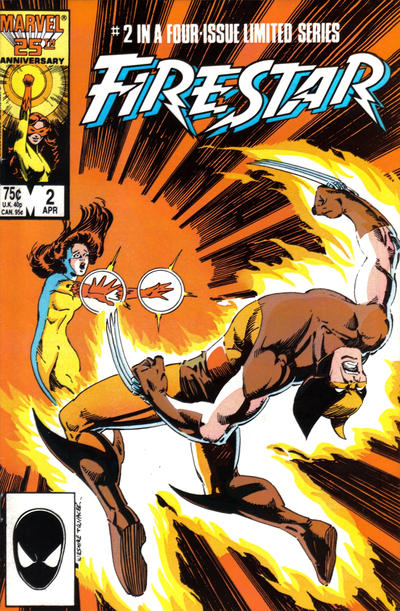
Contrary to this column, Ralph informs me that Firestar, at least for him, didn’t sell worth beans. BEANS, I say. I do recall rarely having to restock this book in the back issue bins. I don’t even her eventual inclusion in the Avengers title did anything to perk up sales. We’re just not a Firestar town, I guess. Maybe if she sang opera….


I mean, yeah, sure, it’s a special issue of Amazing Spider-Man, it’s gonna sell. Still sells even now on the occasion I get one in a collection here at the shop. To this day, I couldn’t tell you who Hobgoblin is or what his deal was — yes, I know that’s only a Wiki link away if I really wanted to know — but that orange weirdo still has sales power even now.


While Secret Wars II wasn’t quite as popular as the original, it still sold awfully well, and interest in the tie-ins wa strong. And this may be among the best of them, an ad-free Avengers story drawn by John Buscema? Sure, let me at it! And it’s still a good seller today…had one in the shop briefly last week before being snapped up.


Ralph tells me that G.I. Joe was largely dead at his shop. Probably one of those books that sold better on newsstands, as folks going into comic shops turned their noses up at those “cartoon comics.”


By “a few issues yet,” they mean “’til #319, which is Byrne’s last issue after quitting the book over a story they didn’t want to run until they ran it in Marvel Fanfare.” Anyway, sales were strong on Byrne’s run, and when Al Milgrom took over the story/art chores with #320, my former boss sez sales didn’t drop as much as one might have thought. Byrne’s arrival on the book sorta rejuvenated interest in the character. I know the story is that Peter David got the gig writing the book shortly after this, as “nobody else wanted it,” but at least in our neck of the woods Hulk was doing okay.


Yeah, I got lazy and just lumped all of these together. For Punisher, this is the Grant/Zeck/Beatty mini-series, which, with issue #5, Zeck is replaced on pencils by Mike Vosburg, and while Grant is still credited with the plot, the script is by Jo Duffy. I did forget to ask Ralph if that did anything to sales, but my feeling is that if you were in for four issues, you were probably going to see it out with the fifth.

Marvel Saga The Official History of the Marvel Universe I did ask about…if you’re not familiar, it’s a retelling of the history of the Marvel Universe (hence the overlong name), with panels taken from various sources, connected together with text, and I’m sure someone wanted this, but not enough to make it sell a whole lot at the old shop. I think I personally bought the first two issues, and I was all “yeah, I don’t have the patience for this.” Kind of a dud as a back issue seller, with the possible exception of the issue focused on Mary Jane Watson since it’s a tie-in to the whole wedding thing. And the Galactus issue had some brief demand at one point.

X-Factor was a big seller…at first. There was a lot of excitement for the original cast of X-Men returning as a team, but enthusiasm dropped a bit once they actually saw the book. I mean, sure, eventually, Louise and Walt Simonson took over the series and things began to look up about a year later, so there’s that.


Again, my old shop was apparently the weird one out here, as, like G.I. Joe, this was one o’them “cartoon comics” for kids and not a serious adult book like Green Lantern. Anyway, probably a big newsstand seller. Boy, I wish I had lots of copies of this comic now, though.


By “Santa Claus #1″ I presume what’s meant is Marvel Comics Special #39, adapting the 1985 Santa Claus movie starring Dudley Moore and John Lithgow. Yeah, I probably wouldn’t have ordered too high on this either. I think the few times I’ve had them in back issue bins since, they were…not big sellers.

As to Young Astronauts…yeah, like this feller here, I didn’t know what this was. A quick Googling shows this was intended to be part of Marvel’s children’s imprint Star Comics, a tie-in to a new Saturday morning cartoon. However, the Challenger space shuttle disaster kinda put everyone off the “kids exploring space!” nature of this property, and the whole thing, cartoon and comic book, was canned. That link will give you all the info you need on this, including the few pics that exist. The “good creative team” included Denny O’Neill as writer, and June Bringman on pencils, and yeah, that was good. Too bad it’s all languishing in some file drawer somewhere.


Man, all these cartoon tie-ins are being pused as “HOT!” while my former boss’s recollection is that they didn’t do well at all, due to the “kid’s book” stigma. And, I mean, it’s not like kids weren’t going to his shop…I was a kid then, and I saw other younger kids there. Just these TV comics weren’t moving, I guess. Ralph noted that he’d see a lot of newsstand editions of these books show up in collections, where, again, these sorts of books were probably selling.


Just wanted to point this out because I liked this comic. An alien stuck in Victorian England, solving mysteries to occupy his mind and not be bored into literal suicide? Sure, I’m in! Written by David Michelinie, illustrated by Bret Blevins and John Ridgway. Apparently it was collected into a trade just a few years ago, and I recommend you read this however you can find it!


One of the classic indies of all time, and it’s a shame that aside from a recent cover for another comic, no new Carrot has graced us in quite a while. I pestered my old boss about sales on Flaming Carrot Comics (use the full name, please), and he said it wasn’t a huge seller compared to, like, everything else, but as black and white indies go, it did relatively well.

Just seeing all these titles together gave me a real nostalgic flashback to this period of comics. Not that I was a big reader of any of them (I think at most I may have flipped through an Elfquest, but I have read a few Blood of Draculas). For a while there, we were doing pretty good custom in the Elfquest line of comics, both in new and back issues, including this annual. I see Elfquest is doing a new push on collections, so maybe we can get interest up in this material again. Oh, also, Elfquest‘s creators Richard and Wendy Pini dropped by the old shop a couple of times, and they were very nice.
I loved both Paradax and Strange Days…don’t think they sold very well for the shop, but boy I thought they were neat.


These were oversized (about magazine-size) reprints, featuring, of course, the always-classic EC Comics stories of the 1950s. I remember having one or two kicking around the shop when I started working there, but no real backstock on them. I’m presuming they did sell well, at least for the old job. The noted sales trouble may come from their magazine size, as by and large anything bigger than a standard comic book could be a harder sell, or at least not sell in quantities equal to their smaller, floppier brethren.

• • •

Phew, that was a lot. And I suspect I have comments that’ll need responding, so there’s maybe one more post in this series. Thanks for reading, everything, and stay safe out there!

Mind the comic tips, Marlon.

Okay, back to the Bud Plant October 1985 distributor catalog and its ordering tips for retailers! Part one is here, part two is being read by you right now!

First off, I spoke to my former boss Ralph about a couple of the titles discussed last time. For example, I was curious if Hex was as hot for him as it apparently was for the person writing this tips sheet. He says that the first issue sold very well for him, but it petered out pretty quickly. “It was on its way out with issue #2,” to quote him.

I also asked how 3-D comics did for him, and it was sort of how I figured…popular for a while, ’til the market got flooded with them and the novelty wore off. I remember getting asked for the 3-D back issues on a relatively regular basis over the next couple of decades I was at that shop, so there was still some demand, anyway.

Booster Gold was also discussed, and again apparently it sold very well at first, and gradually slowed down as the series wore on. As DavidG mentioned, once the mystery of his origin was revealed, folks were done apparently.

And just on a whim, I asked (even though I worked at the store at the time) if the Fish Police TV show did anything for sales of the comic. The unsurprising answer is “no.”

Now let’s get into this new batch of books:


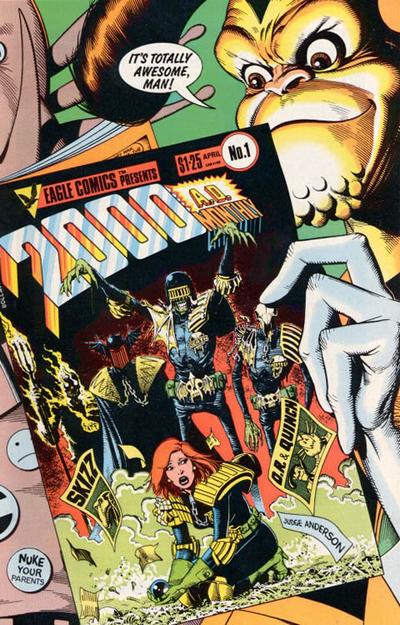
We were still in the early years of the “Put Alan Moore in Anything to Make It Sell” era, and I definitely picked this up. Of course, I’d later learn “D.R. and Quinch” was, um, inspired by O.C. and Stiggs from National Lampoon (later made into a film by Robert Altman), but I think it became enough of its own thing to still be enjoyable.

As I recall, the reprint quality was…not great. I think the images were resized from their original British publication to fit the American comic book format, but I might be thinking of other Eagle/Quality reprints. Regardless, if you want to read D.R. and Quinch, find yourself one of the trade paperback reprints.

Also, yes, while Dredd was popular, Brian Bolland-drawn Dredd was even more so.


I’ve said before, probably here, maybe on social media, that these horror and sci-fi anthologies from PC and Eclipse were, along with the Warren mags, the real successors to E.C. Comics. I really enjoyed these series, which I inexplicably only sporadically purchases, and would enjoy a nice reprinting of the whole shebang.


Oh, man, Mr. Monster. This initial 10 issue run was great, but then proceeded to never really quite find the same traction afterwards. That serious “origin” series from Dark Horse was…okay, but I never really reread it like I did those original run. And every following attempted revival of the “funny” Mr. Monster was fine, but just not the same. (I did really like the Airboy/Mr. Monster one-shot, though.)


(Actually, it’s Night Music #4 and #5.) I mean, kudos to sticking to the bit, but I was always a little surprised they kept doing these opera books as long as they did. Like this fella says, beautiful art, and primary selling point of the books…but I still sold a few of these out of back issues every once in a while. And yes, I have had opera aficianados come and ask for these. So…there, I answered my own question. That’s why these comics lasted so long…for opera fans who like comics! THEY DO EXIST


Ah, yes, the speculation days of yore. Miracleman was sold in very large numbers early on, frustration folks who wanted to invest and flip ’em, though #1 had some printing issues as I recall leaving near mint copies harder to find. Anyway, prices don’t really start going up on these until #9 and up, with #15, the special All Violence issue, being the peak. I haven’t checked lately to see if the later Neil Gaiman issues, once hot commodities, have seen a decline in demand due to the writer’s current troubles.


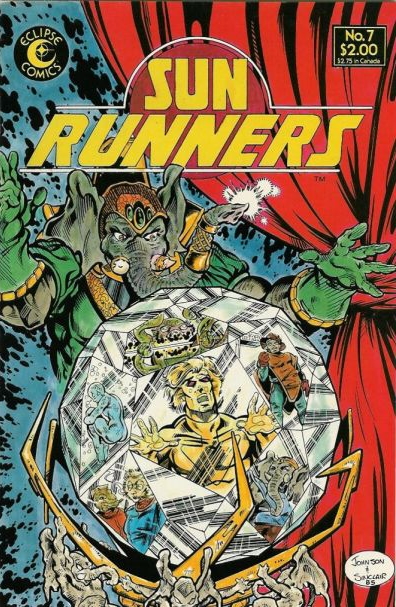
Sun Runners was one of those series I was intrigued by due to a write-up in an issue of Amazing Heroes but, for some reason, I never got around to getting the actual comic, like a dummy. The issue #7 is the final issue of the run, probably thanks to me not buying it, but the title would return for a couple of short runs just a coupld of years later. I liked the look of the elephant guy.


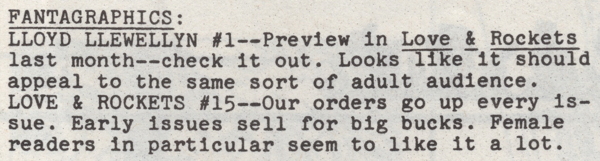
Lloyd Llewellyn was, of course, the first ongoing title by Dan Clowes, he of The Occasional Fancy and Really Good Graphic Novel of late. These old wacky stories, more often than not inspired by Silver Age superhero comic craziness, are great. I actually bought this series at the time and it remains an old favorite.

And Love and Rockets is, of course, what it is. Nice that it’s recognized for attracting lady readers early on.


I don’t think I realized #1 and #2 were that much harder to find, I bought this graphic novel, since I only had the color issues at the time. I’d later buy a copy of #3 for the flexidisc back then, and I got #1 and #2 not long ago, just to fill that ol’ hole in the collection.


Here’s another thing I need to ask my boss…how American Flagg! did post issue #12. That first year is about as classic as classic comics get, but, no offense to other creatives who came onto the book, the less Howard Chaykin there was, the less the AF! comic was. I read the whole series, and it was mostly fine, but the series was not at its peak here.


RIPPED FROM TODAY’S HEADLINES! pretty much. Even though the original creator was still writing and drawing, I think interest was slipping from readers and him for the book. Again, gonna ask the former boss about this but I’m guessing “it was in its decline” is the answer I’ll get.


Boy, Whisper seems to be the forgotten title of the Captial Comics trifecta, with Nexus and (to a lesser extent) Badger having more of a life after that publisher’s end. Ah well, just one of those things, but don’t get me wrong, it had its run, just surprised there aren’t continuing attempts at revivals. Plus, I don’t recall any back issue sales on First Adventures, much less #1.


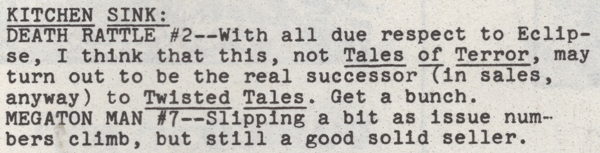
Death Rattle is a great name for a book, and the comic (in its various incarnations) was a pretty good horror anthology. I am…not sure how it sold, so it’s another question to put to the former boss. I know I had more back issues requests for Tales of Terror/Twisted Tales than I did for Death Rattle.

I don’t have much to say about Megaton Man except it was still pretty great even if at this point it wasn’t quite as good as the earlier issues. Once it moves to shorter-run minis and one-shots, the energy comes right back.


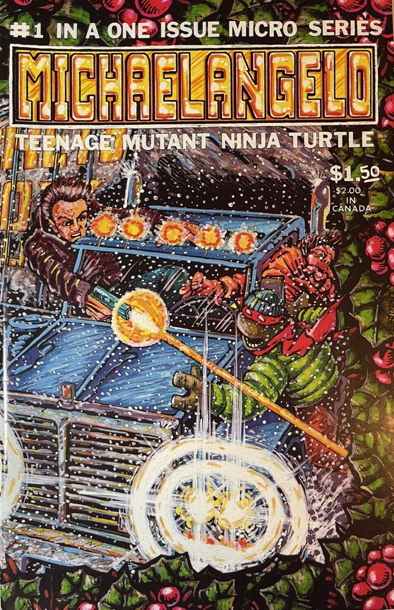
Now the Raphael one-shot was still in that same weird magazine-esque format as the first four issues of the regular Turtles series, which I think helped it sell really well in part of its novelty and the gereral hotness of the franchise. Michelangelo came out in the regular comic book format to which the other series had since moved. ‘ve seen a lot more of Raphael in collections since.

• • •

Yup, I’m stopping here and will be back with Part Three on Friday! There were more tips here than I thought! Thanks for reading, and I’ll see you next time.