Yes, I eventually link to where you can read the theory yourself, be patient.

So a long time ago on this site, when my blog was just barely four months old, I wrote a post outlining why the ending of Alan Moore and Brian Bolland’s Batman: The Killing Joke could be interpreted as Batman killing the Joker. I laid out my reasons, got a few comments (on the now-defunct Haloscan service I used to have on my site), with some folks thinking it was interesting, some others fully onboard, and a few who thought I was way off base. And, fair enough — I said right there in the body of that post “I may be reading too much into this,” and that’s fine. We’re all just having fun.

About nine years later, in an interview, Grant Morrison comes out and says “Batman kills Joker at the end of The Killing Joke,” and because they’re a person who had slightly more fame and influence than a comic shop employee with a blog, everyone was all over this “sudden revelation” that I also had like a decade earlier.

In fairness, a few kind persons here and there piped up and said “hey, this Mike guy said the same thing a long time ago,” but again, comic shop dude, blog, no traction. But it was nice to be remembered.

I didn’t see at the time of the Morrison thing this solid refutation of the “Batman Kills Joker” idea, written by my now-pal-on-Bluesky John. Had I seen it back in 2013, would I have jumped into his comments and declared “NO, YOU’RE WRONG, BATMAN TOTALLY KILLED JOKER! READ MY POST!”

No, of course not. As I said above, we’re all just having fun, and as I note in my 2013 post, it’s just an interpretation, and not any sort of “proof” of authorial intent.

And besides, in a recent Bluesky discussion on a related topic, comics artist Chris Weston reveals
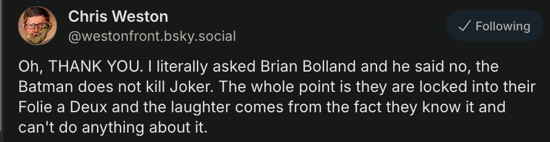

Thus does the long “Killing Joke‘s ending” saga come to its…well, end. Brian Bolland, literal Co-Creator of the Story, sez “negatory.”

Does that mean we can no longer read the ending of Killing Joke as the Joker’s death? No, of course not. Once art is out there, its meaning can be unmoored (er, so to speak) from the creators’ intentions, and anyone can see whatever they want to see in it. Even if it’s entirely…well, I hate to use the word “wrong,” but…wrong. Not all ideas are equally supported or of equal merit, but you can’t stop people from seeing what they see, feeling what they feel.

And that’s kinda that. I had a wild idea about Killing Joke, threw it out into the universe, and it met either approval, disapproval, or indifference. I felt no need to run around defending the idea against every naysayer, because I knew full well it was just an interesting way to read the end of that story. Plus, it’s not like I was necessarily the first to come up with it in 2004, 14 years after the comic originally came out. (And it’s coming out again in a fancy new facsimile edition on the 28th of this month, so you can read it yourself and see if me ‘n’ Grant are right!)

Why do I bring all this up? I mean, other to show off how great and clever I am?

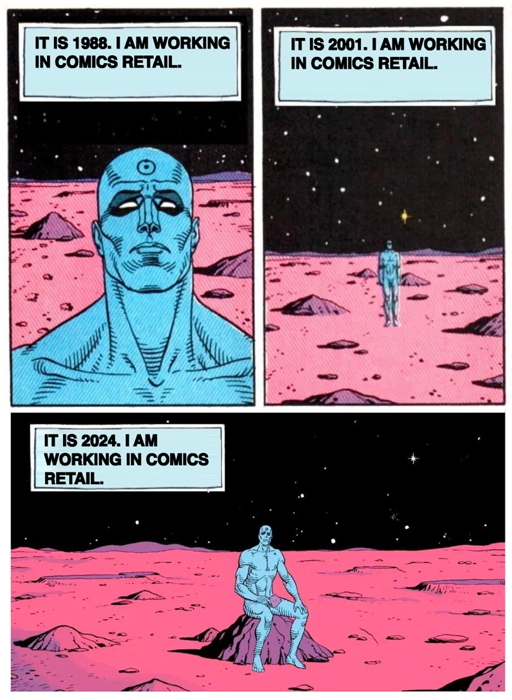
It’s because another of my Bluesky pals mentioned in passing that there was someone out there challenging people who dared not to take his Watchmen theory seriously. That caught my attention, because as longtime readers of this site know, I do love me some ancillary Watchmen stuff, the sillier the better.

Well, said pal explained the theory to me, to which I reacted “huh, interesting, not really supported by the text, but whatever.” My ultimate conclusion in my response was that this was proof of the comic’s complexity and depth, allowing for such differing interpretations. No, I didn’t agree with the theory’s conclusions, but I believed I was even-handed enough in my reply.

In what is now an unsurprising turn of events, the proponent of this theory appeared in our discussion after presumably term-searching, initially thanking me for calling the theory “interesting,” but telling me to spend for than five seconds thinking about it to see that he’s right. Then the challenges began, demanding that anyone who denies his theory “prove him wrong.” The interactions become increasingly offputting, with his continual assertions that only he sees the truth and everyone saying otherwise just hasn’t put the proper effort into reading the comic.

I’m paraphrasing and generalizing, but the arguments come down to “he’s right, everyone else is wrong, debate me.” I eventually told him straight out “your theory isn’t the reason no one wants to talk to you about this.”

And that’s kind of the point of all this. Not that the theory is “wild and out there.” I’m perfectly fine with this guy having this interpretation of Watchmen. Like I noted on Bluesky, the text does not support it, and in fact almost explicitly counters the idea, but whatever, man. We’re all just trying to have fun, and as I said above, art is there for personal interpretation, even if it can be way off base.

That’s all well and good. But being pushy and aggressive about it is not the way to sell it to anyone. Here’s the theory (NOTE: please don’t harass the fella there or in the comments here), with illustrations, as he outlines it on Bluesky. He kicked it off with “Am I delusional? You tell me!” and then people told him and he didn’t like it. You can see his response to skeptics in his main feed, accusing others of “running away” when they dismiss his idea, thinking it’s because they can’t challenge his logic, when actually those folks didn’t see any need to deal with him.

Here’s a Reddit thread from some months earlier where presumably the same person got a better reaction to his ideas. You can see, though, the anger at the deniers creeping in there, and if this is the same person, I can imagine months of his theory not going over becoming more and more of a burden on him, resulting in his behavior on Bluesky.

And like me not being the first person with my Killing Joke idea, when I presented this theory to a friend who actually wrote a book on Watchmen, his reaction was 1) nah, and 2) he’d actually heard this years ago. Now was it from the same guy, or just parallel evolution in Watchmen theories? I don’t know.

Ultimately, I’m sympathetic to the guy, at least regarding this topic. I’m all for new ways to look at established works. I even particularly like his thought that maybe Moore was trying to prove that a “secret identity” in a comic could work on fooling readers in The Real World. Except, first, this level of theorized effort would seem to run contrary to Watchman’s ultimate metatextual purpose. Second, Moore already kinda does this with Rorschach in the early issues.

What was missing from all this is a little humility. Saying that only you know the truth and everyone else has missed it, and being kinda weird about it, doesn’t inspire debate. It inspires abandonment. Nobody wants to be browbeat about not reading comics the “right” way. To repeat a piece of advice I offered to this gentleman, one that I benefited from given my earlier more-uptight-about-my-hobby days: mellow out, dude.
Or I could just give every one asking a Swamp Thing.

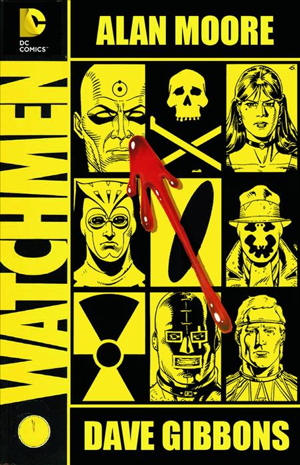
I noticed a lot of discussion on the Blueskies, at least amongst several groups of folks that I follow, regarding the appropriateness of Alan Moore and Dave Gibbons’ Watchmen graphic novel as an introductory comic for new readers.
Reactions, as you might imagine, are mixed, heavier on the “no you probably shouldn’t” versus “sure, why not.” My own particular contribution to the discussion was that I personally don’t need to handsell the Watchmen to anyone. It feels like anyone already coming into a comic shop looking for comics, Watchmen is already a known quantity, and it sells just find without my intervention.

It had been a while since it was that way…Watchmen sales took a hit around the time its movie was released, at least in my neck of the woods. But as time has passed, sales have slowly built back up again to having to reorder the books on a near-weekly basis. There were blips (or anti-blips, slowing sales down a bit) here and there, with the presence of the HBO series, or the prequel comics, or Doomsday Clock, but Watchmen is back to its bestseller status.

All that said, is Watchmen the right book to give to someone new to comics?

Well, it depends.

If someone comes in and asks “so, what are the classic graphic novels that everyone should read?” then Watchmen is definitely on the list, along with Dark Knight Returns and some others. I have received this question in the past, and these are exactly the kind of comics these people are looking for.

If someone comes in and asks “I’m looking for a comic to start with,” then it’s anyone’s guess. Asking “what are you in the mood for” and “what characters do you like” or “what kind of things do you like to read” and so on and so forth are necessary in pointing folks in the right direction. And not always to the graphic novels (unless they specify they want a longer read), but maybe finding a single issue as well.

It’s single issues that I most have to track down for folks who come in buying comics for other people, usually adults (parents or grandparents and such) looking for something for kids, either present or not. It’s not easy, sometimes, as for example I offered recent issues of Amazing Spider-Man and Superman to a couple of adults for a child, and their response was “these seem awfully dark.”

Many times when I have adults asking on behalf of children, they request “nothing too violent or bloody” which can also be a little tricky because I won’t know what their particular limits are for those sorts of things. Ever since I had a mom complain that the ladies in a reprint of a Steve Ditko Spider-Man comic were “too sexy,” I never try to assume what “too much” of something is going to be. Thus, it takes a moment or two of letting them go through the comics to make sure they match their needs.

We’re a bit off the main topic here, which is “Watchman: Good or Bad” for new readers, and honestly I’m neutral on it. Like I said, it’ll sell on its own anyway, especially now that it’s available in a $9.99 Compact Comics format. In terms of difficulty for new readers, I don’t think it’s too challenging for, y’know, a bright teen or an invested adult to tackle it.

As an alternative for someone looking for a good superhero comic to start with, the All-Star Superman book by Grant Morrison and Frank Quitely is a popular favorite, as is Darwyn Cooke’s New Frontier. Both have their own challenges for new readers, but honestly any comic book-styled graphic novel may not exactly be smooth sailing for someone unfamiliar with the format.

Of course, this is just in regards to superhero comics, but when people come in for their first comics, it’s superhero stuff they’re looking for. But sometimes the little, little kids are happy with Disney or My Little Pony…I probably wouldn’t hand a 5-year-old Watchmen.

Yes, “Bud Plant” is a real person, I’ve spoken to him on the phone.

So I was going through some of my old boss Ralph’s distributor catalogs an’ such that he’d saved for all these years and found a new treasure trove of material. In particular, it’s the “recommended order numbers” type of thing that I absolutely adore. A while back I featured some tip sheets from a distributor published in the early ’80s (1 2 3), and on a mildly different note, remember this distributor’s suggestion for ordering future issues of Miracleman?

Anyhoo, I found a punch of mid-1980s Bud Plant catalogs with just pages and pages of ordering suggestions, and they are absolutely wonderful, a great mirror into a particular period of this ridiculous industry’s history. Like my fascination with fanzines (hopefully more on that in a future ProgRuin post), these bits of editorializing mixed in amongst the many listings of orderable products let’s us see kind of what people were thinking about comics at the time. And to my specific interest, what people were thinking from the sales/distribution side, versus the fan side (though in fairness, often the twain shall meet).

This selection of excerpts comes from the March 1986 Bud Plant catalog, under this amusing logo:


One thing I’d sorta forgotten about was that Dave Sim was trying to keep Cerebus to a very tight schedule, with the intent of the last issue, #300, coming out in a specific month and year. So, when he fell behind, he had to catch up, and he did so by just crankin’ out those issues Bill-Jemas-at-Marvel style with no regard to monthly release:


I’ll tell you, as someone super into Cerebus at the time, I wasn’t happy about those small publishing gaps, but sure liked it when a several issues came out right on top of each other.


You know, I was never quite sure what happened there. I think I figured this whole time “Eagle” and “Quality” were the same company, and just underwent a name change. At any rate, we filed their miscellaneous titles together at the previous place of employment. Just never looked into it, I suppose. I guess, despite my best efforts, I’ve learned something today.


Ooh boy, I do love me some Eclipse comics. Thought I’d just lump ’em all together here rather than doing the titles individually. Stuff like Scout and Mr. Monster are mostly forgotten today, which is a shame, but those are solid books worth seeking out. And the Mr. Monster title underwent many stylistic changes over its short run, but all were entertaining. I seem to recall that Giffen story mentioned there was pretty good.

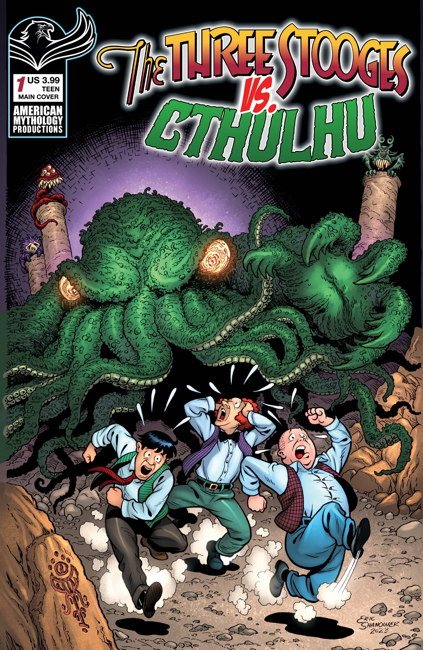
Hamsters 3-D #1″ is of course “Adolescent Radioactive Black Belt Hamsters,” the first Teenage Mutant Ninja Turtles knock-off out of the gate (the last one out of the gate being, I’m pretty sure, this title). This comic, flying in the face of all logic and reason, still has legs, and in fact sold some issues of it (including one of the 3-D mags!) on Sunday. It’s probably some residual effect of the Turtles’ continuing popularity, dragging the Hamsters along in its wake. And pretty much just the Hamsters…you don’t see the Geriatric Gangrene Jujitsu Gerbils or the Pre-Teen Dirty-Gene Kung-Fu Kangaroos doing that, do you?

Champions I do not recall selling a lot of, to be honest. I mean, I started in comics retail a couple of years after this, so maybe I missed the title’s heyday, but it certainly didn’t sell a whole lot out of the back issue bins. I’ll have to ask my former boss if it did sell, and if it did get that crossover gamer audience.

And ah yes…the aforementioned Miracleman, and in fact the very issue discussed in the link I posted above. But I checked the order listing in this catalog, and it credits Alan Moore with Chuck Beckum (AKA Chuck Austen), and there’s a mention, both in this tip and in the solicitation, of the New Wave preview. This sounds like the contents of #8, as the actual published #9 is the “birth issue” by Moore and Rick Veitch. As the tip also notes, this is around the time of the flooding of Eclipse’s offices, so scheduling was a total mess at this point. Plus, unless I’m missing something, Miracleman never had a Frank Miller cover.

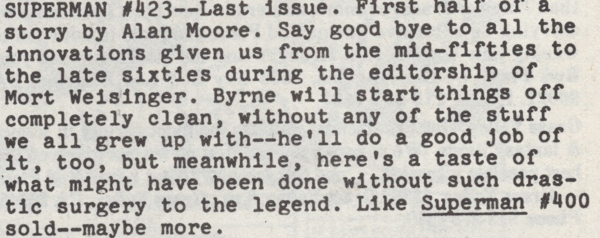
Okay, now here are a couple I should probably save for more discussion of the Superman reboot by John Byrne, but, eh, here they are anyway:


Now here’s the Thing: I actually have Ralph’s original order numbers for all these comics, handwritten in these catalogs. And it just so happens that I have the February 1986 catalog as well, and comparing numbers…yes, Ralph followed this advice, and ordered twice the number he did on issue #96 (with Blue Devil). Now further investigation will likely show what his average order numbers were on the title (he might have bumped it up a little for the Blue Devil issue, since folks liked that character).


What’s interesting here is the optimism for Byrne’s version of Superman, though the start of the tip almost reads like the opposite reaction. Byrne was hot hot hot at the time, so I suspect people were pretty excited for the Big Changes coming up. I mean, some people weren’t thrilled about the changes, I know, but given the Super-titles’ crap sales at the time (therefore necessitating the revamp), they weren’t reading those comics anyway. And they probably bought the Byrne issues. So there.


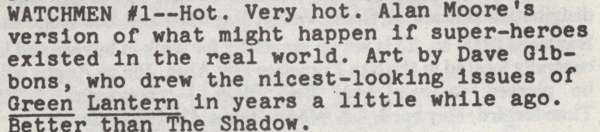
Okay, I love this one because of the “Better than The Shadow tag, which of course means “order more than you did on The Shadow” but for all the world looks like “hey, Watchmen might be a better comic than The Shadow, maybe check it out.”

Did Ralph follow this advice? I don’t know, I haven’t found his Shadow numbers yet. But this is referring to the Howard Chaykin Shadow mini-series, which, as I recall, was a very popular comic (even as it outraged the Shadow purists who were still alive at the time). Ralph’s Watchmen orders were high, the highest of any DC that month, but still it seems like they were lower than I expected, relative to all the other numbers I’m seeing. Then again, this was a new comic featuring new characters at a higher price point even if by admittedly a hot writer…and nobody had any idea this was going to turn into a phenomenon. Mostly just 20-20 hindsight surprise, is all.

Okay, those were just from the first page of that month’s tip sheet. Will I look at more of these in the near future? Probably! I’ve got at least two dozen or more of these catalogs here…I could probably just talk about this for the next few months. I’m sure you wouldn’t mind.

Watching for parodies.

Okay, this week on the site is a little wonky, given some early morning medical stuff I’ve got going on, so this may be the last post here ’til next Monday.

Anyway this week the new issue of Kevin Smith’s Quickstops came out, and I’ve been enjoying these. I saw this cover and thought “that’s pretty funny,” I’ll get this version:


…and then I saw the other cover with the Watchmen parody, and the decision was made for me:


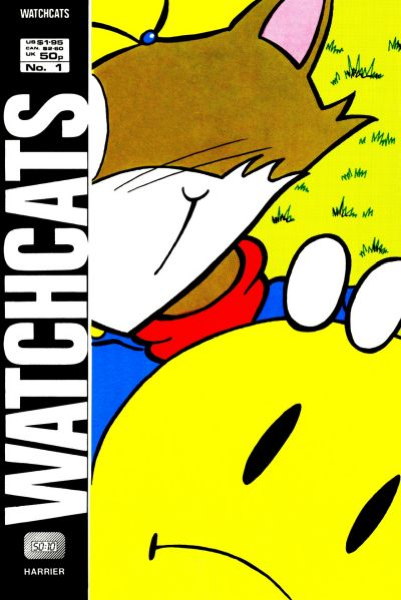
As as longtime appreciator of Watchmen ephemera, this is right up my alley, but it reminds me that there have been other parodies and references that I passed up at the time and sorta/kinda regret doing so. Like this one from 1987:


Not that I need to add another weird wrinkle to the old comic collecting I still do for myself, along with old fanzines, those last few Seaboard/Atlas comics I need, Popeye comics, and Nancy and Sluggo stuff. But, you know, what the heck.

Speaking of new comics for the week, you got your copy of this, right?


The Venn diagram of “high brow” and “low brow” forms a single circle for this comic. That’s meant as a compliment.

The rare almost-appropriate usage of the phrase “here’s the thing.”

So I’m not good at “end-of-year” lists where I run down the best comics, simply because 1) I haven’t read everything, so I’ll feel like a dummy for leaving some stuff out, and 2) I haven’t even read everything from the past year that I’ve taken home to read. As I’ve noted time and again, I have stuff from four years ago, about the time I started having my eyeball shenanigans, that I haven’t read yet. I still have that big ol’ collection of pre-Popeye Thimble Theatre to read, for example.

Thus the plan was to at least point out a handful of oversized collections I picked up this year, as I obviously did’t have enough already to read. I had my reasons for acquiring each, which I can detail (though in at least one case you can probably guess).

But here’s the thing…one of these I’ve already discussed, another I need to take some decent pictures of for use here since I can’t find any decent ones at distributors or on eBay that I can steal borrow, and the third is still at the shop stilling on a shelf behind my counter.

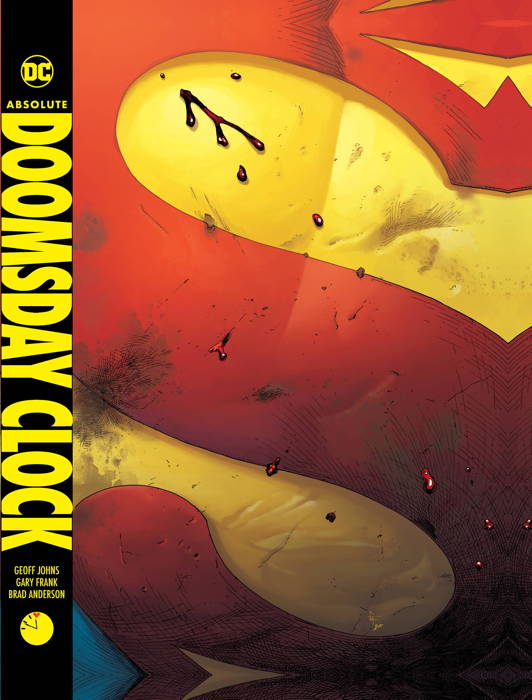
The first one, the one I already talked about, is the Absolute Edition of Doomsday Clock. Yes, it’s garbage, but it’s well-presented garbage, with beautiful artwork reproduced at good size, and plenty of behind-the-scenes material to be had. There’s also that extra thingie in the back of the book that literally shocked me. It remains a “was this trip really necessary” kind of thing, with its ultimate purpose (attempting to once again give in-universe explanations for DC’s rejiggering/rebooting of its fictional milieu) already pretty much ignored or supplanted or piled-upon by other DC event books, as everyone assumed would happen.

But, as a collector of weird Watchmen-related ephemera, this felt like an interesting item to have. Plus, it matches up nicely with my Absolute Watchmen slipcased edition, a thought that probably is giving someone somewhere a bit of a twinge right behind their eyes.

The second oversized collection I’ll talk about later in the week, once I get some pictures taken.

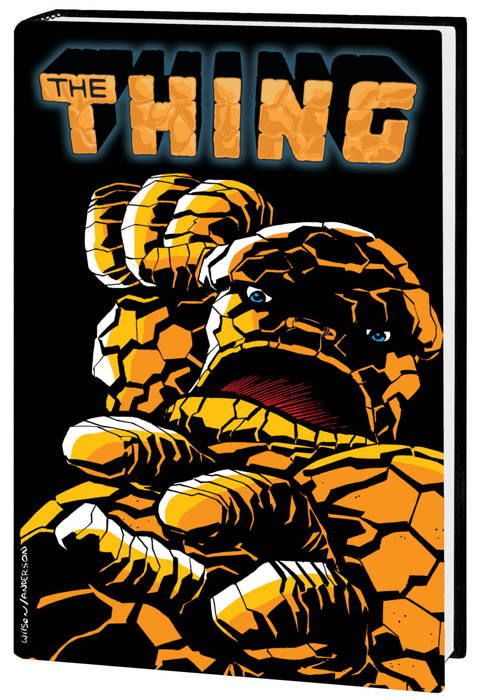
The third collection, still sitting shrinkwrapped at the store, is the Thing Omnibus:


This collects the 36 issues of the Thing series from the 1980s, along with a couple of issues of Fantastic Four that tie into storylines in that book. There are also other miscellaneous Thing stories from the period mixed in (like the Barry Windsor-Smith story from Marvel Fanfare, a Marvel Tales back-up, and that Jim Starlin/Bernie Wrightson Thing/Hulk graphic novel). Issue #3 of the computer-game tie-in Questprobe is even included. I kinda wish they’d made room for the Hulk/Thing team-up in Marvel Fanfare #20 and #21, also by Starlin, which has never been reprinted in the U.S. as far as I know. Ah, well, there’s always the next omnibus.

Now why did I need this volume? Well…I didn’t, really. I own nearly all of its contents still…that Thing series, the graphic novel, the FFs, the BWS story. But it is nice to have it all in once place, and that cover…! There were two covers for this book, because of course there were. One cover, by John Byrne (who wrote the early part of the series), was taken from this issue, and it’s…fine, though not a patch on the Ron Wilson cover they did use. That’s one of the great and iconic images of Aunt Petunia’s favorite nephew.

Ron Wilson drew a whole lotta this book, and he is one of the unsung heroes of superhero funnybooks…clearly inspired by Jack Kirby, but not, like, outright copying the guy. One of the surprises this omnibus has for me is its inclusion of a story from the 1990s version of Marvel Super-Heroes which I hadn’t read, featuring 22 new-to-me pages of Wilson art. Can’t wait to see that.

One thing (heh) I am curious about is that in this issue there was a scripting/editing error which resulted in two conflicting names for the same character. It would be nice if that was straightened out. Also, the “How to Draw The Thing” page from this ish better be in there. I need nice, quality printing of the Thing telling me to not give him no lips. (Which of course literally works out to “give him lips,” but I’m not gonna tell ol’ Benji that.) Also, stop giving the Thing a neck, you guys, so long as we’re on the topic.

I know that’s Too Many Words for a book I haven’t even cracked the covers on yet, but it’s an exciting book to have. That Thing series was quite good, with some nice emotional/background work on the character, particuarly in the early issues. And the whole post-Secret Wars “Rocky Grimm, Space Ranger” was a weird ride, with Ben Grimm, adventuring on an alien world, finally with the ability to switch back and forth between human and Thing forms. All fun, all well-drawn, and all solid support for why the Thing is one of the greatest Marvel characters ever created. If not in fact the greatest. Yeah, that’s right, I said it. He’s even better than Hellcow, don’t make me fight you.

And I just go ahead and relitigate anyway.

So, being the proud owner of the “Absolute Edition” of Watchmen, the oversized hardcover reprinting the series and included the production notes and back matter from the earlier Graphitti Designs hardcover I didn’t buy when I had the chance and regretted for years, I of course had to have the accompanying Absolute Edition of Doomsday Clock.

Now I don’t know if I need to relitigate this series yet again (you can read my initial reaction to the series’ conclusion right here), but it was interesting to 1) read the whole story in relatively short order instead of the couple of years it originally took, and 2) read it with mostly-functional eyes, versus having to use, like, magnifying glasses and trying to look at it with blood-blurred vision during its run. Doomsday Clock was, for a period of about a year and a half, literally the only comic book I’d read as my eye problems made it too difficult to do any reading. But I had to see what they were doing with the Watchmen characters in the DC Universe.

What I found with the reread was…I didn’t miss much in my initial pass. I did forget that the character of Nostalgia, who hilariously appears at the end of the recently-concluded Flashpoint Beyond, was introduced in the final pages of Doomsday Clock. But otherwise, no, I retained nearly all the major plot points and actions. There was no “oh, I missed this nuance the first time but caught it on the revisit,” as there is no nuance. It’s all surface level. It has the appearance of depth, but it’s all…well, I’ve called this a “cargo cult” comic, superficially mimicking the original in the hopes of attracting the same attention and acclaim.

The comic is at its best when dealing with Superman. If Geoff Johns has an affinity for writing anything, it’s ol’ Supes. And the best bit is the tying of Superman to the evolution of the DCU, though as I said before, it would have been nice if they could have done this without involving the Watchmen characters, but then they wouldn’t have pulled in the readers. And this series did sell well.

I should also note that the art by Gary Frank is absolutely gorgeous, and the Absolute format showcases it wonderfully. In all, it’s not like I hate this comic or anything. It’s certainly questionable that it should have been done at all, and it’s filled with bits that are especially weird and not in a good way. But it’s competently done and keeps your interest up, even as its explicitly stated purpose (“sorry about the New 52, everyone”) becomes increasingly obvious. Every change to DC’s fictional milieu apparently requires convoluted explanations, and devoting Moore and Gibbons’ Watchmen to yet another one of those said explanations seems like a bit of overkill.

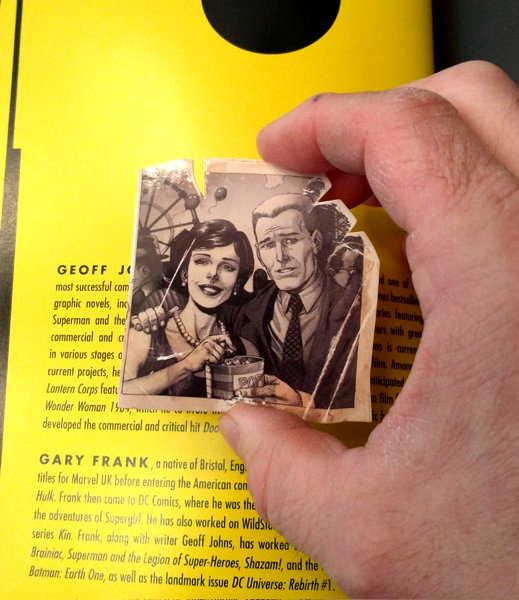
Anyway, that’s not what I came here to tell you about. I wanted to point out a special unsung extra in the Absolute Edition. There are a few dozen pages of material in the back, mostly showing off covers and promo posters. There are character sketches and designs, other production work, plenty of notes, etc. Makes for an entertaining perusal.

As I got to the last page of the book, however, I was literally startled to find this stuck in-between the credits page and the endpaper — a coated cardboard reproduction of the photo of Jon and Janey, taken just prior to Jon’s accident that transforms him into Dr. Manhattan:


And it’s inscribed with their names on the back of the “photo” as well. I was not expecting to see that, and I definitely gave out a little “whoa!” of surprise when I happened upon it. It’s a neat little addition, and actually ties thematically to events in the book, just to find this photo where you least expect it.

That’s really all I wanted to mention, but I can’t bring up Doomsday Clock without pointing out the misguided-yet-complelling-at-least-to-me aspects of the series. It’s fascinating in its own way, in its disuse of Watchmen, and how its inspired further exploitation farther and farther away from the intentions of its creators. I suspect that last phrase would actually describe a lot of comics.

C’mon, surely somebody loves the Hulk.

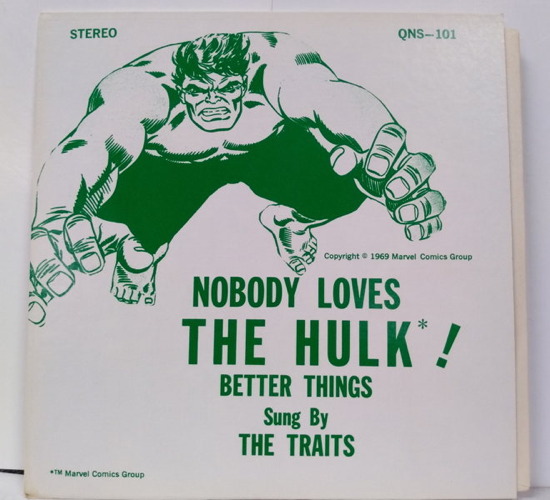
So the other day I noticed on pal Brook’s Instagram that he posted a picture of his latest rare vinyl acquisition. I of course immediately asked him if I could feature it on this here comic book weblog, and he said that was fine…and also since he was going to be dropping by the store Wednesday for new comics anyway, he’d bring it in for me to see in person.

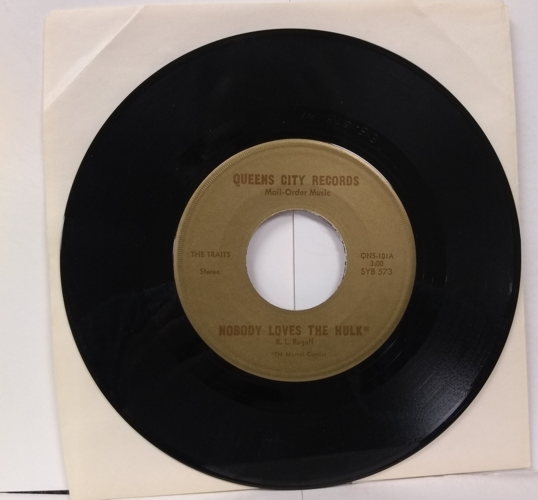
And here it is, with some new photos I took at the store once I had that record in my ungainly mitts, an original 45 RPM single of “Nobody Loves the Hulk” by the Traits, released in 1969:


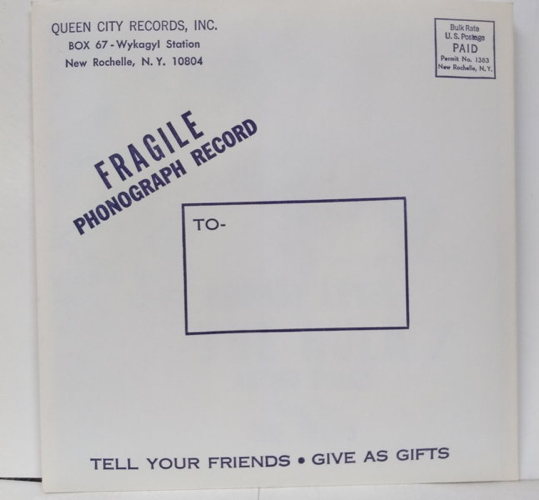
This is a pristine copy, only removed from its original mailer by the seller to check its condition prior to selling. And speaking of the mailer, here it is:

And why not, here’s a pic of this classic piece of vinyl itself:


And did I play it on the in-store turntable? I wasn’t going to, as a’feared as I was to do damage to this artifact, but Brook insisted that I did, so I dood it. If you weren’t lucky enough to be there when I did, you’ll just have to replicate the experience best you can by listening to this:

Brook also forwarded this link to an interview with one of the people behind this recording. Apparently it was originally sold only through mail order ads in comic books, with only some of the 2,000 copy print run selling that way, the rest being dumped off in various places. Given the condition of Brook’s copy, this seems likely to be some kind of warehouse find, probably sitting in a box somewhere for decades after being discarded by the original owner. Who knows? But Brook got one and, um, perhaps I may have my own copy on its way now too.

Big thanks to pal Brook for bringing that in.

In other news:


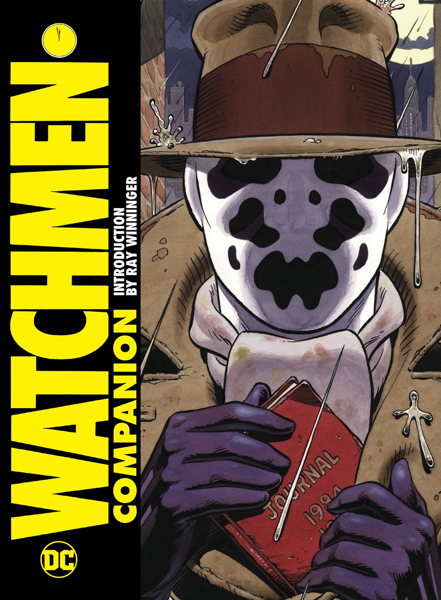
This thing came out this week, which made for a nice addition to my personal collection given that the majority of the reprint material inside is taken from the Watchmen supplements for the DC Heroes Role Playing Game, the originals of which I’d sold off long ago. Thus, it’s nice to have them again.

Also reprinted therein are the entries for the Watchmen and related from Who’s Who in the DC Universe (and given the publication of Doomsday Clock, they really are in the DC Universe!), plus the covers for said Who’s Who issues, as well as material from Amazing Heroes and a Dave Gibbons cover for The Comics Journal.

Most hilariously, it includes that bonkers Rorschach appearance in The Question #17. I mean, sure, why not.

Turns out, when asking longtime customer and fellow Swamp Thing afficionado, and Watchmen and Planet of the Apes expert Rich Handley if he needed a copy…turns out, he was actually consulted regarding content for this book! He was asked what extra Watchmen stuff should be included that hadn’t already been offered in reprint form elsewhere…and I’m presuming whoever it was at DC asking this already knew about Question #17 so I won’t blame Rich for that. Anyway, due to changes in editors and whatnot, Rich didn’t seem to get a credit or even a “thank you” inside (at least, I couldn’t find one in the tiny print, given my ailing eyeballs) so just mentally add his name in there when you’re reading it. Okay? Okay!

Also, in other other news:

Also out this week is Swamp Thing The Bronze Age Vol. 2:


I didn’t really pay much attention to the original solicitation for this book. I just figured “ah, it’s just reprinting that big ol’ Swamp Thing omnibus I already bought, I don’t need this,” but reader, How Wrong I Was. It includes a lot of material not in the big ol’ hardcover…enough material that I probably should have passed on it and just waited for the paperbacks. It has the Challengers of the Unknown issues with Swampy and Deadman, it has the DC Comics Presents and Brave and the Bold team-ups.

Most importantly, it has all extant material related to the unpublished #25 from the original series! Now, I already had copies of the pencil and inked interior pages included here, but this volume also contains pencil roughs for other pages, the script, a paste-up of the letters page for that issue(!), and even the inked-and-logoed cover! Pretty amazing. I’d kinda hoped they had enough of this issue done that they could have released it as one of DC’s currently “facsimile” reprint line, a “reprint” of a #25 that never was, but looks like it wasn’t as finished as I’d thought. Ah, well. But this is great to have, finally.

Now, if we can get DC to reprint the finished pages ‘n’ script from that pulled “Swamp Thing Meets Jesus” story should they ever get around to collecting the stories from that immediate era…that’d be somethin’.

And frankly, I don’t have the memory to do any “decade” lists.

Every year around this time I think “I should really do a year-end review,” since I haven’t done one on this site since…probably 2005, I’m guessing without looking to see if I’m right? Anyway, it’s been a while, and the reason I don’t do it is mostly because…well, because I feel limited in direct experience with the vast array of comics that come out each year. Probably a strange thing for a guy what owns a funnybook store to say, but “ordering, racking, and selling” ain’t the same as “reading,” and I feel like I can’t put my dime down on “THE BEST COMIC OF THE YEAR” when my actual reading experience is limited to the handful of comics I’ve mananged to consume over the previous twelve months.

And especially this past year, where (as perhaps you may have heard whispers of in the dark alleys and not heard me complain about nearly daily on this site) I’ve had problems with my vision. My keeping up with the new comics, which had already fallen a bit behind due to my reading more slowly due to all this stuff, pretty much stopped entirely sometime in April. I managed to read a comic here and there, sometimes with some difficulty (I read at least one issue of Doomsday Clock with a large magnifying lens), but mostly I’ve been just letting things pile up.

I said “until recently” because as my vision has become more or less stable-ish in the last couple of months, I’ve been going through my stacks, pulling runs of books and just reading them straight through from where I left off ’til today. As such, I’m caught up on the Superman books, Immortal Hulk, Justice League, Event Leviathan, and, yes, Doomsday Clock. Oh, and the Tales from the Dark Multiverse comics, too, which I probably like more than I should. Thus, I’m making some progress, slowly but surely. Oh, and I’m caught up on the Legion of Super-Heroes reboot, having just read the first two issues of the new series Sunday evening. (Not quite sold on it yet but we’ll see where it goes.)

So as you see, I don’t have quite the pool from which to draw…not exactly a wide range there. I’ve got a lot of other stuff I want to read set aside, but at the very least I’m trying to keep up with those titles so I don’t get even further behind.

Moral of the story: take care of your eyeballs, folks.

Of course it occurs to me that I can do some kind of year-end thingie just from a retail perspective, and I suppose the biggest trend of the year I’ve noticed is more speculation (apparently driven by certain comic-investing websites and YouTube videos and such). Not that folks speculating on what comics are going to be “hot” and “expensive” and “”rare”” (that last one gets double quotation marks) is anything new, or ever really went away. It’s just that I’ve noticed a lot more of it in the past year (sometimes with no apparent rhyme nor reason). Which, you know, that’s fine, whatever you’re enjoying, but at the same time it makes things a lot more difficult to order. Asking for that variant the day before it comics out, or everyone grabbing the first issue of something, and then the second issue shows up and doesn’t sell at all. It can be a little maddening, but that’s why they pay me the big bucks. (NOTE: no big bucks are actually paid to me.)

On the other hand, a new publisher that distributes their own books directly to retailers, TKO Studios, has been working out quite well for me this year, getting their first batch at the store back in February and a new round of books in November. They’ve done well for me, they’re very convenient to order, and they’re solidly-produced items. Very nice additions to the product lines my store carries.

Oh, and so I have at least one year-end award for a specific comic, Doomsday Clock gets the award for “Best Comic Titled Doomsday Clock.” Yes, I know you’re shocked. Hopefully someday we’ll find out why they hoed this row for so long just to bring back the Justice Society of America and the Legion of Super-Heroes when current Justice League comics brought also brought back the Justice Society and current Superman comics brought back the Legion on their own.

Well, who knows, if I ever catch up maybe I’ll do a year-End Awards thing for 2019 in, I don’t know, 2023. Watch this space!

In the meantime, a couple of reminders:

Lots of folks have contributed to the GoFundMe for my old friends the Beckners, which is greatly appreciated. As I type this, they are a mere $95 away from their goal, so if you can pitch in even a little bit, that would be wonderful.

Plus, I’m still taking your predictions for the 2020 comics industry. Will it rise? Fall? Become more dumb? CHIME IN WHY DON’T YOU

Almost used a different word than “futz.”

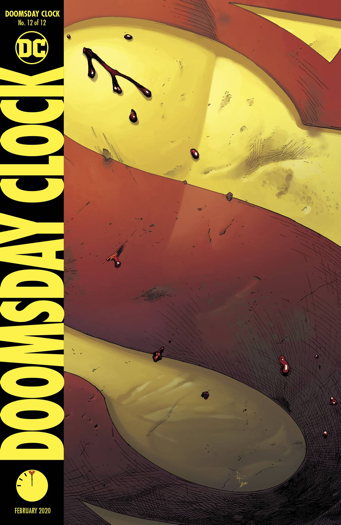
[SPOILERS for Doomsday Clock #12 ahead]

Last week saw the release — finally — of the last chapter of Doomsday Clock, the extremely popular sales-wise, if internetally-reviled, mini-series intermingling Alan Moore and Dave Gibbons’ Watchmen with the mainline DC Universe. While it feels like DC was pushing this new series as being somehow on par with the original, and while it did superficially ape the look-and-feel, Doomsday Clock will probably ultimately be remembered as “hey, remember that one time DC superheroes were in a comic book that also featured full-frontal male nudity?”

Not that it wasn’t sort of fun and intriguing…the series itself, that is, not just the full-frontal male nudity, though that was sort of amusing in its own right just by how uncomfortable a fit that was with what is basically your standard superhero fare. (As the boys on War Rocket Ajax have pointed out, having Dr. Manhattan’s Lower Manhattan right there for Mary Marvel to see is…something else.)

Anyway, the “fun and intriguing” part. Right. I’ve noted (and demonstrated several times) on this site that I have an ongoing fascination with Watchmen ephemera, the mostly unsupported-by-the-creators tie-ins and exploitations of the property. Doomsday Clock, obviously, is one of those things, yet another bullet point in that long list of what Watchmen has wrought. And while I read and followed along with the story as presented, I have to admit my primary interest wasn’t so much in said story but how they told it, what decisions were made to mix what elements of each milieu and to what purpose. It was the observation of the construction of Doomsday Clock to serve whatever specific purpose it was serving that intrigued, more so than whatever plot threads were offered.

Even so, I do like the idea of “the metaverse,” the idea that the DC Universe reconstructs itself around the continual reinvention of Superman to reflect whatever time period in which he’s published…basically, I’ve been observing the construction of a comic book that itself observes the construction of the fiction in which it exists, which I can’t help but appreciate. I suspect the very same point could have been made without involving the Watchmen characters, but by grabbing remora-like onto the former series for the attention it would bring, perhaps the hope was that the results of this particular event series may have more staying power than most. It would be nice to think that this could be the last word on reboots/relaunches in the DC Universe, that, like the idea of Hypertime before it, anyone reading comics long enough to notice significant changes in continuity should just realize that the in-universe explanation is that “it’s just a thing that happens, man” and requires no more thought or finagling than that, really.

Interestingly, the story itself seems to acknowledge that may not be the case, hypothesizing future “Big Event” series in the DC Universe for decades to come (including, amusingly, at least one that involves the Marvel Universe). Implicit in these Big Events is the idea of providing more in-universe explanations for whatever is happening to the fictional universe at the time due to real-life marketing and editorial decisions…to borrow a turn of phrase from a certainly naked blue guy of some note, “nothing ever ends” — even with the metaverse explanation, more explanations will be forthcoming, regardless.

A week or so ago on the Twitters, I did a short thread about the impact of big crossover event comics at Marvel and DC. Mostly, I was pointing out that Marvel Super Heroes Secret Wars promised big changes that were mostly temporary (Spidey’s black costume possibly being the most significant exception), and even those initial promises were downplayed by the writer himself. In contrast, DC’s contemporaneous Crisis on Infinite Earths promised and delivered big changes…but then spent the next decades backpedaling from what they had done, ironically making its fictional universe far more complicated and convoluted than the previous state of affairs Crisis was supposed to fix.

I wrote a bit about the big changes these series supposedly bring about a couple years into this blog, where you’ll see those same Shooter quotes again, so I don’t need to go into that in too much detail. Crisis, certainly, was the most successful in creating lasting changes, in that it pretty much futzed everything up from then ’til now, with several more series (from Zero Hour to Infinite Crisis to the one being discussed in this very post) trying to deal with its aftereffects. It would be nice if Doomsday Clock‘s “metaverse” idea held fast, changing the way we approach the way this shared universe works, accepting the changes without metatextual event series explaining why the changes, but as I said, even Doomsday Clock itself admits this is futile.

The other big change is that we now have the Legion of Super-Heroes and the Justice Society of America back, but that’s more the reestablishment of a previous status quo…a rolling-back of changes that, again, can be traced back to that original Crisis. There are also some small character bits, too, primarily to Superman’s history and supporting cast, which is fine, but the recasting of Martin Stein as a villain who deliberately created the events that brought about Firestorm kinda stick in my fanboy craw, but What Can You Do?

Possibly the biggest change is that the barrier has been breached: Watchmen characters are fair game for use in the DCU. I mean, they can’t piss off Alan Moore any more, right? I know at some point somebody probably paid some lip service to “this is an important event” and “we don’t use these characters lightly” but I’ve mentioned the idea of Rorschach Team-Up before and I think we all know it’s coming. Plus, there’s that eyeroll of an ending to this series to which someone will not be able to resist slapping together a follow-up. With Before Watchmen in 2012, and this series starting in 2017, I’m guessing Doomsday+1 Clock we can look forward to in the early-to-mid 2020s.