Okay, let’s see if I can run through a couple of more comments left back in Ye Olden Tymes (i.e. last August):
Wayne sallies…um, in a forward-moving direction with
“Mike, I will send you five dollars in cash if you write a post on the Heckler.”
I AM NOT ABOVE BRIBERY. However, I don’t think I’d read the Heckler since…well, probably when that series was released in the early ’90s. But I did buy every issue, though I’m reasonably certain I gave up my copies to my shop‘s back issue bins when I opened up in 2014. and I just checked, and The Heckler isn’t on the DC Universe app.
But never fear, as I think those comics may yet still linger in the bins awaiting my retrieval. Therefore, Wayne, I will attempt to read the series and see if I have anything to say here about it. A quick look at the Wiki entry reveals…nothing I can recall from the comic, save for his nemesis “John Doe,” but I might only remember him because he’s on one of the covers. Ah well, I guess it’ll be like reading brand new comics to me.
• • •
David Conner continues
with
“The mention of Peter David’s Supergirl and Aquaman got me thinking, is there any other writer from the last 40-odd years who feels more ‘of his time’ than Peter David?
“I *loved* his stuff in the ’80s and ’90s, but looking back at it today, it’s more often than not cringe-inducing (using that term which I generally hate advisedly.)”
First off, let me just say it’s high time my browser’s spellchecker stops flagging words like “Supergirl” and “Aquaman.” I mean, I suppose I can add them to the dictionary myself, but whoever programs these things might as well just dump all the superhero names they can into whatever file they go into. Help the world spell “Mxyzptlk” correctly!
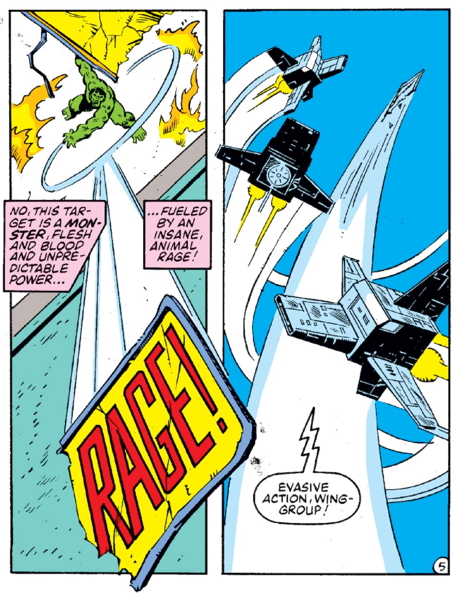
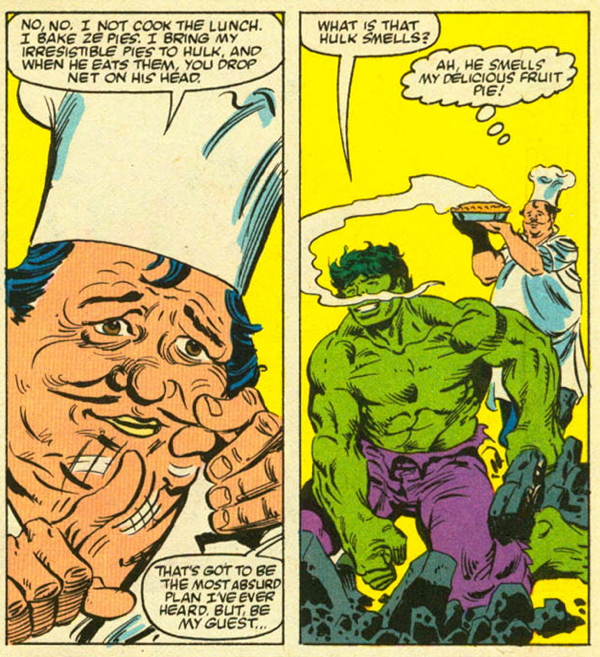
 But to David’s actual point…yeah, I see where you’re getting at. I have to admit, I’m a bit more charitably inclined towards Mr. David’s writings than the opinions of some of my fellow comics-noscenti. I think his Hulk work still stands up, for example, and his Dreadstar was fun (save for that two-issue bit where he was parodying Trek…oof). And there is other stuff he’s written here and there that I’ve liked, such as Fallen Angel and, yes, Aquaman. Supergirl was a weirdie, mostly because of the premise, but I’d read and liked the whole run. His Star Trek was genuinely great, something of a miracle considering the editorial interference he often faced.
When I think of a certain comic creator being “of his time,” the one that comes to mind for me is Don McGregor, a writer who came to prominence in the ’70s and his very text-heavy work is what I picture when I think of “1970s comics.” Now that’s just a matter of my particular perception, as the man’s still working today, but I think of 1970s comics, in comparison to modern books, as having a lot more captions and dialogue, and I associate McGregor with that particular style.
Now David’s work…I think a primary criticism aimed at his comics is the level of self-aware, and of a certain measure self-satisfied, “cleverness” to his writing. Sometimes it can be subtle-ish (the “brush with Death” in Incredible Hulk), sometimes it can be laid on a bit thick (that Trek parody in Dreadstar I’d mentioned) and as with most humorous and/or clever writing, Your Mileage May Vary. It may be that this sort of thing didn’t age well, with it seeming New and Fresh at the time, but as the years have passed and writing styles and trends and tastes have changed in comics, looking back reveals the some of the obviousness of the artifice. Much in the same way we look back at Alan Moore’s early work and kinda wince a little at some of those scene transitions (which, to be fair, folks were kinda gripin’ about even back then — like in Killing Joke where we see a “Fat Lady” poster at the circus, and then we move to the Joker’s memory of his pregnant wife. Hoo boy).
I would say something like your reaction to David’s writing, David [Conner], is different from something like Stan Lee’s writing in the 1960s. That is Very Much of Its Time, but it may be more that Lee’s style defined that time and is considered perfectly acceptable, versus people trying to write “for the hip kids” back then whose writing did not age quite as well (cough cough 1960s Teen Titans cough). Before The World’s Biggest 1960s Teen Titans Fan gets mad at me, those are fine, the art’s beautiful, but you have to admit that DC’s “hello, fellow kids” scripting house style was clunky as all get out, rarely reaching the masterful level of smarm Lee was able to churn out.
 David’s work of late, revising the Maestro character from the Hulk, and Genis from his run of Captain Marvel, seem to have been reasonably well received. I didn’t read the Genis title, despite having read and enjoyed those CMs, only because I’m so backlogged with comics I try not to add more titles unless I absolutely have to. That said, having been a Hulk reader for decades, I of course picked up the Maestro titles, and I think they’re a perfectly fine extension of the character’s story. Nothing in there struck me as being overly…Peter David-y, in the sense of what people who don’t care for his previous work don’t care for.
Now New Fantastic Four maaay be a bit much for those same people, with the banter amongst the main characters and a particular gag involving another character’s name. I picked up this series too (what with the Hulk being in there, and the FF tie-in as well) but I’m only a couple of issues in, since it hasn’t felt quite as compelling a read as the Maestro books have been. Eh, what can you do.
I do still think David’s Hulk run remains a high point in that character’s history, and I still have fond memories of much of his other work. However, I do realize if I go back and reread some of it, I may find myself in a similar position of being more aware of the seams now that some time has passed. Or I may enjoy it just fine for what it is, even if it is an artifact of the period in which it was produced. (Remember “wilding?”)
But you know what? Peter David got this dirty joke into a Popeye comic and I can’t hate him for it.