Swampy, take the wheel.

Hey hey hey, they’re finally here:


After very nearly 40 years, the cancelled-for-various-reasons segment in Rick Veitch’s Swamp Thing in which our favorite swamp monster runs into Jesus. Illustrated by the late Michael Zulli, with finishes by Vince Locke, and featuring a nice long afterword by Steve Bissette giving the surprisingly warts-and-all telling of what happened with this comic way back when.

The book is designed to look like how it would have in 1989, including subscription forms and period house ads (Truman’s Hawkworld, anyone?). Inside the front cover is a “Johnny DC’ text piece, written in the voice of those old promotional pages, that gives the story context of this current issue for anyone new to the book. And it’s written by close, personal friend Rich Handley, the one person in this fallen world that I’ll admit has more Swamp Thing knowledge than I do.

But the comic itself…yes, it’s great. I know a lot of folks who’d been waiting for this book since 1989 went back and reread the issues leading up to this story, but I’ve reread those enough that I’ve practically got them memorized, so I’m good, but if you’re coming in fresh, don’t sweat it. Like I said, Rich’s “Johnny DC” column tees you up just fine, and the story itself does enough to give you the idea what’s goin’ on.

I don’t think the rest of the mini-series will be too difficult for new readers, either. A long time ago, the Comic Buyer’s Guide ran plot outlines for Veitch’s then-cancelled final issues for his run. As I recall, the events in those issues should be easy enough to follow on their own, given what you’re told in this first issue.

But how’s the comic? It’s great. It’s nice to read the full, completed thing after I may or may not have seen photocopies of the art many years ago, I admit nothing. But it’s as weird and magical and knowingly irreverent as Veitch usually is, while remaining respectful to Jesus Himself. We get the Vertigo-style twist of an old DC character, we get yet another origin for a certain demonic fella, and all this madness is mixed up and presented in an almost weirdly dreamlike progression. It’s a wonderful return to this era of Swamp Thing…I’m not going to say “it was worth the wait,” because should never have had to wait this long, but I’m glad it’s here.

• • •

So long to the nigh-legendary comics writer Gerry Conway, who passed away this week. While best known for his Spider-Man work, as well as being the co-creator of the Punisher and Firestorm, he of course has also written certain swamp creatures at both companies. He was the co-creator of Man-Thing at Marvel, and at DC, he wrote the inaugural issue of Swamp Thing’s short-term New Look, issue #23 (1976):
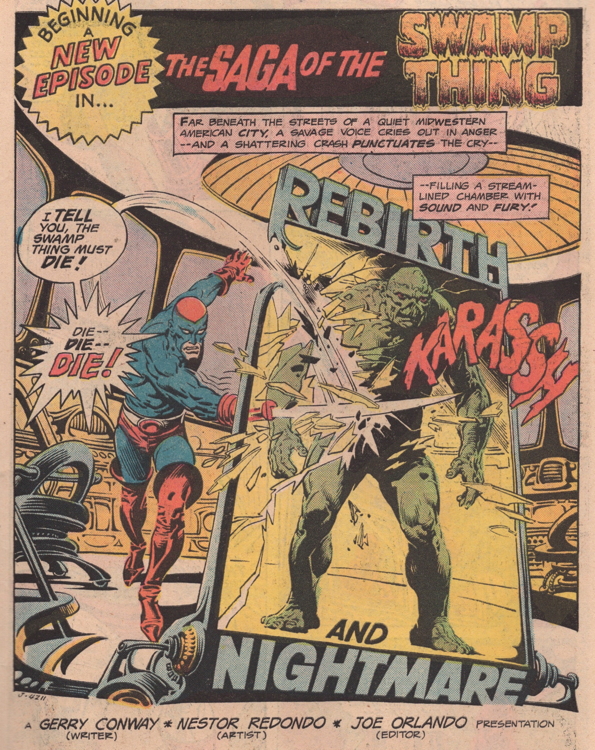

I talked about this issue way back in 2004, and it’s an interesting example of serving two masters: attempting to retain the character’s horror roots (so to speak) while transitioning toward a more superheroic tone, a balance I thought Conway pulled off. He would of course return to Swamp Thing in short order, during his stint on Challengers of the Unknown where he would actually reverse the changes made to the character at the end of his own series.

I know it’s weird I focus on this over all of his other work, both in comics and in television — I remember seeing his name on an episode of Law and Order and thinking “wait, the same Gerry Conway?” — but I always appreciated the fact that he wrote competing swamp monsters in comics. In fact, I once got the opportunity to ask him who’d win in a fight, Swamp Thing or Man-Thing, and you can hear his answer at 1:11:36 in this 2016 episode of War Rocket Ajax. I was happy that I got a chance to make him laugh.

Another loss I learned about just as I sat down to write this post was comics writer Len Strazewski, who was primarily active in the ’80s and ’90s. I remember him most for two things: writing this swell and far-too-short Justice Society series, drawn by the also-departed-too-soon Mike Parobeck:


…and for also popping briefly into the former place of employment and saying “hello.” He was a nice man, who spotted our backstock of Ultraverse titles (an endeavor he also worked for, having co-created Prime) and commiserating with us that we would probably never sell all those. Well, I wish I could tell him we did sell them all, eventually…for a nickel apiece in a bulk sale, which isn’t much but it still counts as a sale!

It’s sad to see two more pieces of my comics fandom pass from this world, but we can always remember them through their work. So long, Gerry and Len.

Sam Kieth (1963-2026).


My favorite Sam Kieth work, aside of course from his magnum opus, The Maxx, was this odd two-issue series released by Fantagraphics in 1991. It collected together short strips, art pieces, and other stuff by Kieth, all in glorious black and white, and affixed with a title that, to this day, helps me remember how to spell his name properly.

Speaking of The Maxx…just the other day, I was writing here about Spawn, and how people who haven’t been around comics in a while always bring it up. The Maxx is brought up nearly as often, and it’s not just people remembering the short-run cartoon that aired on MTV in the ’90s. They’re specifically asking about the comic book, which casts quite the long shadow.

The Maxx nominally had the trappings of a superhero comic, but in Kieth’s hands (with scripting from William Messner-Loebs on most issues, and a guest-script by Alan Moore) it was a tale about trauma, abuse, mental health, and the very nature of imagination and reality. It was weird, it was funny, it was emotional, and it was unique. And to this very day, when I get issues of this series in the shop, they sell out almost immediately. Maybe someday we can get a collection of this work that’ll stay in print longer than a few minutes…the demand is there.


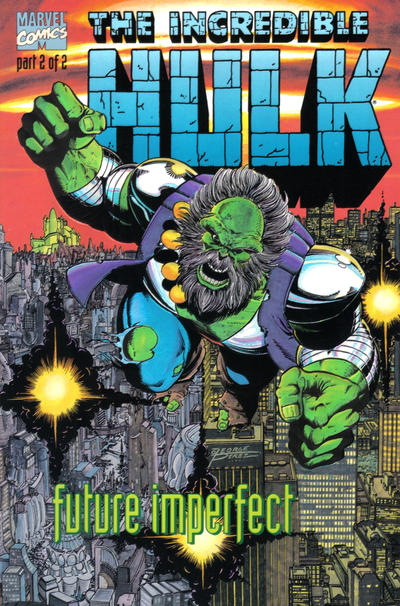
He had a pretty good run of covers for Marvel Comics Presents, sometimes illustrating work inside as well. He drew an issue of Peter David’s Incredible Hulk, he did the occasional stand-alone mini (Four Women and Zero Girl come immediately to mind), a series of projects for Oni Press, multiple Lobo comics, and he eventually returned to the Maxx with, of all things, a strange Batman team-up. Oh, and let’s not forget the wonderful Epicurus the Sage (written by Messner-Loebs).

Pretty much every time Kieth touched pen to paper, no matter how mainstream-seeming the project appears, you were guaranteed a solidly-drawn weird time. “One of a kind” is kinda of an empty description in most cases, since we’re all unique in our own ways, but I think if it could be said about anyone, it can be said about the artistic talent of Sam Kieth.

So long, Sam.

Sal Buscema (1936 – 2026).


Click to make Hulk-sized.

This double-page splash from Incredible Hulk #300 (1984) is a great example of what Sal Buscema brought to the title for many years, creating one of the definitive visual renditions of the charater. Sal was one of the classic Marvel Comics stalwarts, doing excellent work for many of their characters, most notably Spider-Man.

One thing I always like to point out regarding Incredible Hulk #300’s opening pages is the persistence of the story’s title “Days of Rage” on the billboard. You can see part of that title on the billboard chunk Hulk is throwing a couple of pages later:


Don’t know who exactly was responsible for this visual gag, but it gave me an excuse to post another pic by Mr. Buscema.

Thanks, Sal, and so long.

Of course, that Green Lantern space story kinda didn’t end well.

[SPOILERS ahead]


Sophie Campbell’s Supergirl continues to be a delight, this time with guest-artists Rosi Kampe and Paulina Ganucheau, who do quite nicely) and turning over the issue to the various super-animals that have turned up so far in this title’s brief run thus far.

One particularly fun innovation to a Super-Pets story that I don’t think I’ve seen before is that Ms. Campbell has the animals unable to directly “speak” (or telepathically “think”) at each other, like you would see in the various Pre-Crisis stories. That leaves all the animals unsure of each other’s motives, which leads to some cute moments. Highly recommended, as per usual.


This issue goes hard, twisting some of the supporting characters from previous issues into forms more closely approaching those we are more familiar with from the regular DC Universe, in the worst way possible. Gruesome and brutal, but not in an off-putting way, which is the real trick. Scott Snyder and Nick Dragotta know how to keep you hooked and all you want to do is see how it plays out in the next issue. Probably one of the best examples of a serialized story in American comics keeping you invested from issue to issue.


Sometimes I just wish Green Lantern would be on Earth trying to figure out how to keep Goldface from robbing banks. I don’t mind the intra-Corps in-fighting/politics and the Huge Reality-Threatening Battles on occasion, but I’m remembering that bit of business in the ’80s where GL was forced to leave Earth and had to go fight space crime and how unusual that felt.

So what am I trying to say here. Maybe we can…scale things down a bit? The stakes are always enormously high, and it always comes down to armies of space cops shooting beams at whatever. Don’t get me wrong…I’ve been reading Green Lantern comics since about 1981, and I like the characters and the situations and I’m enjoying Sinestro as a “frenemy” type character. I just feel like we’re all just trying to do the “Sinestro Corps War” saga over and over again and could use a little more variety.

That said, the new issue of Green Lantern Corps announces the return of a particular Big Green Lantern Villain that’s an old favorite of mine, and oh Green Lantern, I can’t ever hate you.


The brain-switcheroo in Smallville and Fire and Ice’s sojourn in Hell all come to a swift end in this issue. It feels like it wraps up a little too quickly in this issue, in that I was thinking maybe there was going to be a 7th issue by the time I was 2/3rds of the way through this one. But all the problems are solved and everything’s wrapped up nicely and it’s a joy just to see Fire and Ice — Bea and Tora — just being friends, and that friendship is the real centerpiece of this comic. Well, that and the light goofiness of the Smallville supporting cast. Here’s hoping for a third mini-series.

• • •

Wanted to note the passing of online pal Nick, the two of us having followed each other on various social media for some time. I mean, we weren’t close, dear pals, but we traveled in some of the same circles, shared some interests, had friendly interactions. Seemed like a good guy, and I’m sorry he passed so young. So long, Nick.

Jim Shooter (1951 – 2025).

Entering the comics business as a young teen, writing scripts for DC (including an influential run of Legion of Super-Heroes), he would eventually become editor-in-chief of Marvel Comics in his 20s, and after that starting several new publishing house. One, Valiant Comics, has continued in one form or another even ’til today.

He started publishing “direct-sales” only Marvel comics that bypassed newsstands, brought about the Epic division of Marvel for creator-owned works, and wrote the Marvel Super Heroes Secret Wars event series. While selling well, Secret Wars was somewhat critically drubbed at the time, but has been more positively reconsidered in recent years. (The sequel, Secret Wars II, has not.)

Shooter remained active and available even up until his last days, attending conventions and being part of a Kickstarter for an unpublished title from one of his short-lived companies. He also had a blog that stopped updating back in 2016 but plenty of entries are still up!

Now, I know there were some noted conflicts between Shooter and some of the creative talents that worked under him. I’m not going to detail them all here, but suffice to say, for all his achievements, some measure of controversy surrounded him as well.

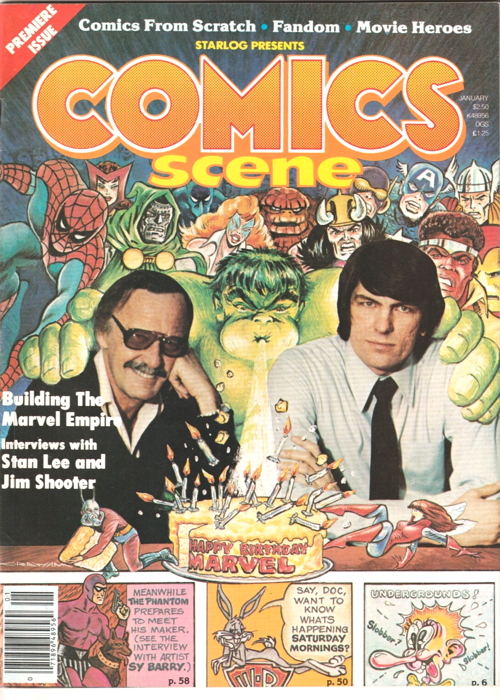
I thought these magazine covers were interesting, all of which I bought new off the stands at the time in the ’80s. This, the general interest Comics Scene debut issue, features Jim Shooter with Mr. Marvel himself, Stan Lee, on the cover:


…a motif repeated by this image by Ron Zalme on this Marvel house mag Marvel Age:


Mmm, okay, this next one may take some ‘splaining, because yes, I realize this isn’t the most flattering depiction of the man (though, um, there are definitely worse):


This issue of Comics Journal, #115, contains transcripts of several testimonies in a libel case brought about by writer Michael Fleisher against the Journal and Harlan Ellison. Shooter gets grilled pretty heavily about the business and the Journal‘s impact on it, among other things. Inquiries on the fanzine search engine should get you at least a taste of what’s going on there.

At any rate, when my mind turns to Shooter, this Comics Journal cover by Don Simpson is one of the images that immediately pops into my mind, for good or ill. That’s a big powerful drawing of a big once-powerful-in-comics fella…meant to be ironic, I think, but still, what a caricature. (And probably the only image that dares to pair Shooter with Zippy the Pinhead.)

Jim Shooter was a talented and influential creator and businessman who may have had his share of issues, but still he was a giant part of my comics reading over the decades and I’m sorry to see him go.

So long, Jim.

Peter David (1956 – 2025).

So I was already reading the Incredible Hulk by the time Peter David came on as the regular writer. Picking up threads established by previous creative teams — Bill Mantlo giving Bruce an abusive father and the preexisting elements of a multiple personality disorder, and Al Milgrom bringing back the grey-skinned version of the Hulk from the very first issue — David intertwined them into a long, engaging adventure over the next twelve years of his run. A complicated portrayal of the Hulk’s mental state was the central focus nearly the entire time, giving us wildly different interpretations of the character beyond the most famous “Hulk Smash!” version (one David famously had said he wasn’t interested in writing).

And what’s fascinating is that, ever since David’s run, the multiple-personality aspect has been, more often than not, a central tenet of the Hulk titles. I would say this makes David’s tenure on the book certainly the most influential. Even after John Byrne returned as scripter for the Hulk series in 1999, even that was a reaction against David’s influence, trying to twist the narrative back to the Hulk What Does All the Smashing business.

But Immortal Hulk, often held up as one of the greatest modern Hulk stories (with, um, a caveat), would not exist without David. The current horror-themed Phillip Kennedy Johnson and Nic Klein run on the character wouldn’t exist without David. Even that weird Donny Cates/Ryan Ottley Hulk-as-rocket-ship-piloted-by-Banner series wouldn’t exist with David. The ultimate version of the Hulk we see in the movies we would not have without David.

And it wasn’t just Hulk he wrote. Oh no. I can’t possibly list everything he’s worked on (EDIT: but customer Corey did!), but the great DC Comics kid team book Young Justice, the weirdest take on Supergirl, the strange mystery/horror/fantasy comic Fallen Angel, the X-Men spin-off team X-Factor, half of the DC Vs. Marvel mini (with Ron Marz — bit of a mess, but thanks to those two at least it was an entertaining mess), Captain Marvel, Sachs & Violens

…and Star Trek.

Boy howdy did he write some Star Trek, and it remains some of the best Trek in comics to this day. Mostly wrote Classic Trek era, though he occasionally dipped into Next Generation, they were some of the most run TV-to-comics adaptations ever published. Some scenes and lines of dialogue from those still flash into my head to this day.

And Star Trek novels, he wrote too. Plenty of them, to much acclaim (and sales!). Of note is an odd little crossover between the classic Trek comics he wrote and the first Next Generation book he wrote, Strike Zone, where a minor character he was…encouraged to remove from the comic by the Trek Powers That Be, returned under a slightly different name in the novel to have his story wrapped up.

There were more novels than just that, such as movie novelizations (including the classic Return of Swamp Thing adaptation that manages to get Alan Moore in there as a character!), novels based on other franchises (such as Babylon 5) and his original novels (Knight Life – King Arthur returns and runs for New York Mayor, Sir Apropros of Nothing – lamed-legged thief makes his way through life with wit and not-always-good luck, Howling Mad – wolf bit by a werewolf changes into a man under the full moon).

Of course there is also his TV and movie work, writing for Space Cases and Babylon 5. Two of his movies were Oblivion and Oblivion II: Backlash, one of those borrowing the “not…SWEENEY!” joke from his Star Trek comics…I’m already going overlong on this, I’ll explain that gag later. Anyway, both those movies got the MST3K-style Rifftrax treatment and I always wondered how David felt about that. The movies were…what they were, you could definitely pick out David’s style in the script, but, well, it’s amusing enough to watch, and the actors looked like they were having fun.

This only really scratches the surface of everything he’s done. The man wrote a ton of comics and books, plenty of which are very entertaining. David can be a little too jokey at times — the man never met a pun he didn’t like — but the basics were solid and he knew how to tell a story and tell it well. And the man wasn’t perfect…he had a…very unfortunate blow-up at a convention that caused him to write this mea culpa.

As you probably know, David and his family had to repeatedly turn to crowdfunding to pay his medical debts, which is a damned shame. One would thing someone at Marvel or Disney or Sony could have ponied up 1% of whatever money they made off of Spider-Man 2099, a character David developed and has subsequently been used in movies and marketed in spin-off toys, and paid off literally all of his bills. Or that comic companies and their corporate owners could come up with some better way to treat their older and/or ailing creators after years of Generating Content that they then use to make piles of money in other deals.

Maybe this will be the final straw that finally gets these companies to do something about this.

But it probably won’t be.

Of course, if we had a proper healthcare system in this country none of this would be a problem in the first place. But ’til then…the GoFundMe is still open for Peter David’s medical bills, which his family still needs to pay. Please contribute if you can.

So long, Peter.

Your 2024 Predictions, Epilogue: The Night of Screams.

Before I get started, I wanted to note the passing of Chad Beckner, a quietly sardonic oddball in the best possible way, and who left us too soon. His brother, my old friend Corey, has a few words about him as well as a pic here.

So long, Chad.

• • •

So after looking at and responding to your 2024 comic industry predictions in parts one, two, three, four, and five, all titled (in case you were wondering) with names of episodes from the late ’80s Alien Nation TV show, the need for some responses, clarifications, and corrections became apparent. Thus, I’ll try to get to them all here and finally put this prediction business behind us…at least until I get to your 2025 predictions in January 2026! I mean, assuming we make it.

Starting with Part Two (didn’t really had much to say to responses in Part One), Joe Gualtieri responds to the lack of any Jack Kirby biographical film by noting there’s a stage play!

Chris V picks up my slack in my response to his question about whatever Kieron Gillen, Al Ewing, and Jonathan Hickman would be doing in 2025. I forgot to mention Gillen! Chris V usefully notes that Gillen is doing more work outside of Marvel and DC.

From Part Four, in response to my desire for Omnibus reprints of post-Crisis Batman stories, Randall reminds me that the DC Finest thing exists, including reprints of those very stories in this book:

Allan Hoffman informs me that the DC/Marvel Amalgam Omnibus delay was a printer error, and thus neither company got stuck with the bill on replacing them.

Joe Gualtieri (that guy again!) notes that despite my saying there was no new comic book announcement with Alan Moore, the Moon and Serpent Bumper Book of Magic by him, Steve Moore, and Many Artistic Hands, did come out from IDW.


Joe, that does indeed count for something. Not strictly a comic book, but I’ll take it.

Patrick Gaffney lets me know that despite my assertions, the Bendis version of the Legion of the Super-Heroes did appear in an issue of Green Arrow. Whoops, totally forgot about that.

And…that’s about it, I think, for just general corrections. There were a lot of responses in my comments in regards to the Legion of Super-Heroes and potential paths for revival…so much so, that may have to be its own post separate from the whole predictions thing. So I’m not ignoring you, I promise! I’ve written on the topic of Legion and its rise and fall and possible rise again before, back in 2016, and thus it’s probably time for an update. WATCH THIS SPACE, as they say.

Thanks again for reading the site and participating in the predictions, pals! I’ll see you next week with more stuff!

Bernie Mireault (1961-2024).


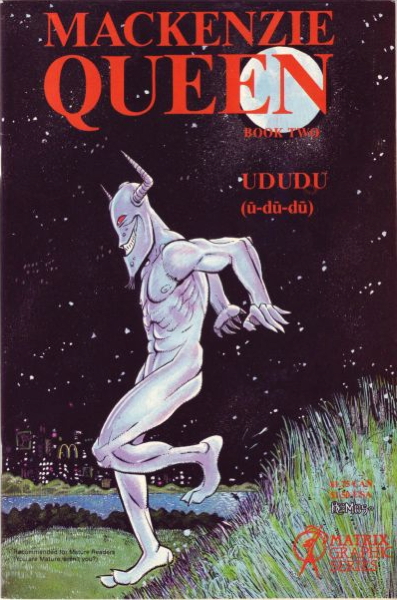
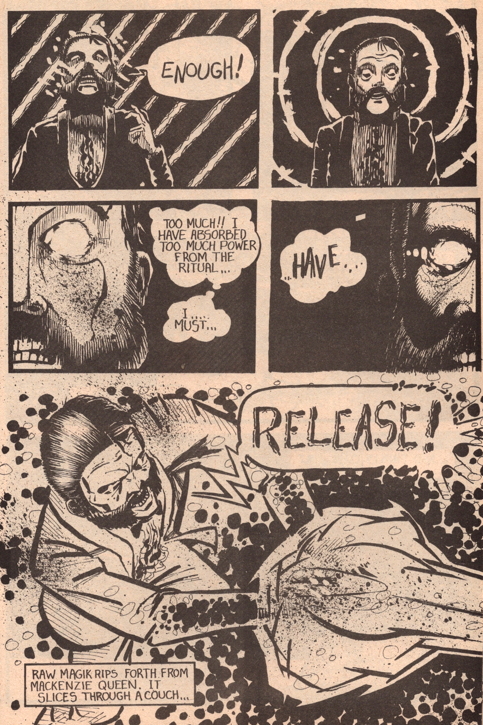
I’m not sure what turned me on to Bernie Mireault’s MacKenzie Queen way back when. It wasn’t a rack purchase…I found a copy in a back issue bin purely at random in the mid-1980s, not very long after the series had come out and completed its five issue run. It might have been the vague memory of an Amazing Heroes review that made it sound interesting to me. Or it may have been Mireault’s striking artwork, standing out as it did even here in its earliest form:


Mireault may have been best known for his non-super superhero comics The Jam, running many issues from a variety of publishers. Usually it was in black and white, but it did have the occasional color appearance, like this one from the Super Col Color-Infused Turbo Adventure from Hell #1:


And he would appear occasionally in various places, like a story in this Secret Origins Special, a short but notable run on Grendel, and somewhat bizarrely this one issue of the Blair Witch Project comic book tie-in.

His comic work declined in recent years, though he did have one final hurrah with the rerelease of some of his The Jam material, plus some new work, from my pal Nat Gertler’s publishing company About Comics. (In fact, Nat has dropped the price on the remastered trade paperback of the first The Jam series, basically selling them at cost to get more people exposed to Mireault’s wonderful work.

And yes, I did say his “last hurrah” up there, because, as you likely saw on this post’s subject line, Bernie Mireault is no longer with us. He was a wonderfully gifted talent in an industry that didn’t appreciate him as it should have. (A story, sadly, that has repeated itself several times.) I selfishly wish I could have had more from him, but I will still treasure what I got.

Pal Nat also has a tribute to the man.

So long, Bernie.

“All life is a blur of Republicans and meat!” — Zippy.


Whelp, I suppose I’m an original art collector now, having followed up my Nancy strip purchases with this, an original pen-and-ink drawing of Zippy the Pinhead by his creator, Bill Griffith.

This is via the official Zippy the Pinhead webpage, though the actual arranging of the purchase had to be done via email (since the site’s payment processing is not working at the moment). This particular item allows you to pick either from a list of pre-selected “Zippy-isms” (like the ol’ standby “Yow! Are we having fun yet?”) to fill in the word balloon, or you can enter your own, if it’s not too long.

In my case I picked a Zippy quote from a published newspaper strip that probably baffled the squares but the real heads know:

And now here it is, an original Zippy pic in my very own home, bringing me inspiration and hope in this fallen world.

And I of course encourage you to get your own, or avail yourself of the many other goodies on the site. From the main page you can use a PayPal link to get yourself a signed copy of Griffith’s latest book, Three Rocks! Am I thinking really hard about doing so, even though I already have a copy? The answer is not “no.”

• • •

I want to note the passing of the great Bob Newhart, who escaped this world at the too-young age of 94. And I say “too young” because frankly, we could’ve used him around these parts for at least a couple more decades.

The comic book connection here is, of course, his short-lived sitcom Bob from the early ’90s, where he played a comic book artist. I watched most of these, and…well, Bob was always great even if the material wasn’t up to snuff. The one episode aimed directly at us nerds was the one where Bob’s character, “Bob McKay,” was accepting a comics award, with Jim Lee, Marc Silvestri, Jack Kirby, and for some reason Bob Kane, along with the always telegenic Sergio Aragones.

There was a six-issue run of Mad-Dog as a tie-in, supposedly the comic book McKay had worked on:

It was a flip book, featuring the “classic” version on one side (by Ty Templeton) and the “modern” dark, gritty version on the other (by Evan Dorkin and Gordon Purcell). The two different takes being a plot point on the show itself, you see. Haven’t read probably since it came out, couldn’t tell you a thing about it at this point, but…the creative teams give me at least some hope this is better than it should be.

So long, Bob.

Just another miscellaneous Monday.

It’s another miscellaneous post, as I’m too scatterbrained right now to focus on a single topic, so bear with me until I can get my head on straight again.

• • •

First off, I wanted to plug my pals over there at Vintage Video, the podcast what is plowing its way through all of 1980s major film releases with observations, analyses and trivia imparted in an easy-going and humorous manner, with only the occasional F-bomb. I’ve added a link to the sidebar there that will take you to their site and their archive of over 400 episodes, not even counting the bonus ones you’d get via their Patreon.

Oh, and have I been on this podcast, you may be asking? Why yes, I have, this very episode right here where we discuss the Heavy Metal animated film (and I wrote about the experience here). …And will I be making another appearance on there in the near future? You’ll just have to wait and see!

But, despite my appearing on the show, I hope you check out this podcast. It really is one of my favorites.

• • •

So a couple of days ago over on the Blueskies I talked about how well the Doom one-shot was selling for me:


I’m posting the Adi Granov cover variant here because that’s the one I specifically got the most requests for, and who could blame folks for wanting it?

I implied that it was more of that dreaded speculation that was firing up demand for the book. I was asked why they wanted it, and my assumption was that it wasn’t for any specific reason, just that it was in short supply and that was enough to attract folks with dollar signs in their eyes. I’ve seen it happen plenty of times before. (Frankly, if there was a reason, I would’ve said it was the shots of Dr. Doom’s unmasked face, which they seemed to be more free about showing than in the past.)

However, Chad, the person who had asked me about the speculation in the first place, found the actual reason…apparently there’s a tribute to the late rapper MF DOOM, utilizing one of his lyrics. Well, his fans found out, and showed up a week late to get the comic because retailers aren’t ordering piles of titles to sit around for eventual sale, they ideally order to sell out or close to the initial week.

You can read all about these latest comics market shenanigans in this Comic Book Resources article. ANd I’m sure we’ll get a second printing in six to eight weeks or so, just in time for the MF DOOM fans to be no longer interested, but I’m sure I can still move copies to the regular comic fans. Ah well, What Can You Do?

• • •

A sad farewell to Tom Luth, the long-running, and recently retired, colorist for Sergio Aragones’ Groo the Wanderer. Mark Evanier wrote a bit about his colleague, as did Sergio. The man did amazing work, somehow keeping up with Sergio’s highly detailed artwork, month after month, decade after decade.

So long, Tom.