Yes, there are plenty of feet, Mr. Tarantino.

Okay, before I get into today’s entry, I want to point back to Monday’s post about the Donald Duck comic from the Rijksmuseum in Amsterdam. Because I am an unworldly American who also has eyes that occasionally betray him, I referred to the museum by a different name. I’ve corrected the post (but left my dumb mistake there and crossed out). Thanks to Walter for pointing this out to me.

Now, onto to hopefully less error-ridden looks at some of this week’s comics! SPOILERS AHEAD!
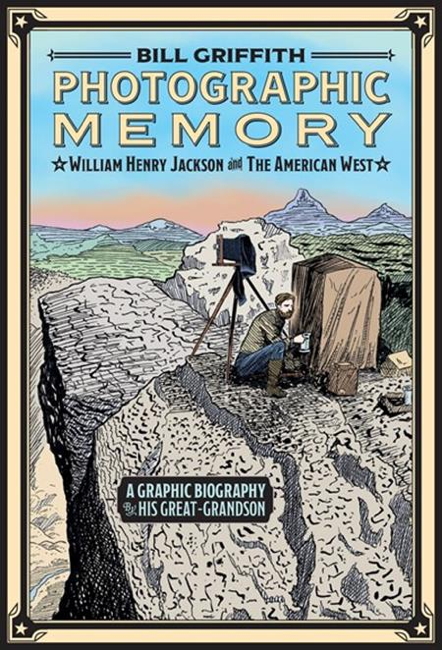

Now, this graphic novel I haven’t had a chance to read page one yet, but it’s Bill Griffith, creator of Zippy the Pinhead and master cartoonist, presenting another of his epic-length biographies, like those of Schlitzie, the famous real life “pinhead” of the 20th century, and Ernie Bushmiller, creator of Nancy.

Griffith is going back to his own family as a subject, having previous written about his mother in 2015’s Invisible Ink. This time he’s examining the life of his great-grandfather William Henry Jackson, the famous photographer. My brief glance through the book reveals another lavishly illustrated, densely-told narrative that promises to be as rewarding as any of Griffith’s works. I can’t wait to dive in.
• • •


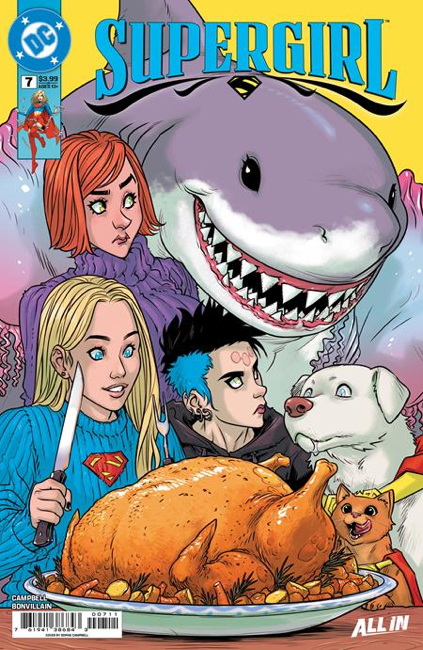
Sophie Campbell returns to full art chores for this Thanksgiving tale, as Supergirl is delayed for dinner by finding herself attempting to help a previous adversary. …Well, okay, no need to be coy, it’s Princess Shark, she’s right on the cover. It’s a fun read, and it doesn’t shy away from the dichotomy of the holiday being a time for family gatherings and maybe not having the most savory of origins. Supergirl is a solid book built around relationships and learning to understand each other, definitely one of the most worthwhile books on the stands.
• • •


Well, bless him for trying.

• • •


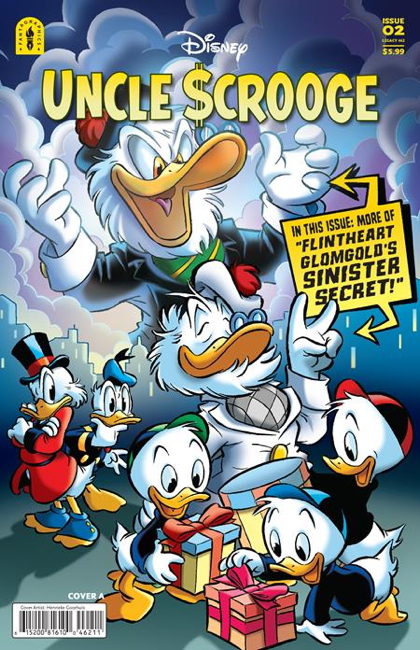
It’s a little strange that two different American companies are publishing their own Uncle Scrooge McDuck series simultaneously. Both are fine, but this one, the Fantagraphics series, is picking up the “legacy” numbering (the pictured issue is #462).

And this series also feels more like an authentic Disney Uncle Scrooge comic, reprinting as it does from Italian publications, one of the primary sources for modern Duck comics. The Marvel produced Scrooge comics feel more like “what if Scrooge was a Marvel character?” (and I don’t mean Marvel’s series of Disney-themed What If comics.) It’s a perfectly acceptable take, but it’s just off-model enough to be distracting.

The Fantagraphics series is enjoyable, though, and surprised me in #461 with a bit of serious emotional depth in the middle of all the wild goings-on. Old enemy Flintheart Glomgold has reformed (or…did he?) and as he’s about to take the nephews out to his place, Donald has this to say:
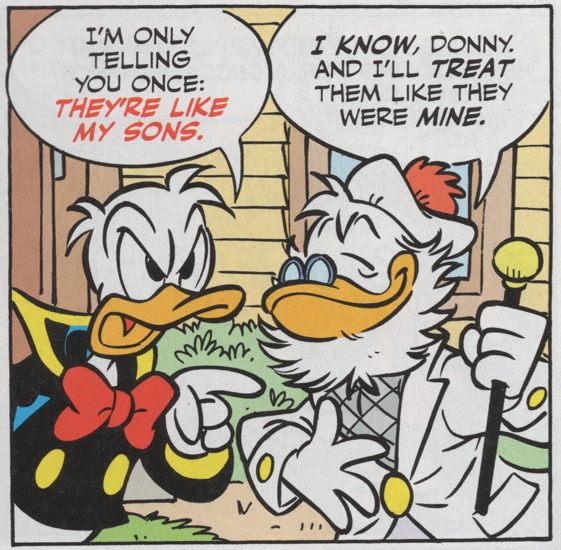

That’s not goofball, slapstick Donald being put upon by Scrooge or Gladstone, or furious Donald squawking incoherently…that’s “don’t piss me off, I mean business” Donald, who poses an actual threat to anyone who would harm his family. Good to know some of that steel in Scrooge made it to his nephew.

• • •

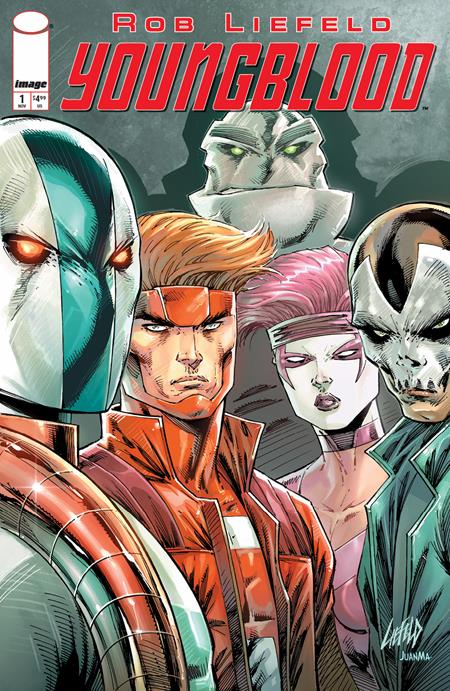
Oh, okay, fine, I’ll say a little more about Youngblood.

Look, I’m not a big ol’ Liefeld hater or anything. I appreciate that he has fans and that he can still sell books. Waaay back in 2009, I even put out the question “hey, I know I sold a lot of Youngblood when it first came out, did any of you guys buy it?” and at first I got some responses from folks who were all “yeah, I got caught up in the hype” or “I was totally into Rob then” and that sort of thing.

And then the Rob himself noticed, and linked to me on his message board, and behold, Every Youngblood Fan in America was suddenly in my comments, defending Rob and his comics and occasionally getting mad at me for some reason. You can read the three parts here (1 2 3) but be aware there is some linkrot, including links to the original comments, alas. But I quote enough of them to give you an idea.

And I discussed the comments and responded to them, even the ones that called me a jerk, and I tried to be open-minded about it all. The overall impression I received was that Rob’s fans, at least these responders, were hyperdefensive, and I quickly add, not that I can blame them. Especially at the time, when his work seemed to get pulled out and kicked around a bit, particularly in the comicsweblogosphere.

The ultimate conclusion was that 1) Rob’s work is Not for Me, and 2) More power to his fans for liking his stuff. I mean, that’s all.

Yes, my short review above was a cheap gag, one I got in my head and needed to release. However, like I said somewhere in those posts I linked from 2009, I would love nothing more than Liefeld committing, Erik Larsen on Savage Dragon style, to doing a single issue of Youngblood every single month for the rest of his career, just to see the weird and wild places it would go to. Personally, I think that would be amazing.

This first issue I don’t find particularly amazing…lots of full-page drawings and close-ups and backgrounds that are little more than lightly textured color and the occasional shot of a boat. Everyone’s leaping around and shouting at each other and, I mean, nobody’s buying Youngblood to see a comics version of My Dinner with Andre. This is pretty much the Platonic ideal of a Youngblood comic.

I will give the comic this. The first page, acknowledging the title’s return to Image with panels in the shape of the Image logo, is clever. And the last page reveal does make me want to see what happens next, even though it’ll probably be more leaping around and shouting.
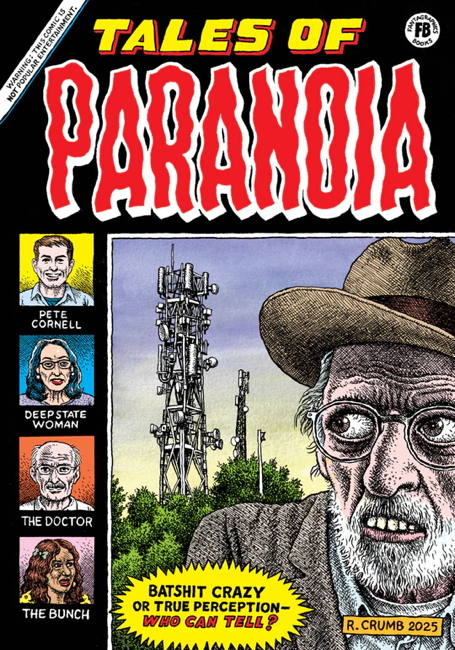
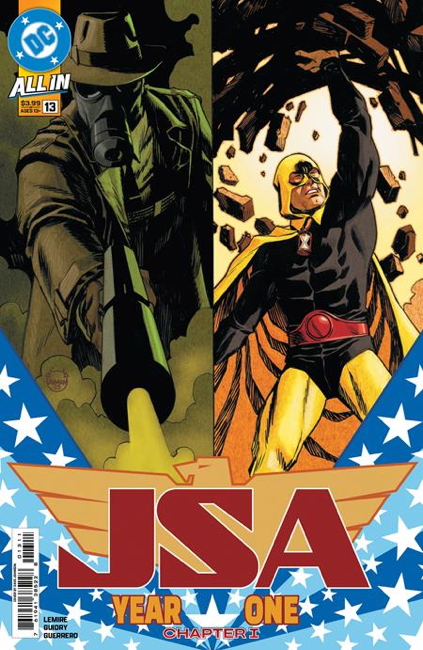
I wrote about as much regarding a new Crumb comic as I did about a Golden Age superhero only I like.

[SPOILERS AHEAD]


It’s been a couple of decades since we’ve had just a plain ol’ comic book from one of the last few still-standing underground comix legends, Robert Crumb. And on a purely artistic level, I am happy to report that he hasn’t lost a step with his illustrative mastery.

The big theme for the main stories of the book is, as you may gather from the title, paranoia, particularly in relation to conspiracy theories. A large part of these stories are caricatures of Crumb himself speaking directly to the reader, outlining his beliefs and opinions on various conspiracies, particularly those around the anti-vaccination movement (with which he sympathizes). He does point out occasionally that he knows he’s ranting, and that yes, maybe he’s the crazy one, but by and large it’s clear the sympathetic point of view is the conspiracy-minded one he’s espousing.

At one point Crumb complains that someone has lumped “alien visitation” in with some other, wildly racist, conspiracy, and he wonders why the former, something he feels that people have general interest in, should be associated with something as specifically awful as the latter. Which misses the point that most populist discussion around alien visitation is essentially defined by conspiracy, and in some cases can be inherently racist itself (see any “ancient alien” type show where primitive (cough)non-white(cough) cultures’ achievements can “only” be explained by alien intervention).

It’s…a lot of text-heavy pages, and I’m not doing much more here than picking out one particular example. I realize this sounds like a chore to get through, but like Crumb’s best work, it’s a peek directly into his head and what he’s worried about and what he’s obsessing over and no one does this sort of thing quite like him. It still functions as a good demonstration of misdirected thinking, and Crumb’s a smart guy…he knows what this all sounds like, and admits as much in the comic. I do hope he’s joking about not getting the COVID shot, though.

Other stories of note is a particular experience Crumb had on LSD decades ago, the memory loss of the evening that followed, and his sometimes nightmarish quest to figure out what happened. Keeping with the secondary theme of “problems with drugs,” I suppose, but he recalls so much of the event in great detail, that when he reveals there’s a bit he can’t remember, we feel that weird loss.

And there’s the final “Dirty Laundry” story, featuring Crumb and his late cartoonist wife, Aline. It’s a tale of what appears to be too many publishers of their work going out of business…a sad sign of our times. But it’s told with humor and Crumb’s hilariously bad bedside manner (where he tells Aline she’s just driving all these companies out of business with her work). At one point Aline’s probably facetious wish for her work to be forgotten takes on an extra depressing level knowing that she’s passed on as we read this. It’s a story that’s equal parts depressing and hilarious, which is like Crumb’s sweet spot.

Other stories round out the book (several single-pagers, and the longer “Deep State Woman,” which you can tell by the title is another conspiracy-minded entry), and it’s good to know Crumb, even in his 80s, can still put out work like this. Well, yes, I know I have problems with some of this comic, but I can’t deny the technique at work here. Hopefully this isn’t his last hurrah…I’d love to see more.

• • •


I have a very minor quibble with a character detail revealed in this issue, in a series that I’ve been enjoying once the first couple of issues shook out the rough spots and it found its footing. And I liked this new issue, too, as it covers the World War II-era beginnings of the team.

But the one thing that kinda mildly sticks in my craw, and I fully understand if this is just a retcon and I’ve got to learn to deal with it, and it involves Johnny Thunder. Yes, it’s me, the Johnny Thunder purist, the last Johnny Thunder fan standing in this brave new post-Crisis/post-Zero Hour/post-New 52/post-Rebirth/post-whatever else world.

Anyway, he tries to introduce himself to Jay Garrick, explaining that he has a magic Thunderbolt he can summon, that’s currently in the form of a pink pen.

…Which is a thing I don’t remember from his early stories, or his Silver Age appearances (though I could have missed something, admittedly). Johnny would say his magic word, “cei-u” (often in some variation of “say, you” in dialogue) and the Thunderbolt would show up and do his bidding.

In the very late years of Johnny’s existence, as an old man suffering from dementia, the Thunderbolt had been disguised as that pink pen, before being passed along to his successor, Jakeem Thunder. So Johnny does appear to have created the “Thunder-pen” concept, though not revealed until…a couple or three decades ago? Something like that.

So what’s going on in this new JSA is the establishment that Johnny didn’t just start doing that under the influence of dementia, but something he’s been doing all along. We just never saw it on panel ’til the end.

I guess in talking it out like this I’ve unstuck my craw and am better with it. It was just a surprise to see this particular character quirk that I more closely associate with another era, and not part of the Golden Age. But I guess it’s fine.

• • •

Also, today is the 11th anniversary of the opening of my store, Sterling Silver Comics.

Also, Superman should still be able to push around the bones and muscles in his face to disguise himself, like he did in the Golden Age.

[SPOILERS AHEAD]


The new Superman Red and Blue 2025 Special was certainly a welcome arrival this week, given the Red and Blue mini-series from a couple of years back was about 95% great (there’s that unpleasant story in the first issue where Superman is captured and tortured, which does not sit well).

This special has four stories presented in the limited palette gimmick, each tale colored with only shades of red and blue and somehow manages to look great anyway. The story I specifically want to note is “Out of the Ordinary” written by Dan Abnett, drawn by Caitlin Yarsky, and colored by Alex Guimaraes. And just so I’m clear, I liked this entire comic, and I enjoyed seeing Superman doing super things and being nice without having to worry about the continuity of the DC Universe at large.

And I liked “Out of the Ordinary.” But I did get stopped short at one point when Superman just up and admits to this small town reporter he befriends that, oh, yeah, I have a secret identity. Here’s a little piece of that:


Now here’s the problem. It’s me, I’m the guy who’s been reading Superman comics since the John Byrne relaunch in 1986 and have picked up every issue of Superman and Action and the other ongoings. That’s spitting distance within 40 years, which clearly no sane person should have done.

Stuck in my head from the promotion for the ’80s Superman relaunch was Byrne’s insistence that in this new version of the mythos, the fact that Superman even has a double identity wouldn’t be common knowledge. You can read more about that here. Prior to this, Superman having a secret identity was known by the general public, and often a major plot point as bad guys (or Lois) try to get Supes to spill the beans or trick him into revealing it.

That little bit of knowledge is always there, whenever I read a modern Superman comic, whether or not it’s still an active thing or if it’s gone the way of the fancy cuffs that were the last remnants of Jim Lee’s terrible redesign of Supes’ costume. Realistically, I know in the nearly four decades since the relaunch happened, some storytelling choice made way back when, by someone who doesn’t even work in comics anymore, is not going to be enforced.

But that didn’t keep your pal Mike from being tripped up by Superman telling this young lady “oh, yeah, I grew up in a place like this, and I have a regular job when I’m not Superman, etc.” Then again, he was just telling one person, not, like, announcing it on TV or anything. And she probably knows “oh, yeah, I should keep this to myself.”

I am reminded by that story where Jimmy Olsen gets a photo of Superman’s hand, showing a wedding ring (which he neglected to remove before going into action, as he usually would). After some shenanigans regarding that photo getting out to the public, and getting explained away as a Justice League thing, Superman does confide to Jimmy that he is married, but his private life is private. And Jimmy, being Superman’s Pal, of course keeps that under his hat.

Okay, that’s a lot of typing that’s basically “Mike can’t let things go,” but I do want to add this story is still a fun and pleasant one. As are all the stories in this comic.

• • •


Normally, in current comics, especially with the limited page counts and occasionally sparse storytelling, I can find myself resenting any full-page illustrations, or God help us, two-page spreads that aren’t the opening splash pages. That usually just feels like wasted space, eating up valuable real estate.

Daniel Warren Johnson’s story in Absolute Batman Annual #1 delivers multiple full-page splashes and two two-page spreads, and they are earned and fantastic.

You can’t fool me, that’s Miracleman in different clothes on that cover.

So I don’t know where to even begin with the work of Fletcher Hanks, Golden Age cartoonist. He was only active for a couple of years, from 1939 to 1941, and it would be easy to dismiss his oddball superhero comic book work as naïve art, as Hanks’ stories rarely seem more than unfettered id unleashed upon a page with no mollifying influence between thought and execution

But also keep in mind the superhero genre was still in its infancy, with Superman his own self first appearing in print in 1938. The language and tropes of the superhero comic had yet to establish themselves, leaving Hanks free to interpret the genre in his own unfettered way.

If you’re unfamiliar with the man’s work, a quick Googling will pull up plenty of examples, or you can see an overview of a Stardust story here. And trust me when I say, that’s not even one of the weirder Stardust stories.

A thought that just crossed my mind: Hanks’ comics are like, what if the Herbie the Fat Fury stories were serious? It almost feels that way.

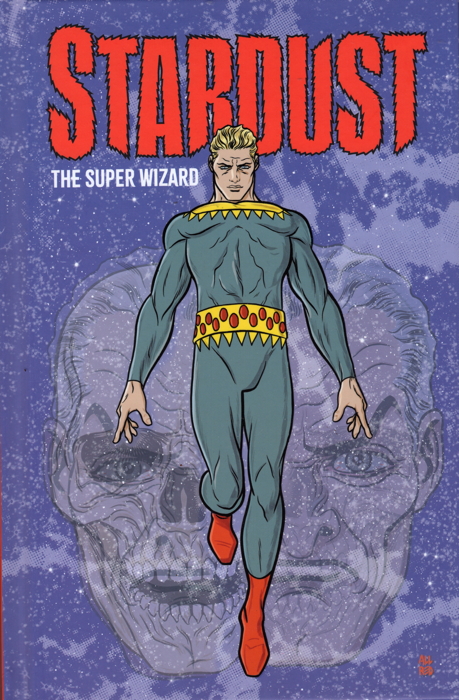
At any rate, Hanks’ work started get a lot of attention a decade or two back, thanks to a couple of nice paperback collections from Fantagraphics. That certainly made new fans of the man’s work. And that brought us to a couple of years back, when a book of new stories about Hanks’ Stardust character showed up on a crowdfunding site. Lots of great creators were involved, lots of perks for the supporters, it all looked great.

Unfortunately, it was a large number of creators, which is, to use the old expression, like herding cats, so the book took a little longer than intended to produce and put out. But supporters were kept in the loop, and worries were kept to a minimum.

At last, this month, they started to ship, and I got mine:


Haven’t had much more than a brief flip-through of the volume, but it’s very nice looking, beautifully colored and printed, and featuring some real top flight talent.

Unfortunately there is a page of A.I. art in the book, apparently being used by the “artist” on purpose to make a point about something, but I’ll never read it and neither will you. Doing A.I. “comics” is an insult to other actually talented creators involved in this book and should never have been allowed.

The other little thing that bugged me about this had nothing really to do with the book itself, but rather how one of the funding campaign perks was handled.

This is what I ordered for the shop:


That would get me three copies of the hardcover, and as it says right there in black and white, “all copies signed by Mike Allred.” Great, all the books will be autographed, I’m getting everything at a reasonable price, should sell great at the shop.

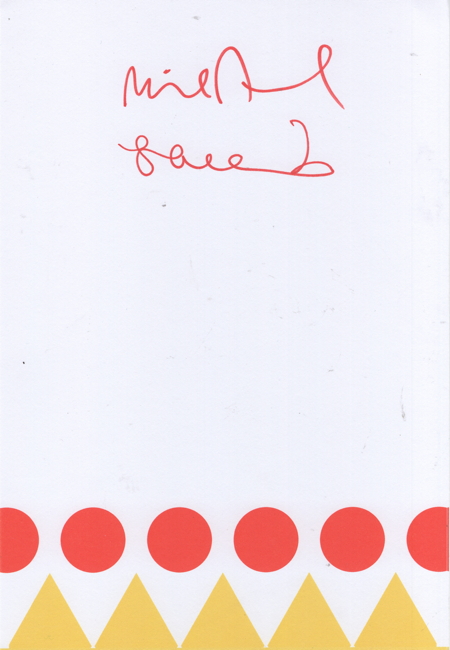
As it turns out, the books weren’t signed, and I instead got these separate bookplates with Allred’s signature:


…which, you know, “signed bookplate” is fine, too, probably easier for the publisher to get those shipped from place to place instead of mailing hundreds of books to Allred, or flying Allred out to where the books are and have him sign them there. But “bookplate” is different from “book signed” and that distinction should have been made more clear.

On top of everything else, said bookplates are wider and a hair taller than the actual book, so if you’re gonna but them in there, you may have to trim them down. And they’re not self-adhesive so you’ll have to glue ’em down yourself.

Sigh. I did drop a line to the publisher suggesting that he be more careful about this sort of thing in the future. Or maybe it was just something that was out of his control…maybe he was just as surprised at the size of the signed bookplates but it was too late to do anything about it. Who knows.

To reiterate: the book itself, with that minor one page caveat, looks wonderful and I can’t wait to dig into it. The other issues may be a little disappointing, but the book itself is the important bit and that looks like they got it about 99% correct. Can’t wait to see who was able to lose their minds enough to match Fletcher Hanks’ illustrated insanity.

Leaving comments “on” may prove to be a mistake.

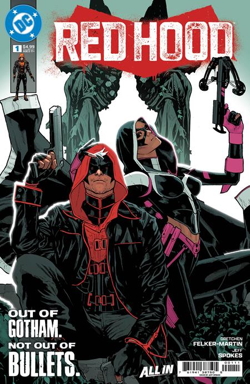
Without getting into the entire series of circumstances here (which you can read about in this article), the new fairly-well-anticipated ongoing Red Hood series that came out last Wednesday has already been canceled by DC Comics, who issued a statement regarding “standard of conduct” policies, credited the full cost of the comics back to retailers, and, I don’t know, probably salted the earth besides.

Anyway, I had a few copies still on the shelf come Thursday morning following the news of the series’ ending, for which I had a sudden influx of folks immediately interested in picking it up. Sometimes even multiple copies.

Now, when I posted about this on Bluesky, I had some folks asking maybe if they were being bought to be destroyed in protest of the comic’s writer, and no, I didn’t get that vibe from anyone. Most likely it’s either 1) curiosity about the comic itself, or (especially in the case of the multiple issue pick-ups) 2) immediate flipping on the eBays. Sure enough, we’ve got some wild prices on that #1 over there already, so “an ill wind…” and all that.

It’s a weird situation, brought about by the most unfortunate events. And just so we’re clear…no matter how abhorrent or even dangerous I found the man’s beliefs, shooting him was not the answer. If anything, regardless of the shooter’s reasons for doing so, it’s just made things more difficult in sociopolitical conditions that are already deeply damaged.

And frankly, given some of the man’s past statements, I can understand why the comic’s writer would be extremely unhappy with him. And that’s fine. You don’t have to like anyone. You don’t even have to mourn someone you didn’t like when they’re gone. But let’s draw the line at, like, shooting them. Maybe just yell at them instead.

Sigh. I said I wasn’t going to get into it, but it’s kind of hard not to. I didn’t even want to write about this for today’s post, but I felt like I just couldn’t ignore it. So there you go, a real world ugly political mess that’s pushed its way into comics. Not what anybody wanted.

And please, also, don’t forget the victims of the Evergreen High School shooting that happened the same day. Or the Historically Black Colleges that are under lockdown over what will hopefully be spurious bomb threats.

Just…be careful out there. And be good to each other.

Of course, that Green Lantern space story kinda didn’t end well.

[SPOILERS ahead]


Sophie Campbell’s Supergirl continues to be a delight, this time with guest-artists Rosi Kampe and Paulina Ganucheau, who do quite nicely) and turning over the issue to the various super-animals that have turned up so far in this title’s brief run thus far.

One particularly fun innovation to a Super-Pets story that I don’t think I’ve seen before is that Ms. Campbell has the animals unable to directly “speak” (or telepathically “think”) at each other, like you would see in the various Pre-Crisis stories. That leaves all the animals unsure of each other’s motives, which leads to some cute moments. Highly recommended, as per usual.


This issue goes hard, twisting some of the supporting characters from previous issues into forms more closely approaching those we are more familiar with from the regular DC Universe, in the worst way possible. Gruesome and brutal, but not in an off-putting way, which is the real trick. Scott Snyder and Nick Dragotta know how to keep you hooked and all you want to do is see how it plays out in the next issue. Probably one of the best examples of a serialized story in American comics keeping you invested from issue to issue.


Sometimes I just wish Green Lantern would be on Earth trying to figure out how to keep Goldface from robbing banks. I don’t mind the intra-Corps in-fighting/politics and the Huge Reality-Threatening Battles on occasion, but I’m remembering that bit of business in the ’80s where GL was forced to leave Earth and had to go fight space crime and how unusual that felt.

So what am I trying to say here. Maybe we can…scale things down a bit? The stakes are always enormously high, and it always comes down to armies of space cops shooting beams at whatever. Don’t get me wrong…I’ve been reading Green Lantern comics since about 1981, and I like the characters and the situations and I’m enjoying Sinestro as a “frenemy” type character. I just feel like we’re all just trying to do the “Sinestro Corps War” saga over and over again and could use a little more variety.

That said, the new issue of Green Lantern Corps announces the return of a particular Big Green Lantern Villain that’s an old favorite of mine, and oh Green Lantern, I can’t ever hate you.


The brain-switcheroo in Smallville and Fire and Ice’s sojourn in Hell all come to a swift end in this issue. It feels like it wraps up a little too quickly in this issue, in that I was thinking maybe there was going to be a 7th issue by the time I was 2/3rds of the way through this one. But all the problems are solved and everything’s wrapped up nicely and it’s a joy just to see Fire and Ice — Bea and Tora — just being friends, and that friendship is the real centerpiece of this comic. Well, that and the light goofiness of the Smallville supporting cast. Here’s hoping for a third mini-series.

• • •

Wanted to note the passing of online pal Nick, the two of us having followed each other on various social media for some time. I mean, we weren’t close, dear pals, but we traveled in some of the same circles, shared some interests, had friendly interactions. Seemed like a good guy, and I’m sorry he passed so young. So long, Nick.

This week’s new issue of Krypto is good too.

Hi pals! I’ve been a tad out of sorts of late so the content-generating gears in my brain have been working slower than usual, for which I apologize. Proper content will resume shortly on this site, such as starting on answers to your questions and getting to the next entry in the Final ’90s Countdown.

In the meantime, why not hie yourself hither to the Longbox Heroes podcast run by close personal friends Todd and Joe, which while on the Patreon site, their main weekly comics podcast and their weekly After Dark show remain free. However, if you throw ’em a buck or five, you get all their bonus podcasts (sometimes right away, sometimes you have to wait a couple of weeks, depending on your subscription level).

Now, those bonus Patreon-only podcasts may be of interest to you, the Progressive Ruin Platinum Member Cardholder, in that I’m definitely involved in one, and may eventually be involved in the other. In the first case is their monthly “Previewing the Past” show, where they send 2 to 3 hours discussing the Diamond Previews released exactly 30 years ago this very evening WOOOoooOOOO spooky! And Todd and Joe were nice enough to invite me, or I shoved my way in, one of those two, and I’ve been supplying additional notes based on my own memories and experiences about some of the items in these old catalogs. Since, after all, I am quickly approaching my 37th anniversary in the business, so I sold all the stuff in those 30-year-old Previews!

I should emphasize I’m submitting written material for Joe and Todd to read, so you’re not going to hear my malodorous — er, mellifluous voice on the show. However, their other monthly Patreon podcast, “Comic Book Oddities,” is where the two lads discuss comic book movies of the past. The next episode’s movie is randomly picked at the end of each show, and somewhere in the mix is America’s greatest cinematic achievement, Frank Miller’s The Spirit. And Joe has said, on air, that should The Spirit ever turn up via random selection, they’ll find a way to have me actually on the episode. So, there you go, added incentive (or perhaps, decentive) to sign up.

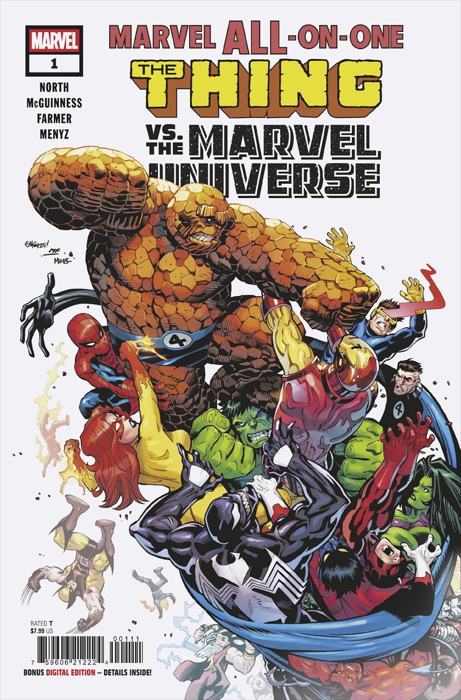
And, um, okay, here’s some actual comic book stuff: I read this week’s forthcoming release of Marvel All-on-One #1:


…and it’s a hoot. All splash pages inside, as befitting a comic where the Thing just beats the stuffing out of folks. Don’t reveal the surprise ending to your friends!

Wonder how many shops put this Archie book on the all-ages rack?

[SPOILERS ahead]


It’s a real pleasure to read one of these oversized treasury comics where the artwork is drawn to take advantage of the larger dimensions of the pages. Plenty of full page illos and double-page spreads, and while this may annoy in your standard-sized monthly periodical comics, it feels like a special bonus to get such imagery in these books. Bruno Redondo (along with assists from various artists like Dan Jurgens and Brett Breeding) knocks it out of the park here, and the comic is never anything but delightful to look at.

Now, the story…it takes place slightly in the past, where Superman and Lois’s son Jon was still a boy, before getting aged up for reasons I’ll touch upon shortly. And because it’s the aforementioned Dan Jurgens is the writer, we get more Jurgens creations in addition to Jon popping up throughout the story, such as [reminder: SPOILERS] the Cyborg Superman and Maxima. (Well, okay, Jurgens didn’t create Maxima, but he sure used her a lot.)

As I was reading this, I was just slightly disappointed that these particular characters got dragged out from the last thirty years or so of Superman’s history. I’d hoped for something a little less deep-cut-ish and more accessible for new readers, rather than Jurgens doing a “My Greatest Superman Hits.” But, in fairness, it was either “yet another Superman Vs. Luthor” story versus something that showed off some variety in Superman’s rogues gallery, so ultimately, in retrospect, I suppose I don’t actually have a problem with this.

One this this story does do is establish the history of the current version of Superman, spending a few pages outlining the character’s Big Events (death by Doomsday, his marriage, etc.) and trying to get straight just what exactly is canon for this character, who had his from-scratch reboot in 1986 and has gone through some various revisions in the decades since.

(Also of note: it’s confirmed that Maxima was once a Justice League member, from way back in the pre-Zero Hour DC Universe.)

(Also of note: the “timeline,” as such, ends around the time Superman first encounters his father Jor-El, who survived Krypton’s destruction, but takes place before Jor-El takes Jon on his space trip, during which, due to time travel/dilation/timey-wimey stuff, he ages into his late teens. So Jurgens is really threading the needle here of when this story took place.)

After the story are some pages promoting the new Superman film, with nice big color photos of the cast. Overall, it’s a fun, attractive book…would’ve been okay with not seeing the Cyborg Superman yet again, but, eh, it’s fine. Hopefully this comic will sell well enough to encourge DC to publish more new treasury comics, instead of just reprinting the old ones.


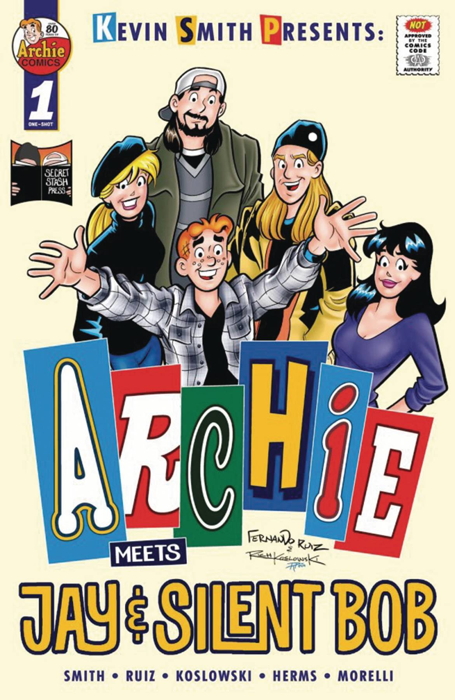
Kevin Smith his own self writes this crossover between the world of Archie and the View Askewniverse, and while not wildly over-the-top funny, it’s certainly amusing enough and will inspire a few Sensible Chuckles.

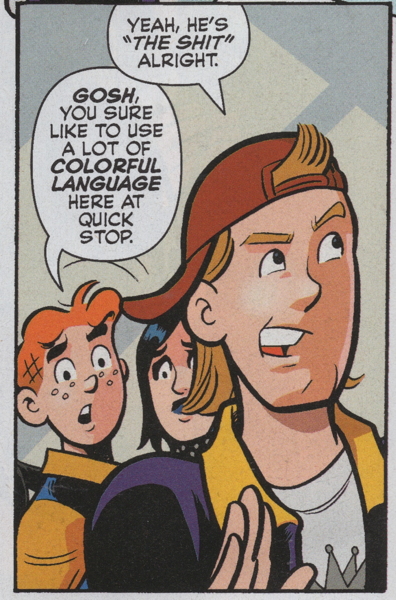
A good chunk of the humor is in the contrast between the filthy language used by Smith’s characters versus the general innocence of the Archies, commented upon within the book itself:


And I’m not made of stone, seeing characters drawn in the Archie style, in a comic published by Archie Comics, use naughty words made me laugh a bit.

The plot itself works its way up from smaller character pieces and interactions into a giant climactic event at a concert, but I felt the smaller scale scenes worked better. There was just more focus in the earlier bits of the book, while things just got a little too chaotic at the end. Might have been the sort of scene that would work better cinematically but falls a little flat on the page. Not that it wasn’t amusing, it just didn’t entirely work for me.

But overall I enjoyed the comic, which reminded me a little of the Good Ol’ Days of the early Clerks comics from Oni Press. I wouldn’t mind seeing more of these, though I suspect we were lucky to just get the one.

Also, I liked the running gags referencing specific Archie comics titles. I knew that Pep wasn’t in there just by chance!

On a related note, I was listening to some old mix discs of mine (remember mix discs? ask your grandparents) and came across this one track, which is about the first 30 or 40 seconds of this very Not Safe for Work video. That still makes me laugh.

Yes, Scribbly’s hair was pretty much just like that.

So in the wake of the mid-1980s Crisis on Infinite Earths, the epic mini-series that changed the DC Universe permanently and forever, never to be altered again, the masterminds behind that series, Marv Wolfman and George Pérez, put out a two-part History of the DC Universe. The last two installments of the 12-issue Crisis were intended as an overview of the new, combined, parallel-Earthless DCU, but ended up as its own thing.

The premise of the series was that Harbinger, former associate to the Monitor in Crisis, is documenting the events of this new version of the DC Universe, presenting how everything now fits together when it had all been on multiple Earths before. It was text with beautiful illustrations by Pérez, and was out of date almost as soon as it was published, as DC began its multiple decades of trying to bend everything back into something resembling pre-Crisis shape. However, it still stands as a wonderfully drawn art showcase which still gets rereleased from time to time, including a new reissue of the Crisis on Infinite Earths Omnibus that includes History.

However, after nearly forty years, it’s been decided that it’s probably time to try again and see where the DC Universe stands. This is probably the right time for it, as we seem to have gotten away from DC’s near-yearly attempts at undoing Crisis from the last decade or so and the DCU has settled down into some relative stability.

And that new try? Behold, The History of the New DC Universe written by Mark Waid, issue #1 illustrated by Jerry Ordway and Todd Nauck, main wraparound cover here drawn by Chris Samnee:


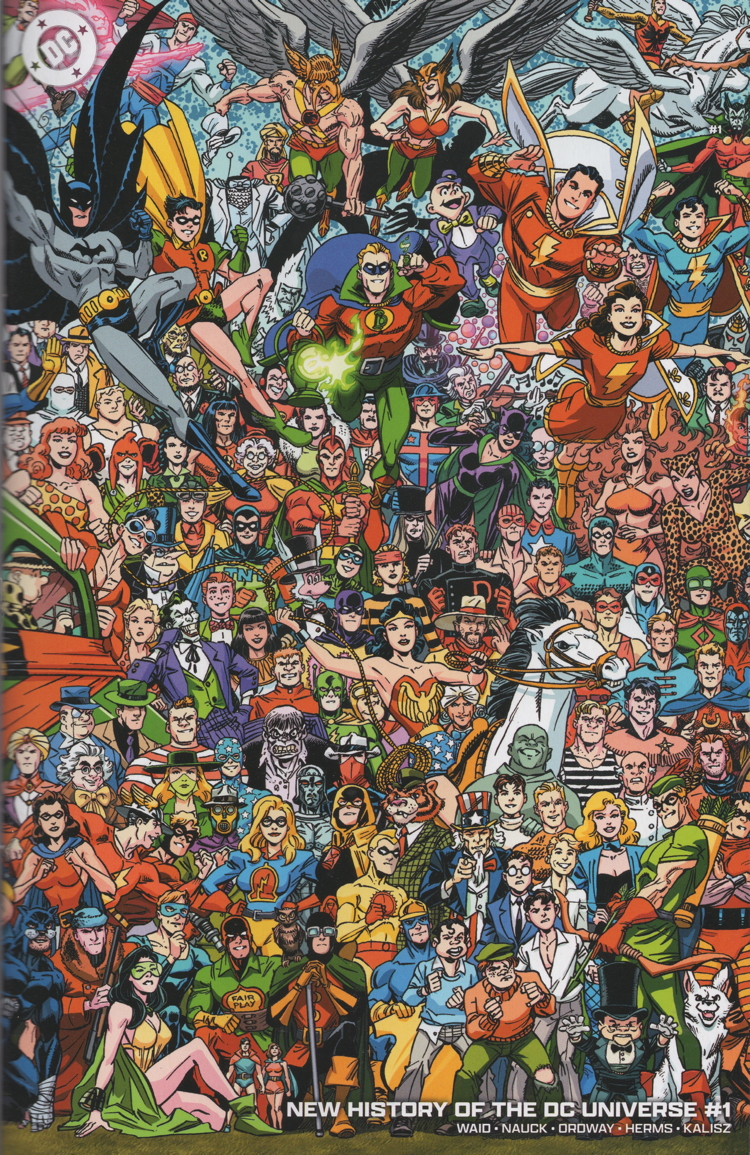
I did love Samnee’s cover, and if I gave in to temptation, I would have kept one of every cover for myself. I did manage to restrict myself to just one cover, though, and it’s the wraparound group shot cover by Scott Koblish:


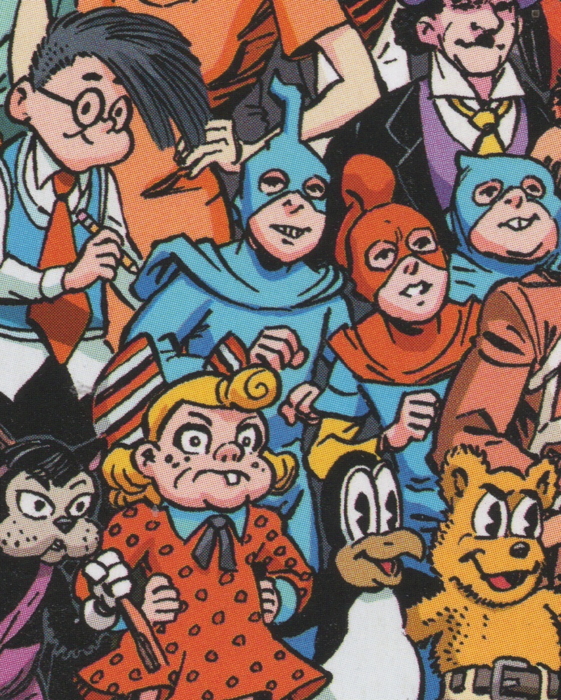
Here’s a detail I pulled off the back cover, specifically because this image includes Sheldon Mayer’s Scribbly:


There’s a specific reason why I like the Koblish covers specifically, in that it includes characters like some of those funny animal characters that don’t get mentions in the comic itself but have their existence acknowledged in this huge group shot. We also get characters that, In Real Life, first appeared during the Golden Age, but in the new DCU are presented as more contemporary characters, like the Marvel/Shazam! Family.

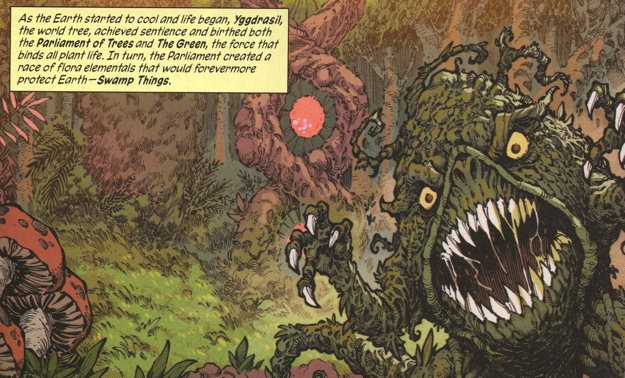
The actual content itself is split into two parts: the main “story,” as such, is Barry Allen, the Silver Age Flash, presenting a chronological step-by-step New History of the DC Universe, as it says on the tin, light on the text and transitions, almost by necessity, but heavy on the swell art:


Yes, I picked a Swamp Thing-related image as an example, You know whose blog you’re on.

Another nice touch is that Barry acknowledges at the very beginning the presence of “Crisis-level events” that have mucked about with continuity, which does have me curious as to how the series is going to handle things like Crisis on Infinite Earths, or Dark Crisis, or the various Metal series, or, God help us, Doomsday Clock.

Of course, it’s easy to draw comparisons between this series and the History of the Marvel Universe by Waid and Javier Rodriguez, released about six years ago. Similar in layout, with art heavy pages and small blocks of text in the front of the book, with pages of notes in the back (more on the notes section shortly), it differed in that it the Marvel history seemed to go out of its way to point out and correct continuity issues.

I imagine it’s at least in part because Marvel’s mostly avoided line-wide reboots or endless rejiggerings of its fictional world. But some characters, like the Punisher, had their origins in the Vietnam War, which is maybe a little too far back in real world history for the Punisher to still be an active and effective vigilante in stories set in modern times. As such, the fictional Siancong War was created to replace the Vietnam War, always some vague time in the recent-ish past, being pushed along forward in time much like the Marvel characters themselves, staying current in relation to the real world year.

If I recall correctly, characters like Reed Richards and Ben Grimm from the Fantastic Four, who originally had fought during World War II (and was still a thing, so to speak, as of 1981, kinda sorta), had their wartime experiences shifted to the Siancong War. But some WWII-era characters who had an “out,” like Captain America’s initial 20-years-long suspended animation being extended eventually to now, what, 60 or 70 years, are still WWII-bound. And there’s Namor, who’s long-lived, and there’s the Red Skull, whatever his deal was…all still connected to the 1940s.

It’s mentioned here only because New History of the DC Universe hasn’t yet dropped any huge change along those lines, at least that I’ve noticed. To be honest, I was expecting something drastic being done with the Justice Society of America, a World War II-era superteam, some of whom are still around and kickin’ today. I think the Golden Age Green Lantern is kept vital by his ring, and the Golden Age Flash is…his connection to the Speed Force, maybe? At any rate, they’re all literally 100 years old or more now, or thereabouts.

I think the solution provided, seemingly inspired by Last Days of the Justice Society by Roy and Dann Thomas and David Ross, that they were on an “interdimensional adventure” that extended their lives “by decades.” It’s sort of the DC version of Marvel’s “Captain America was frozen in ice for [x] years,” where they can just keep increasing that value of [x] as needed. Anyway, I think this preferable to changing the DC WWII superheroes to, like, some newer war or an invented war.

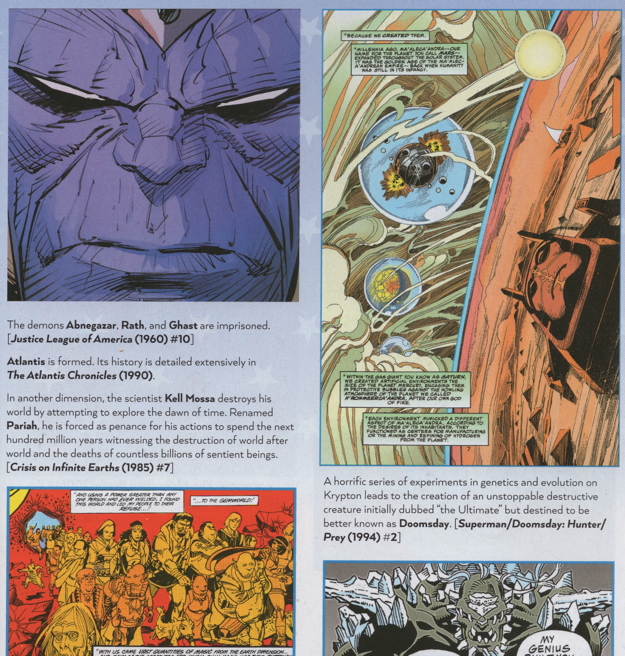
As I said, like the Marvel History, there are pages of extra notes in the back, titled “New History of the DC Universe Timeline, written by Dave Wielgosz, based on the research he and Waid underwent for this project.


In case you’re wondering, yes, Scribbly gets a mention in the Timeline.

Almost by necessity, the “comic book” section of the publication had to skip a lot of the finer details while hitting the big moments of the history. There’s really only so much space to work with, and while I’m sure everyone involved would have liked to spend page after page detailing the origins of every Golden Age character, but that just wasn’t going to happen. But here in the notes, or Timeline, section, you can get those details and even specific issue numbers. It’s a nice, informative supplement to the main thrust of the book.

New History of the DC Universe is a wonderful artistic showcase, supported by the very thorough informative writing and research by Waid and his team. Like I said above, I’m looking forward to seeing how the later more volatile eras get hammered into coherent shape.

Dickie’s got a gun.

So as a funnybook-readin’ adult, there are very few times where I’ve had a direct, visceral reaction to something in a comic book. Like, a literal shock to an event or, well, something else. I mean, I’ve enjoyed comics, I’ve been in suspense, I’ve found things funny, but rarely have I encountered a comic that really gave me a jolt.

One of them was Superman: American Alien, which, yeah, I know, that writer, that series, etc., but there’s a page-turn jumpscare where Clark is just sitting there calmly, and then on the next page there’s Batman just crashing violently through a window at him. Don’t know why that was so effective on me, but this generated actual frission.

Another was, in of all things, Doomsday Clock, where at the back of the book you will happen upon a reproduction of a photo that plays an important part in the story (and its presence actually fits thematically). Totally unexpected, totally surprised me.

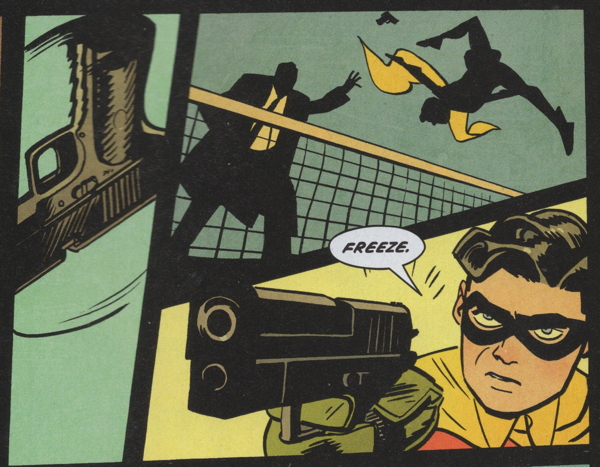
The latest example is a brief bit from the beginning of this week’s Batman and Robin: Year One #8, in which Robin disarms a thug, grabs the gun, and immediately points it back at his opponent:


This struck me as…wildly wrong, an image that just gets hit with the “REJECT” stamp by my brain. Of course, moments later Batman slaps the weapon out of Robin’s hand and admonishes his sidekick about never using guns. But that panel was a real “oh shit” moment that I physically felt.

I tried to share this observation on the War Rocket Ajax Discord message board, and got a real sense that I was, like, the one person to feel that way. Of course, I don’t participate too much (mostly I’m on there to talk to the show hosts Chris ‘n’ Matt) and the whole ecosystem that’s built up feels like I’m reading someone else’s mail, despite the fact I’ve listened to every episode of that podcast. At any rate, I got no back-up on my particular feeling about this panel, but it’s not the first time I’ve died on a hill occupied by nobody else.

• • •

So with the the news that Diamond is ending its print edition of the Previews catalog, let me send it off when one last End of Civilization entry:

p. 127-131: various Boom! Studios titles:


“Cover to be revealed” — by Penguin Random House, I presume!